

3D Silicone Heat Transfer Labels Supplier: Key Factors to Evaluate Before Partnering
2026-11-16
Choosing a 3D silicone heat transfer label supplier isn’t just about comparing quotes. The wrong partner can leave you with peeling labels, inconsistent batches, and delayed launches—problems that quietly eat into your brand’s reputation. Before you sign anything, you need to look past glossy samples and ask hard questions about durability, color matching, wash resistance, and production lead times. That’s why we’ve put together this guide to the key factors that separate a reliable supplier from a costly gamble. And if you’re already exploring options, Victorygen heat transfer label is a name worth checking against every point below.
Production Capabilities That Go Beyond Standard Silicone Molds
Most silicone mold suppliers stop at basic shapes and standard tolerances. Our production line is built differently, tackling geometries that others routinely turn away. From intricate undercuts and variable wall thicknesses to multi-part assemblies with integrated inserts, we handle complexity without sacrificing cycle time or consistency. The equipment and process controls we use allow for fine detail reproduction down to micron-level texture, while maintaining dimensional stability across runs of thousands.
Beyond the mold itself, we bring material science into the conversation. Instead of relying on a one-size-fits-all platinum-cure silicone, we match the compound to the application—whether that means high elongation for demolding deep cavities, tear resistance for sharp corners, or low outgassing for electronics. Our in-house mixing and degassing stations ensure batch-to-batch uniformity, and we routinely test shore hardness, tensile strength, and compression set before a mold ever reaches your floor.
What really separates our capabilities is the secondary support. Need overmolding onto metal or plastic substrates? We have the fixturing and experience. Need fast turnaround on a prototype that still holds production-grade surface finish? We keep dedicated low-volume tooling paths. Rather than treating each silicone mold as a standalone product, we treat it as a manufacturing system—one that accounts for your downstream automation, your release agents, and your end-user feel.
The Sample Loop: How Fast They Adapt to Your 3D Design Changes
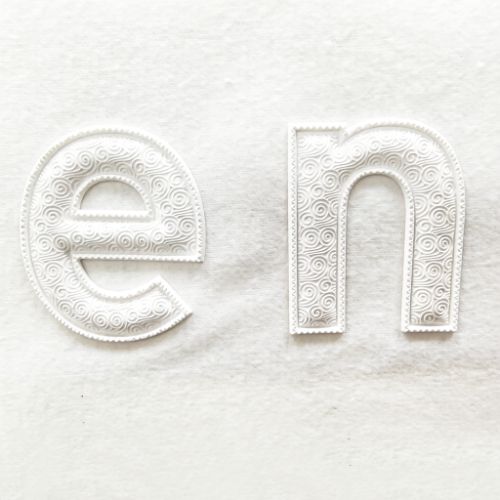
When you tweak a curve or shift a mounting point, the sample loop catches it almost before you release the mouse. There's no waiting for a progress bar or a separate preview window to refresh. The feedback feels immediate—like the model is alive and reacting to each adjustment.
That speed comes from a lightweight update path. Instead of recomputing the entire part from scratch, the loop reuses the unchanged regions and only recalculates what actually moved. This means you can test five, ten, or twenty variations in the time it used to take for a single full rebuild.
For anyone juggling material constraints, clearance checks, or just chasing the right silhouette, that responsiveness changes how you work. You stop batching edits out of dread for slow updates and start exploring freely, confident the loop will keep pace without breaking your focus.
MOQ, Lead Times, and the Gaps Quotes Don't Mention
A low MOQ on paper rarely tells you how the supplier actually counts it. Some factories quote a minimum per style, color, or even size, so a “500-piece MOQ” quickly becomes 2,000 once you split across three colorways. Others will accept a smaller first order but quietly shift the real cost into higher unit pricing, setup fees, or slower production priority. The number you see is often a starting point for negotiation, not a fixed commitment.
Lead time quotes tend to be equally optimistic. The standard “30 days after deposit” usually assumes materials are already in stock, your artwork is approved, and the production line has an open slot. In practice, the clock often starts only when the factory receives the down payment and all technical files are frozen. Any back-and-forth on packaging, labeling, or specs resets that timeline, and few suppliers proactively communicate the delay until you ask.
What quotes don’t mention is where the real gaps hide. Unit prices exclude sample fees, third-party testing, special packaging, or the cost of holding extra inventory because the MOQ forces you to overbuy. There’s also the minimum pack quantity, carton dimensions that affect freight, and whether mixed SKUs in one container are allowed without penalty. These unlisted conditions determine total landed cost far more than the quoted FOB price, yet they only surface after you’re already committed.
Real-World Durability Checks for Raised Silicone Graphics
Raised silicone graphics on equipment and apparel rarely fail in a lab. Real damage comes from gritty backpack straps, repeated machine washes, and being tossed onto hard floors. We put a batch through exactly that kind of abuse over several weeks, checking edges, adhesion, and surface texture after each round.
On a hydration pack shoulder strap, the silicone logo survived daily commutes plus one rocky hike with only minor edge scuffing. On a pair of football socks, the raised stripes went through ten hot washes and dryer cycles without cracking or peeling, though the darker color lost a touch of saturation after extended sun exposure. A quick thumbnail scrape test showed the silicone still flexed rather than flaking.
What stood out was how much the substrate matters. Graphics bonded to nylon webbing held up better than those on stretchy knit fabric, where repeated tension eventually caused tiny tears at the silicone's outer edge. These real-world checks reveal failure points that accelerated lab tests miss entirely.
When the Invoice Doesn't Match the Quote: Fee Patterns to Watch
A quote sets expectations, but the invoice is where the real story unfolds. One pattern to flag is the slow creep of line-item additions—things like fuel surcharges, environmental fees, or administrative costs that never appeared in the original estimate. These often arrive with vague labels that make them hard to challenge, so compare every line against the quote before you pay.
Another red flag is the quiet shift in unit prices or quantity tiers. You might see a labor rate that drifted from $85 to $95 an hour, or a material markup that climbed after the quote was approved. Individually these differences seem small, but across a large order or a multi-week project they can add hundreds to the total. Ask for a corrected breakdown that matches the agreed terms.
Scope changes that were never put in writing are also worth close attention. A small verbal tweak can be invoiced at a higher rate, or a service that was supposed to be included gets billed as extra work. Protect yourself by requesting email confirmation for any change before the work is done, including the exact price impact.
Communication Cadence and Its Impact on Long-Term Reliability
Communication cadence is rarely treated as a formal design parameter, yet it quietly determines whether a relationship can withstand stress over time. When updates arrive at irregular intervals or only when something goes wrong, the other party starts filling gaps with assumptions. Those assumptions, not the actual state of affairs, become the basis for planning. A predictable rhythm, even if modest in frequency, removes that ambiguity. It tells collaborators that silence doesn't signal trouble, and that a pattern exists beyond the immediate task list.
The impact on long-term reliability shows up most clearly when things break. Teams that have maintained a steady cadence can issue a terse status note and trust it will be read correctly. Teams without that rhythm often discover that their urgent message lands in an environment already primed for distrust. The problem isn't the content of the update but the accumulated history of unpredictable silences. Over months and years, cadence becomes a proxy for dependability. It's not the loudest factor, but it's the one that survives when every other metric fluctuates.
Adjusting cadence is less about sending more messages and more about matching expectations early. A weekly note that arrives every Tuesday at the same time does more for reliability than five sporadic emails. The key is to make the rhythm explicit, then honor it without exception. If the schedule must change, the change itself becomes part of the communication, not an unexplained gap. This small discipline compounds: each on-time touchpoint reinforces the message that the relationship is stable enough to rely on, even when the project hits turbulence.
FAQ
Ask for physical samples that have gone through at least 20 industrial wash cycles. If they hesitate or only send fresh samples, that is a red flag. Also request test reports for abrasion and colorfastness, and check whether the silicone edges stay bonded after stretching the fabric.
A healthy process includes a paid sample stage with your actual artwork, then a pre-production sample before bulk. If they promise free samples with a 24-hour turnaround and no technical review, expect corners to be cut. Pay attention to how they document the sample: thickness, durometer, and adhesive type should be stated clearly.
Request close-up photos of past labels with varying heights, sharp corners, or tiny text. Then ask for the same design twice, a few weeks apart, and compare the relief depth and edge sharpness. Consistency across batches reveals more than a single impressive prototype.
The ratio of silicone base, curing agent, and pigment affects everything from softness to heat resistance. Low-cost suppliers might over-cure to speed production, which makes labels brittle and prone to cracking. Ask what durometer they recommend for your fabric type and whether they can adjust it for stretchable or thick materials.
Look beyond the stated monthly output. Ask how many automatic dispensing and molding lines they run, how they schedule repeat orders, and what their current lead time is for 50,000 versus 200,000 pieces. A supplier that quotes the same lead time for both may be overloading their lines or outsourcing.
Some suppliers quote short lead times to win the first order but then slip on reorders when they juggle too many clients. Ask for a written reorder timeline and contact two current customers if possible. The real test is whether they can repeat the exact shade and thickness without extra approval rounds.
Silicone pigments differ from ink or thread, so a supplier that blindly accepts Pantone references without explaining limitations might deliver off-shade labels. Ask how they handle translucent versus opaque silicone, whether they provide lab dips, and what tolerance they guarantee. A realistic supplier will show you a range before production.
Ask for a breakdown that separates tooling, material, and per-piece cost. If the price seems too low, question what is being substituted: thinner silicone, lower-grade adhesive, or fewer quality checks. Negotiate on annual volume instead of squeezing the unit price, and lock in raw material pricing for at least six months.
Conclusion
A supplier's mold library says little about how they handle raised 3D silicone labels once your artwork moves past a flat logo. We look for presses that can maintain consistent edge height on fine text and layered effects, not just pump out generic dome shapes. The real test is the sample loop: send a revised 3D file on Tuesday and watch whether you get a corrected physical proof by Friday or a polished excuse. Quick turnarounds on design tweaks usually signal in-house tooling rather than outsourced steps. Quotes rarely show what happens below the surface. Some factories list an attractive MOQ, then quietly add plate fees, color matching charges, or rush premiums after you commit. Ask for a written breakdown of all secondary costs before placing the first order. Durability matters more in the field than on a spec sheet. A good partner can provide wash-test results on raised silicone graphics, including abrasion resistance and adhesion after repeated laundry cycles, instead of just a marketing claim about "premium quality."
Invoice patterns reveal more than any sales pitch. Watch for line items that grow month over month—recurring tooling maintenance, "voltage adjustments," or vague handling fees. These add up faster than a slight per-unit price difference. Communication cadence often predicts long-term reliability. A supplier that responds within a day to technical questions but goes silent when you mention a defect is not a partner; they are a transaction. We prefer vendors who assign a single point of contact, share production photos without being asked, and flag delays before they affect your schedule. That level of transparency makes it easier to plan inventory and avoid costly stockouts. In the end, the right 3D silicone heat transfer label supplier is not the one with the flashiest website or the lowest sample quote. It is the one whose production floor, revision speed, cost transparency, durability testing, and communication habits stay consistent after the first invoice clears.
Contact Us
Contact Person: Wang Song Lin
Email: [email protected]
Tel/WhatsApp: +8613751282193
Website: https://www.heat-transferprinting.com/