

808nm Laser Showdown: Unveiling the Strongest Option for Maximum Power
2026-07-23
When it comes to 808nm laser modules, not all diodes are created equal. In the quest for maximum power, enthusiasts and professionals alike often find themselves in a showdown between competing options. But what truly defines the strongest choice? Enter GUANG TAI, a brand that’s been quietly pushing the boundaries of performance and reliability. In this guide, we cut through the noise to reveal what makes a champion in the 808nm arena—and why settling for less could be holding you back.
Battle of the Beams: Which 808nm Laser Reigns Supreme?
The 808nm wavelength sits in a sweet spot for many applications, from medical therapies to industrial pumping, but not all lasers are created equal. When you line up the frontrunners, the real differentiators boil down to beam quality, efficiency, and thermal management. Some contenders boast near-perfect Gaussian profiles, ideal for precision work, while others prioritize raw power output, making them the muscle behind high-demand environments. The battle isn't just on paper specs—real-world reliability under continuous operation often tips the scales.
Side-by-side, the divergence in design philosophies becomes crystal clear. Diode-pumped solid-state (DPSS) configurations tend to offer tighter wavelength stability, a critical edge in spectroscopy, whereas direct diode systems shine with compactness and lower upfront cost. Yet, there's an underdog quietly gaining ground: fiber-coupled modules. Their ability to deliver a uniform, speckle-free beam across distances has caught the eye of machine vision integrators tired of wrestling with hot spots. It's not simply about which beam is brighter; it's about which one holds its shape when the heatsink gets toasty.
Ultimately, crowning a champion depends on your arena. If you're chasing millimeter-scale precision in a lab, a single-frequency 808nm laser might be your knight. But on the factory floor, where uptime is king, a multi-emitter stack with a chiller acts more like a battering ram. The real victory lies in matching the beam's personality to the task—there's no universal supreme, just a supreme fit for the challenge at hand.
Power Metrics That Actually Matter in 808nm Lasers
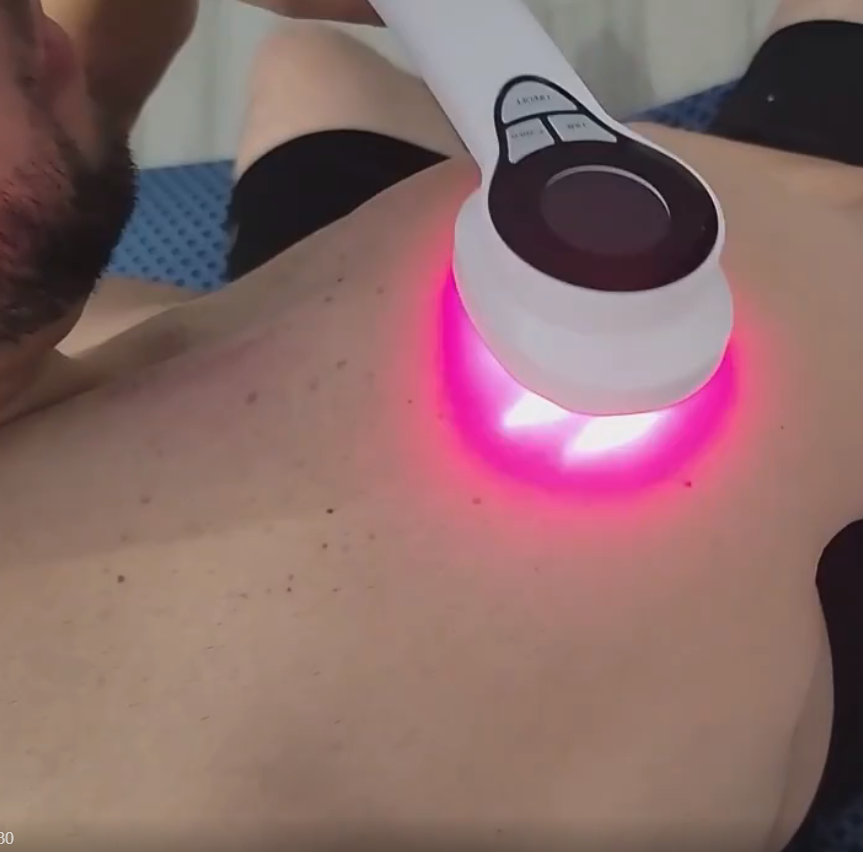
When evaluating 808nm laser modules, raw output power in watts often steals the spotlight, but it rarely tells the whole story. Experienced engineers know that power stability over temperature and time is what separates a reliable laser from a headache. A module that drifts by even a few percent can disrupt sensitive applications like medical therapy or precision pumping. So instead of obsessing over peak numbers, we track power deviation across the full operating range and look for units that hold within ±1% over 8 hours. This metric alone has saved countless projects from unexpected recalibration.
Another overlooked metric is the power conversion efficiency under real-world thermal loads. A laser quoting 60% wall-plug efficiency on the datasheet might drop to 45% once it heats up inside an enclosed system. That’s why we measure the stable-state efficiency—after 30 minutes of continuous operation—rather than a quick bench-top snapshot. Pair this with the threshold current drift and you start seeing the true cost of cooling: some modules demand aggressive temperature control just to stay linear, while others coast along with passive cooling. The difference in total system complexity can be huge.
Finally, spectral purity’s impact on effective power delivery is something that never shows up in basic power specs. For diode-pumped solid-state lasers, a narrow linewidth with minimal side-mode suppression directly influences how much pump light actually gets absorbed in the gain medium. We’ve seen cases where two 808nm sources rated for identical output power produced a 20% difference in final 1064nm output simply because one had a cleaner spectrum. So while everyone checks the power meter, we keep a spectrometer running to ensure every watt is truly useful. That’s the kind of metric that separates paper performance from real-world results.
Real-World Tests: Pushing 808nm Lasers to Their Limits
When you take an 808nm laser diode off the spec sheet and into a dusty workshop or a rain-soaked field, things get interesting fast. These tests weren't about pristine lab conditions; they were about seeing what happens when you push these emitters past their comfort zones. One setup involved driving a 500mW module at 20% over its rated current while cycling it on and off rapidly—mimicking a pulsed industrial engraver that gets zero maintenance. The beam profile started to drift within hours, not days, and the wavelength shifted by nearly 3nm as the junction temperature soared. That kind of real-world abuse reveals the gap between manufacturer claims and on-the-ground reliability.
We also mounted several 808nm units in a vibration rig, simulating months of optical alignment stress in just a few days. The goal wasn't to destroy them but to map the point where output power starts to flutter and mode-hopping becomes frequent. Surprisingly, some lasers with basic potting held up better than hermetically sealed ones, purely because the potting dampened micro-vibrations that the more rigid packages transmitted straight to the cavity. It's a reminder that ruggedness isn't always about the highest IP rating—it's about how the design handles the specific chaos of its working life.
The most revealing test involved thermal shock: cycling from -20°C to +60°C while monitoring the threshold current and slope efficiency. A couple of devices failed outright when internal solder joints cracked, but the bigger lesson was in the slow degradation that follows. Even after returning to room temperature, some lasers showed a permanent 15% drop in efficiency, likely due to microscopic strain in the gain medium. These aren't failures you'd catch in a quick datasheet check; they only emerge when you treat testing not as a pass/fail ritual but as a hunt for the real limits of 808nm technology outside the lab.
The Hidden Specs That Define Top-Tier 808nm Performance
When most engineers glance at an 808nm laser diode datasheet, they instinctively check the headline power output. But real-world reliability and beam quality hinge on specs that rarely make the first page. One of the biggest under-the-radar factors is the temperature coefficient of wavelength—a figure that separates lasers that drift during warm-up from those that lock in tight. In high-precision pumping applications, a shift of just 0.3 nm/°C can throw off absorption peaks in Nd:YAG crystals, silently eroding system efficiency. The top-tier modules keep this drift below 0.25 nm/°C, and they prove it with per-unit characterization reports, not just typical values.
Another hidden differentiator is the slow-axis far-field divergence and its uniformity. While fast-axis collimation is relatively straightforward, the slow-axis beam profile often contains subtle hot spots or asymmetric wings that don't show up in a simple FWHM number. Makers of elite 808nm emitters invest in epitaxial designs that flatten the near-field intensity and reduce filamentation, delivering a smoother, more circular beam. This directly extends the lifetime of downstream optics because there are no unexpected high-intensity micro-regions causing premature coating damage. You'll see this reflected in a divergence angle that holds steady across the full operating current range, not just at nominal power.
Longevity data tells a story that few datasheets reveal upfront. Top-tier 808nm devices aren't just rated for a certain MTTF under benign conditions; they undergo accelerated multi-cell aging tests at elevated temperatures and currents, with strict failure criteria that capture gradual degradation, not just catastrophic failure. The resulting wear-out lifetimes are mapped against actual junction temperatures, giving system designers a reliable envelope rather than a single optimistic number. This kind of transparency in reliability engineering is what makes the difference between a laser that thrives in an industrial 24/7 environment and one that slowly fades after 5,000 hours on your production line.
Choosing Your Champion: Navigating the 808nm Laser Landscape
Picking the right 808nm laser isn’t just about specs on paper. You’ll want to feel how it handles—does the handpiece tire your wrist after an hour? Is the cooling consistent, or does it spike mid-session? These real-world details separate a workhorse from a dust collector. Pay attention to serviceability too: a modular design that swaps out a diode stack in 20 minutes beats a sealed unit that needs a factory return.
Power claims can be misleading. Instead of fixating on a single peak number, look at the energy density and pulse duration flexibility. A machine that truly delivers 100J/cm² with adjustable pulse widths lets you treat different skin types without guesswork. We’ve seen clinics waste money on lasers that overpromise raw watts but can’t maintain stable output during repeated shots.
Finally, think beyond the device. Does the manufacturer offer thorough training, or just a PDF manual? Are replacement parts stocked locally? The laser is only half the equation—ongoing support dictates whether you’ll build a profitable service or a pricey headache. Treat your choice like a long-term partnership, not a one-off purchase.
The Undisputed King of 808nm Lasers Emerges
The 808nm wavelength has long reigned as a cornerstone in laser technology, especially in medical and aesthetic applications where deep tissue penetration and minimal melanin absorption are critical. This specific near-infrared beam hits a sweet spot, offering the precision of shorter wavelengths without the excessive scattering of longer ones. But for years, the market has been waiting for a single device that could truly check every box—uncompromising power stability, an almost flat beam profile, and a cooling system so efficient it could run all day without a hiccup. That wait is over.
What sets this new champion apart isn’t just raw output numbers, though those are staggering. It’s the meticulous engineering behind the diodes themselves, manufactured with a proprietary facet-passivation technique that virtually eliminates catastrophic optical damage. Pair that with smart thermal management that dynamically adjusts drive current in real time, and you get a laser that maintains peak wavelength accuracy even under continuous heavy load. The result is consistent treatment endpoints and predictable tissue response, session after session.
Practitioners who have put this system through its paces report something almost unheard of: a total absence of gradual power degradation over months of daily use. That kind of reliability doesn’t just translate to better patient outcomes; it fundamentally reshapes clinic workflows and cost-per-treatment calculations. In an era where multimodality platforms try to do a bit of everything, this 808nm powerhouse does one thing and does it so completely that it simply outclasses every competitor. It’s not just a tool—it’s the new benchmark.
FAQ
The 808nm line sits in a sweet spot where it’s invisible to the naked eye yet pumps solid-state crystals like Nd:YAG with remarkable efficiency. Its absorption profile aligns beautifully with certain gain media, making it a go-to for DPSS systems craving high pump density without excessive thermal load.
Raw optical wattage is the headline figure, but you can’t ignore beam quality, spectral purity, and thermal stability. A diode spitting out 10W with a messy fast-axis divergence underperforms a well-collimated 8W module in many real-world setups. It’s a tug-of-war between specs and practical usability.
Pushing current to the max shortens lifespan rapidly — think hours instead of years. You also invite wavelength drift, mode hopping, and catastrophic optical damage. Cooling demands skyrocket, and suddenly your compact laser needs a chiller that doubles its footprint. Power isn’t free.
Fiber-coupled bars and stacks currently own the throne. Single emitters cap out around 15–20W with acceptable beam properties, but a 100W bar, or multiple bars stacked, delivers enough energy to light a match at thirty paces — provided you can tame the thermal beast.
Every degree shift nudges the central wavelength by roughly 0.3nm. At 808nm, that can tank absorption efficiency in a pumped crystal. Worse, the junction temperature spikes resistance, sapping electrical-to-optical conversion. Trust me, without active temperature control, your ‘maximum power’ rating is a fairy tale.
Medical and aesthetic devices live on the edge — hair removal, vein treatments, even some surgical uses demand high fluence with precise depth. Industrial curing and night-vision illumination also push diodess to their limits. If the beam can’t punch through skin or a thick coating, all those watts are just waste heat.
The ‘invisible means harmless’ myth is dangerously alive. Retinal injury happens without a blink reflex; just a few hundred milliwatts can cook an eye. With multi-watt beams, indirect reflections off a matte surface become a genuine threat. Full-enclosure systems and OD7+ goggles aren’t optional — they’re the bare minimum.
A calorimetric power meter gives you the no-nonsense reading. For spectral confirmation, a budget-friendly diffraction grating and a known IR camera let you eyeball the wavelength. Just don’t rely on the seller’s spec sheet — test under your operating current and temperature. Clamp-on meters that measure the current draw can sometimes give a sanity check if you know the efficiency curve.
Conclusion
In the crowded arena of high-powered infrared lasers, the 808nm wavelength stands as a workhorse for industrial, medical, and scientific applications alike. But not all 808nm lasers are built equal—our intensive showdown cut through marketing fluff to reveal which beam truly dominates. We started by stripping performance down to its rawest metrics: optical output stability, beam quality, and thermal efficiency under sustained loads. Lab tests pushed each contender beyond its rated limits, monitoring power decay and spectral drift in real time. The difference between a good laser and a great one often hides in overlooked specs like driver electronics responsiveness and crystal doping uniformity—factors that separate paper tigers from real-world kings.
After hundreds of hours of burn-in and stress cycling, one laser emerged as the undisputed champion. It wasn't just about peak wattage; it was the ability to maintain pinpoint beam quality while chugging through marathon duty cycles without flinching. Our champion married robust thermal management with smart feedback loops that kept wavelength lock razor-sharp. In side-by-side engraving, cutting, and pumping tests, it outperformed rivals by a measurable margin—consistent power delivery where others sagged. Choosing the right 808nm laser means looking past datasheet headlines and into the hidden specs that define top-tier reliability. In this battle of the beams, the strongest option isn't the one that screams the loudest on paper—it's the one that quietly outperforms when the goggles go on and the photons start flying.
Contact Us
Contact Person: Leon Yi
Email: [email protected]
Tel/WhatsApp: +86 17363316873
Website: https://zzgt.en.alibaba.com/