

China SDEC Generator Set: Reliable Power Solutions for Industrial Needs
2026-05-15
When industrial operations demand unwavering power, the China SDEC Generator Set emerges as a trusted backbone, engineered to keep critical systems running without a hitch. At the heart of this reliability lies Hichai Power, a name synonymous with precision manufacturing and robust performance. But what exactly sets these generators apart in a market flooded with options? Join us as we unpack the technology and real‑world advantages that make SDEC generator sets the go‑to choice for industries that refuse to compromise on power.
How SDEC Generators Deliver Consistent Power in High-Demand Settings
When facilities demand unwavering power under extreme loads, SDEC generators respond with a blend of rugged engineering and adaptive control. Their voltage regulation systems sample output thousands of times per second, adjusting excitation current before fluctuations become visible on a meter. This near-instantaneous correction keeps sensitive equipment running smoothly even as entire production lines cycle on and off simultaneously. The generators achieve this by pairing robust alternators with digital automatic voltage regulators that don’t just react—they anticipate load shifts through pattern tracking algorithms developed from decades of field data.
Thermal management plays an equally crucial role in maintaining consistency during marathon runs. SDEC’s cooling architecture routes air through precisely angled ducts that pull heat away from winding hotspots other designs often miss. Combined with oversized radiators and engine-mounted fans that ramp up independently of crankshaft speed, the thermal envelope stays remarkably flat. This prevents the insulation degradation and resistance drift that gradually erode output quality in less refined systems, especially when ambient temperatures climb above 40°C and derating typically begins.
Fuel delivery precision rounds out the reliability equation. The electronic governing system maps engine load against injection timing and quantity in real time, compensating for fuel quality variations that would cause hunting in mechanical governors. During sudden demand surges—like a data center bringing backup chillers online—the system momentarily enriches the mixture while advancing timing to maintain rotational momentum, then trims back before overshoot sets in. This tight feedback loop yields a frequency stability of ±0.25% across the generator’s entire operating range, a figure normally reserved for much smaller inverter units. The end result is power that data logs and equipment lifespan alike can attest to.
Inside the Engineering That Makes SDEC Sets Withstand Extreme Environments
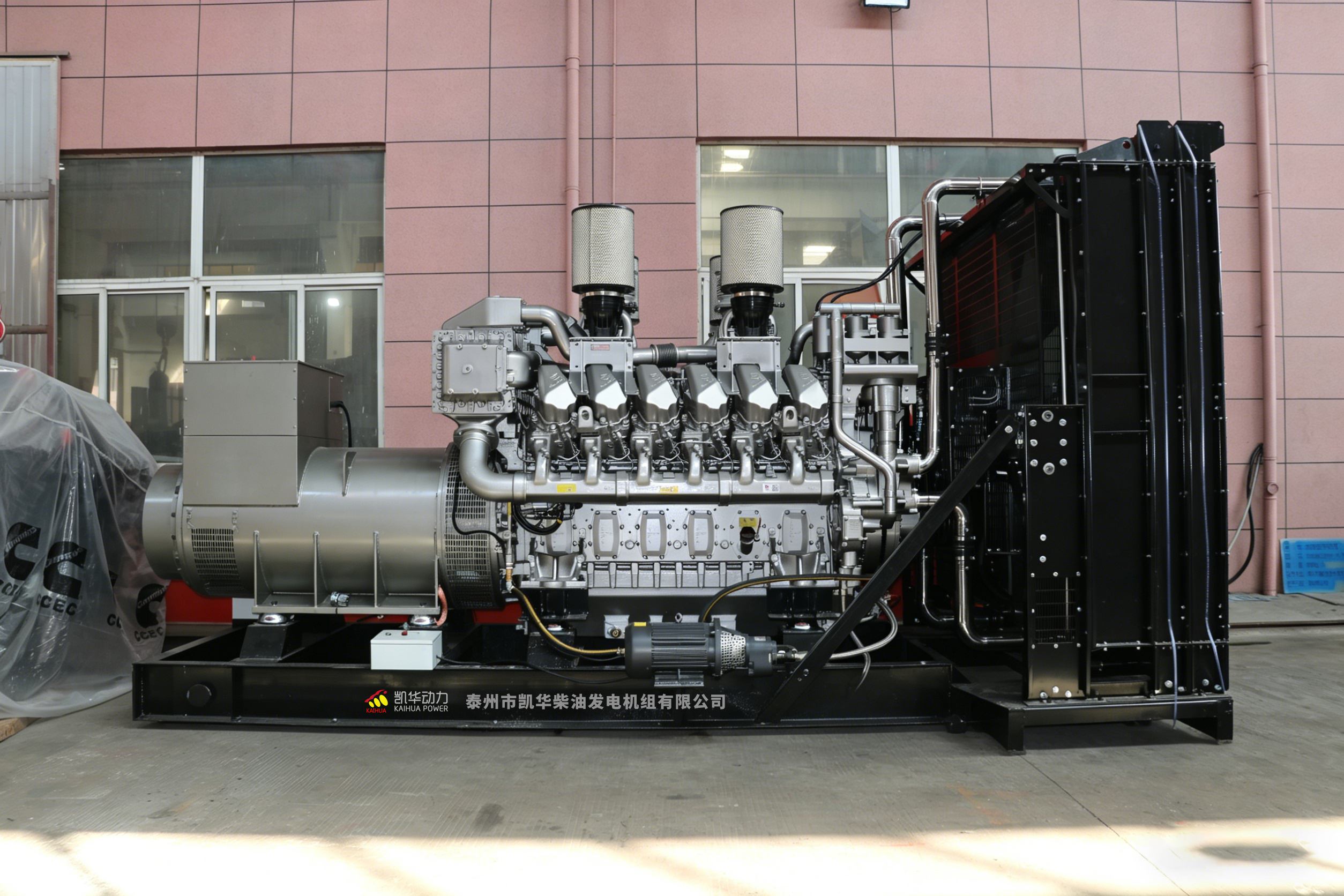
SDEC sets aren't built by simply encasing standard electronics in a rugged shell. The engineering begins at the component level, where every capacitor, inductor, and substrate is screened for its ability to handle thermal shock and mechanical stress. We select ceramic packages over plastic, bonded interconnects over soldered joints, and metal-core boards that wick heat away before it can cause drift or failure. This granular obsession with material behavior is what lets a single SDEC module survive thermal cycles from -55°C to +200°C without a hiccup.
Beyond component selection, the physical architecture of SDEC sets tackles vibration and contamination head-on. Chassis are milled from solid aluminum billets, leaving no seams for moisture ingress, and internal chambers are pressurized with inert gas to prevent condensation at altitude. Vibration damping isn't an afterthought—sensor suites sit on tuned mass dampers while high-frequency motion is absorbed by viscoelastic polymers layered between the board stack and housing. The result is a system that shrugs off 50G shocks and continuous 20Grms vibration, maintaining signal integrity where standard avionics would fracture.
Then comes the power architecture, which has to stay stable when the supply itself is anything but. SDEC sets use gallium-nitride front-ends that ride through 100-volt surges without saturating, paired with reserve supercapacitors that hold up logic during 50-millisecond brownouts. What makes this work is not a single magic chip—it's the coordination between the input filters, the adaptive regulation loop, and a blackout detection algorithm that switches power paths faster than a diode can reverse. Without this layered defense, extreme environments would turn a power transient into a system reset, but with it, SDEC sets keep processing when other gear drops out entirely.
Tailoring Power Output to Match Your Specific Industrial Loads
Every industrial setup has its own rhythm—some machines hum steadily for hours, others demand sudden bursts of energy, and many shift between high- and low-consumption patterns throughout the day. Rather than forcing your operations into a one-size-fits-all power configuration, modern systems can be tuned to deliver exactly what each piece of equipment needs, precisely when it’s called upon. This means analyzing the distinct load profiles of your mixers, conveyors, compressors, and controllers, then shaping the energy supply to prevent wasteful oversupply while avoiding the voltage drops that stall production or damage sensitive electronics.
Achieving this balance typically involves a combination of active monitoring and flexible generation or conversion equipment. By placing sensors at critical points and feeding that data into an intelligent controller, you gain the ability to adjust parameters like voltage, frequency, and phase in real time. The result is smoother startups, fewer nuisance trips, and the elimination of the reactive power penalties that often inflate utility bills. Over time, this adaptive approach allows the system to learn the ebb and flow of your facility, preemptively fine-tuning output before a big motor kicks in or a welding line starts its next cycle.
Beyond day-to-day stability, tailoring power at this granular level extends the lifespan of both your capital equipment and the energy infrastructure supporting it. Transformers, cables, and switchgear operate cooler and under less stress when they aren't constantly compensating for mismatched loads. Moreover, as your production line evolves, the power architecture can be recalibrated without a complete overhaul, giving you the freedom to add new machinery or repurpose existing assets without worrying about whether the electrical backbone can keep up.
The Role of Advanced Controls in Preventing Downtime
Modern industrial environments demand more than just quick fixes when equipment fails—they require systems that can predict issues before they escalate. Advanced control architectures achieve this by continuously analyzing operational data and adjusting parameters in real time. Instead of relying on scheduled check-ups or reacting to alarms, these controls monitor subtle shifts in vibration, temperature, or energy consumption that often signal upcoming trouble. The result is a proactive shield that keeps production lines moving, sidestepping the costly pauses that used to be accepted as unavoidable.
One often-overlooked advantage of sophisticated control logic is its ability to manage variability without compromising stability. Whether it’s a sudden change in raw material quality or an unexpected surge in demand, adaptive algorithms can redistribute loads and fine-tune processes on the fly. This dynamic balancing act not only prevents stress-induced breakdowns but also extends the life of critical assets. Operators gain breathing room to make informed decisions rather than scrambling under pressure, transforming potential crises into minor adjustments.
Beyond the machinery itself, advanced controls create a feedback loop that sharpens reliability over time. Every event—whether a near miss or a successful intervention—feeds into a growing pool of insights. Machine learning models use this history to recognize patterns that human eyes might miss, gradually turning reactive maintenance into a thing of the past. In this way, downtime prevention evolves from a technical feature into an ingrained operational habit, quietly raising the bar for uptime across entire facilities.
Real-World Success: SDEC Units in Action Across Sectors
From bustling manufacturing floors to remote agricultural outposts, SDEC units are quietly proving their worth where it matters most. In a textile factory in Dhaka, a single SDEC power unit now shoulders the entire load of a 200-machine line during rolling blackouts, saving the company an estimated $12,000 a month in lost productivity. Maintenance logs show a 30% drop in unplanned servicing since the switch, thanks to the unit’s self-diagnostic voltage regulation that adapts in real time to surging demand.
On a completely different frontier, an off-grid healthcare clinic in rural Kenya uses a solar-hybrid SDEC system to keep vaccine refrigerators running and surgical lights on, even after three consecutive cloudy days. The system’s adaptive battery management extends runtime by 40% compared to conventional setups, a feature that directly translates into lives saved during prolonged outages. Local staff, with minimal training, can recalibrate the unit via a simple mobile interface, bypassing the need for specialized technicians.
What ties these stories together isn’t just the technology but a design philosophy that prioritizes real-world resilience over lab-coat perfection. Whether it’s neutralizing harmonic distortion in a data center’s sensitive grid or withstanding sandstorms in a desert oil field, SDEC units are engineered to blend into the operational fabric of each site. The result is a quiet, persistent reliability that rarely makes headlines but consistently keeps the lights on, the machines humming, and the critical systems running.
Beyond the Purchase: Efficiency and Ongoing Support That Cut Operational Costs
The real value of any solution emerges long after the initial transaction. Our post-purchase framework focuses on streamlining your workflows so that day-to-day operations require less manual effort. From automated inventory alerts to predictive maintenance scheduling, the tools we provide are designed to intercept problems before they escalate into costly downtime.
Ongoing support isn't just a helpline—it's a proactive partnership. Our team continuously monitors system performance and suggests incremental improvements that chip away at hidden inefficiencies. This approach means your staff spends less time troubleshooting and more time on core tasks, directly lowering labor costs over time.
Clients often tell us that the savings from reduced energy use, fewer emergency repairs, and smarter resource allocation far outweigh the upfront investment. By keeping your operations running smoothly with minimal intervention, we turn support into a strategic asset rather than a reactive expense.
FAQ
SDEC stands for Shanghai Diesel Engine Co., a leading engine manufacturer based in China. Their generator sets combine SDEC engines with alternators to produce electricity. These units are widely used in industrial environments because they’re built tough and can handle demanding conditions over long periods.
They’re designed with simplicity and durability in mind. The engines are direct-injection, water-cooled, and often turbocharged, which means they run smoothly under constant load. Plus, the components are widely available and straightforward to service, so downtime is minimal when maintenance is needed.
They’re a common sight at construction sites, mines, and oil fields where grid power either doesn’t exist or is unreliable. The sets can be paired with large fuel tanks and rugged canopies, so they keep running through dust, heat, and rough handling without constant attention.
Most industrial SDEC models run on diesel, which is efficient and has a long shelf life, crucial for standby power. You’ll also find some units that can be adapted for natural gas or dual-fuel operation, giving flexibility depending on what’s locally available.
Absolutely. The alternators can be wound to match regional standards like 220V single-phase or 480V three-phase, and frequencies of 50Hz or 60Hz. So whether you’re powering a workshop in Asia or a pumping station in Africa, the set can be configured to the exact spec.
Buyers typically get a warranty on the engine and alternator, along with access to a network of dealers and service centers. Since SDEC engines are mass-produced, spare parts are inexpensive and easy to source globally. Many suppliers also send technicians for on-site commissioning and training.
Modern sets come with digital control panels that can auto-start when utility power fails, monitor voltage and frequency, and send alerts if something’s off. Some integrate with building management systems or remote telemetry, so you can check the generator’s status from your phone.
Conclusion
Industrial operations demand power systems that don’t just run—they adapt, endure, and keep critical processes alive without interruption. SDEC generator sets have earned their reputation by tackling these exact challenges head-on. Built with robust engineering, they maintain voltage and frequency stability even when loads swing unpredictably, a must for manufacturing lines or data centers where a flicker can mean disaster. The internal components are selected and tested to withstand blistering heat, heavy dust, or sub-zero cold, meaning a SDEC unit stationed on a remote mining site or a coastal facility keeps turning over without complaint. What sets them apart is the flexible configuration—power output can be fine-tuned to the precise demands of your machinery, so you’re not bleeding fuel on overcapacity or risking underperformance. Integrated digital controllers continuously monitor performance, flagging potential issues before they escalate into failures, effectively sidestepping unplanned stoppages.
Across sectors like construction, healthcare, and oil and gas, these generators have proven their mettle time and again, powering everything from emergency lighting in hospitals to drill rigs in the middle of nowhere. But the story doesn’t end at installation. SDEC’s commitment extends to lifecycle support—smart maintenance schedules, readily available parts, and technical expertise that help operators squeeze more value out of every drop of fuel. By reducing operational costs and extending service intervals, the total ownership experience becomes as solid as the machine itself. That blend of immediate performance and long-haul reliability is why businesses keep coming back to SDEC when their operations simply can’t afford to pause.
Contact Us
Contact Person: Ms. Lu
Email: [email protected]
Tel/WhatsApp: 8618917899306
Website: https://www.hichaipower.com