

China Villa Door Factory Crafting Custom Luxury Entrance Doors for Modern Villas
2026-11-18
A villa’s entrance doesn’t just welcome guests; it quietly sets the standard for every detail behind it. Still, many modern villa projects end up with mass-produced doors that flatten the design instead of finishing it. FANSI, a China villa door factory, approaches this differently. Its custom luxury entrance doors are built around the actual architecture, not retrofitted to it—blending clean lines, heavier materials, and precise hardware into a front door that feels like part of the villa’s character. Here’s what to look for when a standard door won’t do.
Where the Villa Makes Its Quietest, Strongest Impression
It happens most often in the loggia just after sunrise, when the stone floor holds the night's coolness a little longer than the air. The only sounds are the rasp of a watering can against the potted lemon trees and the far-off tick of a gate latch settling into place. This is not a space designed to impress at first glance; it earns attention slowly, through the weight of shadow and the particular stillness that gathers between the columns.
There is a built-in bench near the old fountain that nobody thinks to sit on until the third or fourth afternoon. Once you do, the villa drops its public manner. You notice the uneven edge of the plaster, the hairline crack running from the window sill to the floor, the faint smell of wax and cool stone. These flaws don't weaken the architecture; they make it legible, as if the house finally speaks in a lower, more honest register.
By evening the strongest impression comes from the threshold between the kitchen and the garden door. Lamplight spills across the paving in a narrow band, and moths move through it without sound. The house no longer feels like a sequence of rooms but like a single quiet presence, holding the dark at arm's length. It is here, leaning against the doorframe with a glass of cold water, that most people understand why the villa was built the way it was.
A Door Built Around the Facade, Not Around a Standard Template
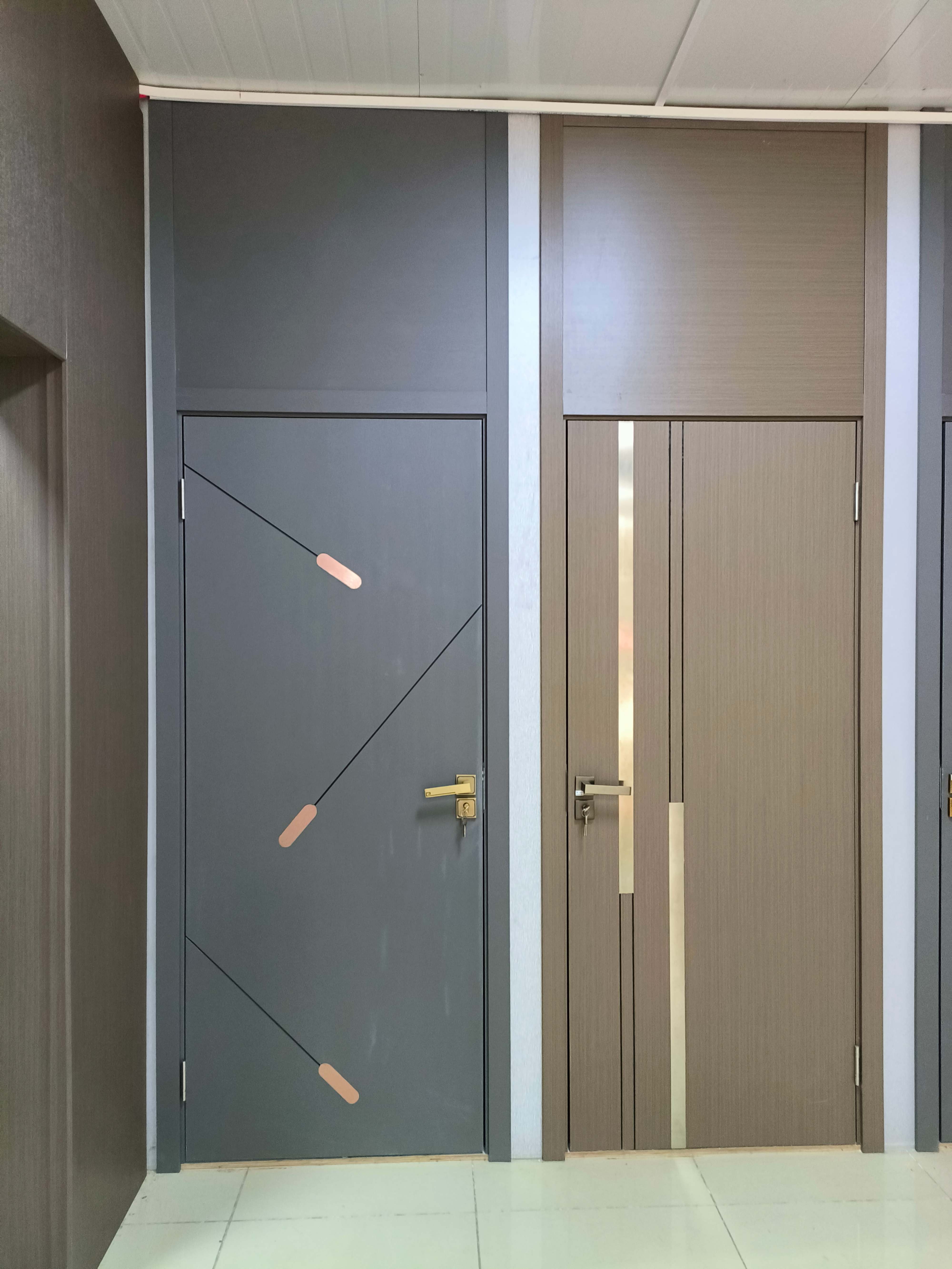
When a facade has irregular stone coursing, deep reveals, or a rhythm of metal fins that shifts from floor to floor, a standard door leaf pulled from a catalog rarely sits comfortably. The panel proportions feel off, the frame interrupts a joint line, and the threshold becomes a visual afterthought. A door built around the facade starts from the opposite direction: it reads the existing planes, shadow gaps, and material transitions first, then lets those conditions determine the door height, stile width, finish, and hardware placement.
This approach changes the role of the entry from generic component to part of the wall composition. If the facade uses limestone panels with a pronounced horizontal grain, the door can align its top and bottom rails with those coursing lines. If bronze mullions step slightly proud of the glass, the pull handle and lock face can follow the same projection. The goal is not to make the door disappear, but to make it look inevitable, as though it was drawn in the same section cut as everything around it.
That level of integration rarely comes from selecting a larger or smaller factory model. It comes from adjusting frame depth, panel thickness, gasket shadow, and even the angle of a sill to match what the eye already expects from the building. The result is a facade that keeps its composure at the part that gets touched most often. Visitors may not consciously notice why the entry feels right, but the absence of a misplaced seam is exactly the point.
Materials Chosen for Climate, Light, and the Way Families Actually Live
In this house, the material palette was not chosen from a design magazine spread but from observing how the family actually moves through their days. The living room floor is a wide-plank oak with a matte, hard-wax oil finish that hides the scuffs of toy cars and takes on a warm, honeyed tone where the afternoon sun hits it. On the walls, we avoided flat paint in favor of a mineral-based lime wash that breathes with the local humidity, subtly shifting from pale gray to soft green depending on the hour. The result is a surface that feels less like a coating and more like the room is exhaling.
For the kitchen and entry, we leaned into honed terrazzo with recycled glass aggregate. It shrugs off wet boots, dropped juice cups, and the constant shuffle of chairs, but it also catches light in a way that polished stone never does — a gentle, scattered brightness that helps the north-facing room stay luminous without any artificial sheen. The counters are a dark, heavily veined soapstone that develops a cloudy patina around the sink, a quiet record of the family's daily rituals rather than a blemish to be polished away.
Upstairs, the bedrooms are wrapped in wide, unlacquered brass wall panels only where hands and heads tend to rest, while the rest is kept to a low-VOC clay plaster. This combination lets the rooms feel cool on summer mornings and hold warmth during winter evenings without cranking the thermostat. The windows are framed in thermally broken steel, painted a deep bronze that recedes into the shadows so the eye goes straight to the light and trees beyond. Every material was tested against one question: will it look better after three years of being lived in, not just on move-in day?
The Joinery and Hardware Details You Notice After Years, Not Weeks
The first thing that gives itself away is usually a drawer front. Not the finish, which can be sanded and sprayed to look perfect on day one, but the way the dovetails have moved. After a few humid summers and dry winters, machine-cut joints stay put while a hand-fit drawer will show a faint shadow line where the tail meets the pin. That tiny, uneven gap is not a flaw; it is the wood breathing against the glue and still holding.
Hardware tells the same story more slowly. A solid brass knob does not wear evenly across its whole surface. You notice a polished crescent on the side where thumbs have pulled for years, and a darker, untouched hollow on the underside. Hinges that were adjusted once and never again still close a door with a soft, oiled resistance, while cheaper ones begin to chirp or sag. The difference is not in the catalog photograph but in how the metal meets the hand and the frame over time.
Then there are the details you never see without living alongside them: a latch that catches just before the door is fully closed, a stop that has been shimmed so a knob no longer kisses the plaster, a tiny bevel on a drawer bottom so it does not scrape when fully loaded. These are not decisions a builder points out. They are decisions the house quietly proves were made.
Finishes That Grow More Interesting as They Age
There is a quiet shift that happens to unlacquered brass around the third year. The high shine fades into something cloudier, and the spots touched most often take on a deeper tobacco-brown tone while the edges keep a muted gleam. That unevenness is what makes the surface feel alive rather than neglected.
Waxed walnut behaves in a similar way, though more slowly. The first scratches are almost invisible, but over time they hold a little more oil and dust, turning the grain into a soft map of daily use. A drawer pull becomes smoother and slightly darker on one side, and the difference is subtle enough that it reads as depth instead of damage.
What these finishes share is a willingness to accept change instead of resisting it. They do not ask for constant polishing or protective covers. A water ring on a soap-finished oak table, a faint green bloom near a brass hinge, the worn corner of a leather armrest, all of them record the room as it is actually lived in.
Inside the Workshop Where Custom Luxury Entryways Take Shape
Inside the workshop, the day starts with the low whine of a beam saw cutting through a slab of white oak that still smells faintly of the lumberyard. Here, custom luxury entryways are not assembled so much as composed. A single door can spend weeks moving between stations: one craftsman steams and bends a stile to follow the curve of a client's arched opening, while another taps a chisel along the channel for a continuous brass inlay. The drawings pinned above each bench are marked with notes about swing direction, threshold height, and the way afternoon light will fall across the grain.
What sets the space apart is the refusal to rush the unseen parts. Joints are fitted dry, taken apart, adjusted by a few thousandths of an inch, and fitted again before any adhesive is opened. Finishes are applied in thin, almost invisible layers, with days of curing between coats. Even the hardware gets its own quiet ritual: hinges are mortised by hand, and locksets are tested until the latch falls with the same soft click at eight in the morning as it does at the end of a long shift.
Walk past the spray booth and you will find a wall of offcuts, each tagged with a project name and a date. That archive is part material library, part memory. It holds a piece of figured walnut from a lakeside residence, a strip of painted ash from a townhouse entry, and a dark meranti offcut that once became a pivot door wide enough to frame a courtyard. In this workshop, a luxury entryway is less a product than a record of decisions made by hand, argued over, and eventually resolved into something you push open every day.
FAQ
We work mainly with solid wood, aluminum, steel, and sometimes bronze or brass inlays. For modern villas, many clients choose thermally broken aluminum frames with engineered wood or stone panels because they hold up well in different climates and still feel substantial.
Yes, nearly all of our orders are made to measure. We ask for the rough opening dimensions and wall thickness, then adjust the door slab, frame depth, and hardware placement accordingly. Oversized pivot doors are pretty common for villa entrances.
That depends on the complexity and finish. A straightforward custom door usually takes 30 to 45 days. Special veneer, hand-carving, or imported hardware can push it to 60 days or longer. We share a production schedule once the drawing is approved.
We can integrate electronic locks, video intercoms, fingerprint scanners, and concealed sensors. Tell us which system you use and we will pre-cut the door and frame for wiring and hardware so the installation looks neat.
Yes. We have weather-sealed designs and marine-grade finishes for those conditions. The core is treated to resist warping, and the hardware can be upgraded to stainless steel. We also add threshold drainage channels where needed.
Most requests fall into minimalist flush doors, vertical slat panels, large pivot doors with hidden frames, and slim-profile aluminum designs. We also mix wood with stone or metal mesh to match the villa's exterior.
We include a detailed installation manual and can provide video guidance. For larger projects, we sometimes send a technician to supervise the first installation. The frames are pre-assembled as much as possible to reduce on-site errors.
Conclusion
A villa entrance rarely shouts; it holds a pause. At the China Villa Door Factory, that pause is engineered from the first site photograph to the last coat of oil. Instead of forcing a stock door into an opening, the team studies the facade's rhythm, setbacks, glazing, and roofline so the door feels like a decision the house made about itself. Materials follow the same logic. Teak, bronze, thermally treated ash, or stone composite are weighed against coastal humidity, high-altitude UV exposure, or the daily habits of young children and dogs. The result is not a door that merely fits, but one that belongs, down to the way a shadow falls across the threshold in late afternoon.
The quieter pleasures appear later. Hand-filed hinge knuckles, a latch that engages without a metallic snap, timber movement allowed through concealed joinery rather than fought with filler. Finishes are chosen to mature: waxed steel clouds near the handle, oak silvering gently where morning light hits, brass losing its brightness but not its depth. In the workshop, patterns are laid out full-scale, veneers matched by grain direction, and weather seals tested before the door is crated. What leaves the floor is less a product than a slow, precise answer to how a particular family enters, leaves, and comes home.
Contact Us
Contact Person: Liam
Email: [email protected]
Tel/WhatsApp: (+86)16658531012
Website: https://www.fansifiredoor.com