
Cleanroom Turnkey Company: Streamlining Your Controlled Environment Project
2026-08-12
Building a controlled environment shouldn't feel like solving a puzzle blindfolded. Yet, juggling multiple vendors, designs, and regulations often turns your cleanroom project into a maze of delays and hidden costs. There's a smarter way—one that hands you a single, seamless solution from concept to certification. Enter GENO Pharmatech, a cleanroom turnkey company that redefines streamlined execution. We handle every detail, so you can focus on what truly matters: your breakthrough work. Ready to see how effortless a controlled environment project can be?
Beyond the Standard Cleanroom: What True Turnkey Means
In a landscape where controlled environments are often reduced to a checklist of particle counts and pressure differentials, the term "turnkey" has become dangerously diluted. Many providers will deliver a room with four walls, a fan filter unit, and call it a day. But a true turnkey solution starts long before the first panel is hung and extends well beyond the final certification. It begins with a forensic-level analysis of process workflows, material compatibility, and future scalability—where the cleanroom is treated not as a static structure, but as a living envelope designed to evolve with your operation.
What sets a genuine turnkey approach apart is the seamless integration of interdependent systems that are often overlooked in a specification-driven bid. This means in-house ownership of everything from architectural design and mechanical engineering to BMS integration and validation protocols, orchestrated under a single point of accountability. Instead of juggling separate contracts for drywall, HVAC, electrical, and controls, you're handed a unified ecosystem where air handling, gowning logistics, and instrumentation are woven together from day one. The outcome isn’t just a space that meets ISO standards—it’s a space that anticipates bottlenecks, eliminates cross-contamination vectors, and reduces the total cost of ownership through intelligent load management and energy recovery strategies.
Ultimately, the benchmark for true turnkey delivery isn’t whether the room passes initial testing, but whether it vanishes into the background, allowing science and production to take center stage. That means rigorous third-party commissioning isn’t an add-on; it’s the default. Documentation arrives fully packaged—IQ/OQ/PQ protocols, asset tags tied to a CMMS, and training handovers that aren’t rushed box-ticking exercises. When the keys are handed over, the facility should feel less like a construction project that just ended, and more like an organic extension of your capability, ready to meet tomorrow’s challenges without requiring a retrofit six months down the line.
The Missing Link in Most Controlled Environment Projects
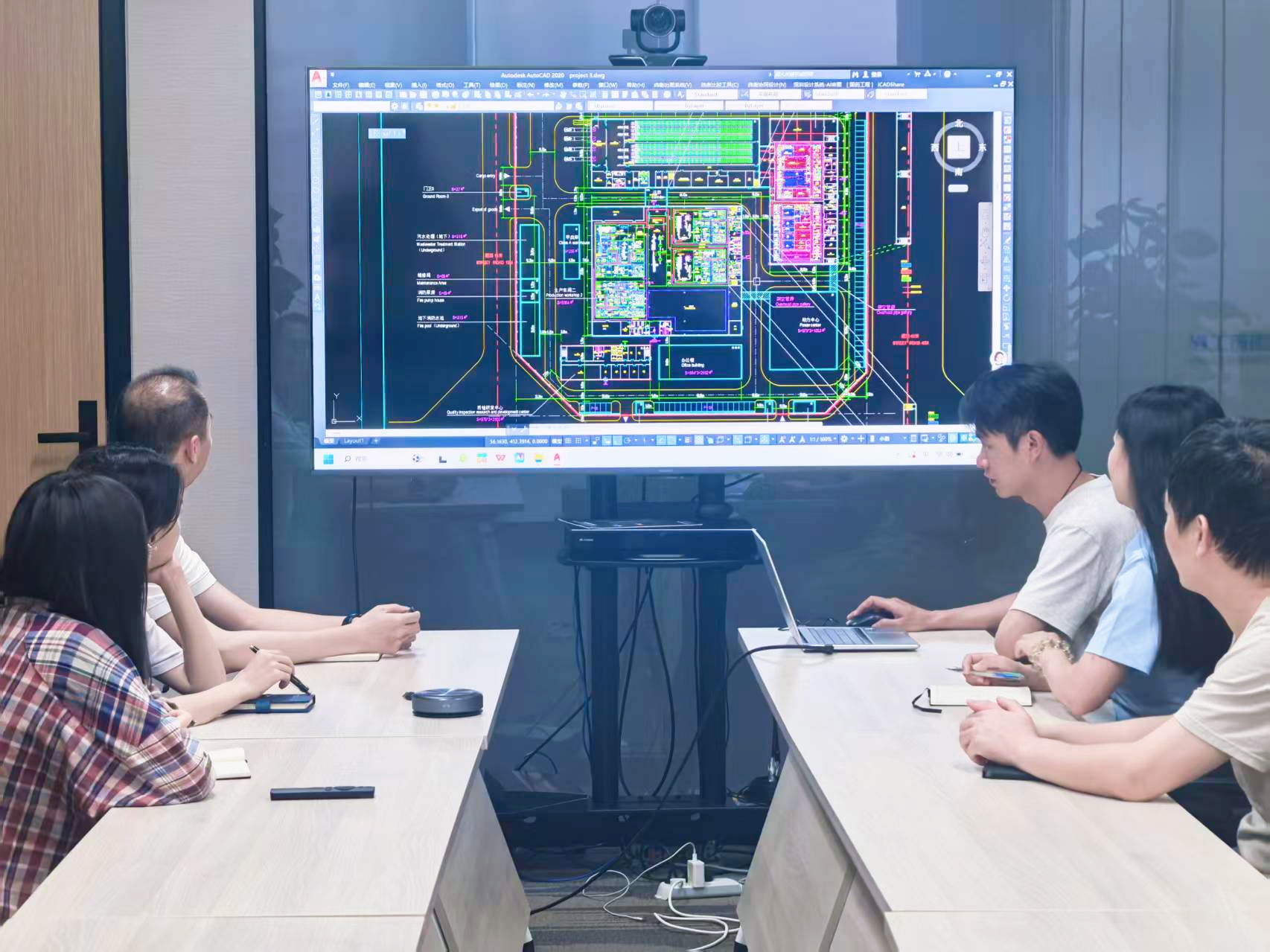
In many controlled environment projects, the focus lands squarely on temperature, humidity, and pressure differentials, yet the thread that ties these variables to actual operational success often goes unnoticed: environmental monitoring integration. It’s not that sensors aren’t installed or data isn’t collected—it’s that the information rarely flows into a cohesive system that informs real-time decisions. When monitoring exists in a silo, deviations become historical anecdotes rather than actionable alerts, and the very control you’ve engineered begins to erode before anyone notices.
The missing link is not a piece of hardware but a mindset that treats environmental data as a dynamic conversation between systems. Traditional setups might log readings for compliance, but they miss the opportunity to enable predictive responses—like adjusting air handling before a particulate spike reaches critical levels. Without this integration, projects become static monuments to initial design parameters, ill-equipped to adapt to the subtle shifts that daily operations bring.
Bridging this gap requires acknowledging that control is an ongoing process, not a one-time certification. It means embedding environmental intelligence into the operational fabric so that every drip of data refines performance. The facilities that get this right don’t just meet spec sheets; they evolve with their environments, turning a potential vulnerability into a sustained competitive edge.
Navigating Regulations Without the Guesswork
Regulatory landscapes shift constantly, but relying on intuition or outdated spreadsheets often leads to compliance gaps. A structured approach turns scattered rules into clear, actionable steps—without the late-night panic over missed updates. By mapping obligations directly to operational workflows, teams move from reactive firefighting to proactive governance.
Smart automation now does the heavy lifting: scanning official sources, flagging changes that matter to your specific context, and tracking deadlines before they become emergencies. Instead of chasing vague interpretations, you get precise, verified guidance tailored to actual business activities. This isn’t about generic alerts—it’s about distilling regulatory noise into targeted insights.
Embedding compliance into daily systems means the right people see the right requirements at the right time. Dashboards highlight what’s pending, while audit trails write themselves. The guesswork fades because every decision ties back to a curated, live feed of obligations—kept honest by version control and accountability layers that turn regulation from a barrier into a backbone of operations.
Unified Design, Construction, and Validation—A Smarter Sequence
Think of it as three stages flowing naturally into one another, not a relay race where the baton might get dropped. In conventional projects, design, construction, and validation often happen in siloed phases, with each team handing off documents and hoping for the best. But when you unify them into a smarter sequence, the boundaries blur in a productive way. Design decisions are weighed against real-world construction constraints right from the start, and validation isn’t a last-minute checkbox—it’s a continuous thread that weaves through every step. This approach minimizes the late-stage surprises that drain time and budget, while fostering a culture where engineers, builders, and testers actually understand each other’s challenges.
The smarter sequence leverages shared digital models and real-time feedback loops. Imagine a design change that instantly flags a construction feasibility issue, or a validation scenario that highlights a weak spot before a single brick is laid. That’s the power of keeping these disciplines in constant conversation. Instead of the old linear path where you complete a phase and throw it over the wall, you get a dynamic, iterative process. Construction insights feed back into design, validation data informs ongoing tweaks, and the entire timeline compresses because rework and miscommunication plummet. It’s not just faster; it’s more resilient, because the system adapts as you go rather than crashing into a problem at the final hurdle.
Perhaps the biggest shift is cultural. When teams stop seeing their roles as isolated tasks and start viewing them as parts of a single, living project, quality becomes everyone’s business. Designers don’t just sketch in a vacuum; they’re aware of the tools and tolerances on site. Builders aren’t just following blueprints; they’re contributing to a smarter build through on-the-ground insights. And validators aren’t gatekeepers at the end; they’re partners ensuring that the final product matches the shared vision. This unified sequence doesn’t just produce a better outcome—it changes how everyone thinks about their work, turning a fragmented chain of events into a coherent story of creation.
Why Fragmented Teams Kill Cleanroom Timelines
When cleanroom projects sprawl across multiple subcontractors with no unified oversight, delays become almost guaranteed. Each team operates within its own silo, prioritizing local efficiency over the global sequence of interdependent tasks. A ductwork crew might finish ahead of schedule, only to block access for the electrical contractors who need to run conduit first. These misalignments aren't random—they're baked into the structure of fragmented execution, where nobody feels accountable for the overall timeline.
The real schedule killers often hide in the handoffs. In a pressurized cleanroom environment, one misstep in the build sequence can contaminate weeks of work. When the framing team doesn't coordinate installation details with the HEPA filter specialists, rework piles up. Worse, fragmented teams rarely align on quality hold points, so issues that should have been caught during the next trade's prep work surface only during final certification. That's when the real timeline erosion happens—and it's expensive.
Beyond the physical clashes, communication fractures kill momentum. Decisions that should take minutes stretch into days as emails bounce between disconnected project managers. Without a single source of truth for schedule logic, crews revert to what they know best: racing through their own scope, often at the expense of other critical path items. The result is a stop-start rhythm that drains productivity and makes mockery of the original completion date.
Building for Tomorrow’s Standards, Not Just Today’s
True innovation isn’t about meeting current regulations—it’s about anticipating the ones that haven’t been written yet. When you design with only today’s standards in mind, you’re already falling behind. Tomorrow’s requirements will demand better performance, greater efficiency, and deeper resilience. By embedding flexibility and forward-thinking principles into every decision, you create solutions that evolve gracefully instead of becoming obsolete the moment the rules change.
This approach means looking beyond minimum compliance. It’s about asking what the world will need in five, ten, or twenty years, and building that vision into the foundation now. Materials, processes, and systems should be chosen not just for their current certifications but for their capacity to adapt. When you prioritize long-term adaptability, you avoid costly retrofits and stay ahead of the curve without chasing it.
In practice, this philosophy transforms constraints into opportunities. Instead of ticking boxes, you’re shaping a legacy that outlasts shifting policies. The goal isn’t simply to pass inspection today—it’s to earn trust for decades by demonstrating that your work was built with a deeper understanding of progress. That’s the difference between checking a box and leading an industry forward.
FAQ
It manages everything from design and engineering to construction, certification, and handover, so you get a fully operational cleanroom without having to coordinate multiple vendors.
You deal with one team for the entire project, which reduces miscommunication, streamlines scheduling, and ensures that all systems—like HVAC, filtration, and monitoring—are seamlessly integrated.
Yes, experienced providers work on everything from small lab suites to large-scale manufacturing cleanrooms, tailoring the solution to your specific process requirements and budget.
It usually starts with concept design and feasibility, moves to detailed engineering and procurement, then construction and validation, and ends with commissioning and staff training.
Through rigorous testing and certification at every stage, including particle counts, airflow measurements, and pressure differentials, followed by a final validation against ISO or GMP standards.
Pharmaceuticals, biotechnology, microelectronics, aerospace, and medical device manufacturing—any sector where contamination control is critical.
Often yes, because the integrated approach minimizes design conflicts, change orders, and delays, leading to a faster time-to-market and lower overall lifecycle costs.
Deep industry expertise, a proven project management methodology, strong supplier relationships, and a commitment to understanding your unique process needs before offering a solution.
Conclusion
When a facility demands strict environmental control, a cleanroom turnkey company steps in to absorb the complexity that often derails projects. The real difference goes far beyond delivering standard modular panels and HEPA filters—it means assuming full accountability for every phase, from concept to compliance. A true turnkey partner doesn’t just hand off a shell and walk away; they bridge the gap between cleanroom design, construction, and rigorous validation, ensuring that no detail falls through the cracks. This unified approach directly addresses the fragmentation that typically kills timelines, where mismatched contractors, revisits, and miscommunication create costly delays. By integrating the full sequence—design, build, certify—under one roof, the process becomes inherently smarter, removing the guesswork from regulatory navigation and aligning every decision with both current and emerging standards.
That long-term vision is what separates genuine turnkey providers from those who only hit minimum requirements. Instead of reacting to shifting GMP, ISO, or industry-specific mandates in a panic, the right company builds in flexibility from the start, future-proofing the controlled environment. They manage the entire chain: environmental monitoring, HVAC intricacies, material selection, and validation protocols, all while keeping the project on schedule and within budget. The result is a facility that not only passes final certification but operates reliably day after day, without the hidden risks of a patchwork build. For pharmaceutical, biotech, semiconductor, or aerospace applications, this seamless delivery model converts a high-stakes investment into a predictable reality, freeing teams to focus on their core work rather than construction chaos. In the end, it’s about trust, continuity, and a partner who treats your controlled environment as a complete ecosystem—not a fragmented checklist.
Contact Us
Contact Person: Amy Yang
Email: [email protected]
Tel/WhatsApp: 008619330882686
Website: https://www.genopharmatech.com/