
Custom Lost Foam Casting: A Complete Guide to Precision Metal Parts
2026-10-13
Lost foam casting might sound like a behind-the-scenes trick, yet it quietly powers the most intricate metal parts in modern machinery. From complex engine blocks to one-off prototypes, this method delivers precision where traditional casting falls short. If you’ve ever wondered how custom shapes with tight tolerances come to life without costly tooling, you’re in the right place. At Zhaoyuqi, we’ve spent years refining every step—pattern making, coating, pouring, and finishing—so you get parts that fit perfectly, every time. In this guide, we’ll walk you through the entire process, bust a few myths, and show you exactly when lost foam casting beats the alternatives. Ready to see why engineers keep this technique close to the chest? Let’s dive in.
Foam to Metal: Inside the Lost Foam Casting Sequence
The sequence starts not with metal but with a lightweight polystyrene pattern that mirrors the final part in every detail. These foam replicas are often glued into clusters, then dipped in a refractory slurry that dries into a thin ceramic coating. That coating isn't just armor—it defines surface finish and helps control how gases escape when the metal arrives.
Once the coated cluster goes into a flask, loose sand is vibrated tight around every contour. There's no need for draft angles or separate cores in many geometries because the foam stays in place until molten metal is poured. The metal instantly vaporizes the foam, flowing into the cavity left behind, copying even fine textures and logos from the original pattern.
After cooling, the sand falls away and the casting is cut from its gating system. The result can be a complex, near-net-shape part that would be expensive or impossible to machine from billet. Because the foam vanishes rather than being removed, undercuts and internal passages become routine instead of headaches.
When Tight Tolerances Matter: Why Custom Lost Foam Casting Delivers
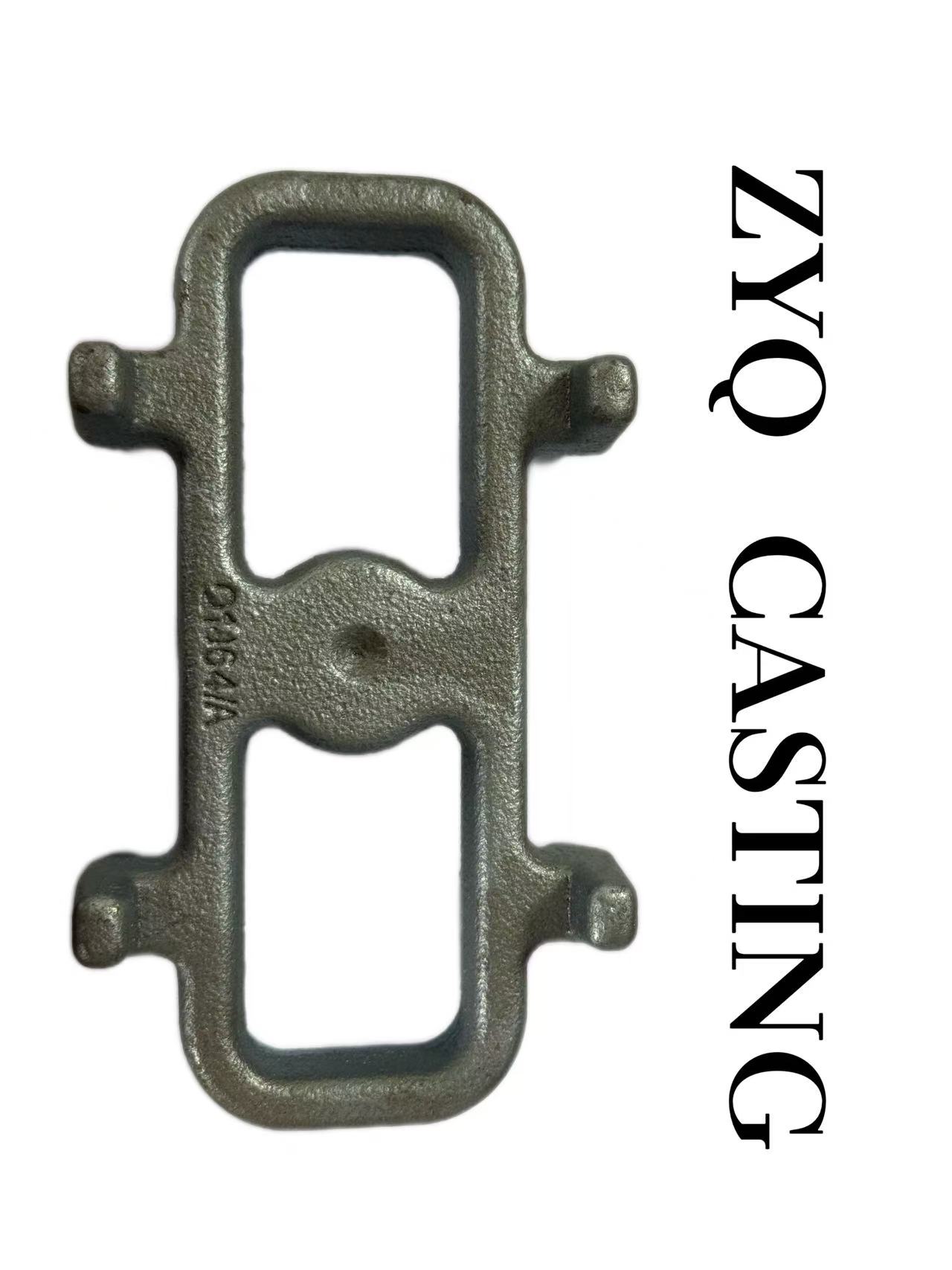
When dimensional accuracy drops to a few thousandths of an inch, most casting processes start to show their weaknesses—draft angles, parting lines, or uneven cooling push parts out of spec. Custom lost foam casting removes those variables almost entirely. The foam pattern vaporizes during pouring, so there are no mold halves to misalign and no need to add draft just to pull a pattern free. Complex internal passages and thin walls hold their geometry with far less distortion than you'd expect from sand or investment casting.
In practice, that means components like hydraulic manifolds, pump housings, or turbocharger parts can be cast closer to final shape, cutting down on secondary machining. Because the unbonded sand is vibrated around the foam pattern rather than packed into a rigid mold, heat dissipates more evenly. That thermal consistency helps maintain tight tolerances even on parts with abrupt section changes—something that often trips up conventional methods. Tolerances around ±0.005 inch per inch are achievable in production runs, and for many applications, that's the difference between a ready-to-assemble casting and one that needs hours of corrective work.
Repeatability is the other quiet advantage. Once the foam tooling is dialed in to compensate for shrinkage, every pour reproduces the same geometry without the slow drift caused by mold wear or core shift. For low-volume, high-precision projects, that stability removes a major source of scrap and shortens the path from foundry to final inspection.
Alloy Selection for Precision Parts: What Works Best in Lost Foam
Lost foam casting usually rewards alloys that balance fluidity, pouring temperature, and shrinkage behavior. Aluminum-silicon grades such as A356 and 319 are frequent choices for precision parts because they flow easily into thin sections and reproduce fine details from the foam pattern. Their relatively low pouring temperature also reduces thermal stress on the coating, which helps maintain tight dimensional control without excessive distortion.
When higher strength or wear resistance is needed, ductile iron and compacted graphite iron become strong candidates. They offer good fluidity from their carbon content, but the higher pouring temperatures demand more attention to coating permeability and venting to avoid gas defects. Steel alloys are less common, yet low-carbon and stainless grades can deliver precise components when the foam pattern density and refractory coating are carefully matched to the alloy.
Copper-based alloys like bronze and brass can achieve excellent surface detail, but their density and thermal conductivity often cause rapid solidification. Preheating the mold or adjusting the gating system helps sustain metal flow for intricate geometries. In practice, the best alloy is the one tuned to the part geometry, tolerance requirements, and service conditions rather than a single universal metal.
Design Details That Keep Your Casting Defect-Free
Sharp internal corners are among the quickest ways to invite cracks and hot tears into a casting. Replacing them with fillets that match the wall thickness--not just a token 1 mm radius--lets solidification fronts meet without building localized stress. Wall sections that transition gradually instead of stepping abruptly keep feeding paths open and discourage shrinkage porosity.
Gating and risering deserve more than a last-minute check. Position ingates where metal can fill the cavity without spraying or splashing, and place risers so they remain liquid longer than the sections they feed. Blind risers need vents; otherwise trapped air simply pushes back against incoming metal and creates misruns or surface laps.
Run a solidification model before cutting steel. Look for the last regions to freeze and ask whether a riser, a chill, or a geometry change can nudge the thermal gradient in your favor. Small adjustments--a relocated gate, a slightly thicker web, a radius added to a boss--often eliminate defects that post-processing can never fully repair.
From Automotive to Art: Where Custom Lost Foam Castings Shine
Lost foam casting rarely gets the spotlight, but in the right hands it becomes a quiet powerhouse for complex geometry. The automotive sector has leaned on it for years to produce engine blocks, intake manifolds, and turbocharger housings that would frustrate conventional tooling. What's less obvious is how the same process lets sculptors and designers chase organic, almost impossible shapes without the weight of traditional pattern-making. A custom foundry can take a foam cluster, bury it in unbonded sand, and pour metal directly into that ephemeral form—no draft angles, no parting lines, no compromises.
The crossover from industry to art isn't just about capability; it's about repetition. Automotive runs demand consistency across thousands of parts, which hones the process control to a fine edge. That discipline then transfers to small-batch or one-off artistic commissions where a client wants a bronze torso with internal voids or an aluminum abstract that looks different from every viewing angle. The foam pattern can be CNC-cut, hand-carved, or even 3D-printed in a dissolvable polymer, allowing each piece to be as unique as the original vision without rebuilding an entire toolset.
What really makes custom lost foam shine outside Detroit is the freedom in material choice. Cast iron, ductile iron, stainless steel, and various copper-based alloys all behave well in the process, giving artists and niche manufacturers a palette that sand casting often struggles to match for thin walls and deep undercuts. A foundry that understands both the repeatable demands of automotive OEM work and the aesthetic intuition of a gallery piece can bridge those worlds with surprising ease—turning a foam ghost into a permanent metal statement.
The Custom Casting Workflow: From Your CAD File to the Finished Part
Your CAD file lands in our system, and that's where the real translation begins. We don't just read the geometry; we dissect it for draft angles, wall thickness transitions, and potential shrink zones. Small adjustments here—like adding a degree of taper to a deep pocket or easing a sharp internal corner—prevent headaches that only show up after the first pour. This early stage is less about approval and more about tuning the design so it behaves predictably in metal.
Once the model is prepped, we build the tooling path backward from the part you need. Patterns, cores, and gating get designed not as separate items but as a single system that controls how metal enters, cools, and solidifies. The pour itself is timed and directed, not just dumped in. After shakeout, we move straight into finishing—grinding contact points, chasing threads, and inspecting dimensions against your original file. Any deviation gets traced back to a specific upstream decision, so corrections are surgical rather than guesswork.
The finished part arrives with a small report that maps key measurements back to your CAD features. It's not a stack of generic certificates; it's a short record of what we changed, what we held, and what the casting actually measured. That way, if you order again—or modify the file—we start from a known baseline instead of re-learning the part from scratch.
FAQ
It uses a foam pattern that vaporizes when molten metal is poured, so there's no need to remove a pattern from the mold. This allows for complex internal cavities and undercuts without cores, and it eliminates parting lines almost entirely. Compared to investment casting, the tooling costs can be lower for prototypes and small batches because the foam patterns are often machined or molded inexpensively.
Common choices include aluminum, ductile iron, gray iron, and various steels. Aluminum is especially popular for lightweight structural parts, while iron and steel suit heavy-duty components. Exotic alloys can be used, but the foam and coating must be compatible with the higher pouring temperatures.
Generally you can hold around ±0.005 inch per inch for well-designed features, but this varies with part size and geometry. For larger castings, tolerances loosen to maybe ±0.030 inch across a foot. It's not as tight as CNC machining, but it often eliminates secondary operations because complex shapes come out near-net.
Typical surface roughness runs from 125 to 250 microinches RMS. The finish depends heavily on the foam density, coating thickness, and metal temperature. A finer foam bead and a well-controlled coating can push it closer to 100 microinches, but if you need a polished surface, plan for machining or blasting.
For prototypes, foam patterns can be CNC-cut or hand-carved from polystyrene blocks, which keeps upfront costs low. For production runs, aluminum tooling is made to mold foam beads, similar to EPS molding. That tooling can last thousands of cycles, but the initial investment is usually recovered quickly if you need hundreds of parts per year.
Very thin walls below about 3 mm can cause incomplete filling because the metal must displace the foam. Sharp internal corners can trap gas or create shrinkage defects. Also, extremely long, slender sections may distort during foam handling. But undercuts, internal passages, and blind cavities that would be nightmares in sand casting are often straightforward here.
Yes, especially for complex shapes. Since you don't need permanent cores or multi-part molds, the pattern cost is low. One-off or low-volume orders can be produced with machined foam patterns, avoiding tooling altogether. The main trade-off is that each foam pattern is consumed, so per-part cost doesn't drop as steeply as with permanent mold processes at high volumes.
Automotive powertrain components like engine blocks and cylinder heads, agricultural equipment housings, pump and valve bodies, and general industrial machinery. It's favored where internal passages, weight reduction, and design freedom matter more than a mirror finish.
Conclusion
The lost foam casting process starts with a foam pattern that replicates the final component, then gets coated, embedded in sand, and replaced by molten metal—the foam vaporizes on contact, leaving behind a precise cavity. This sequence allows for complex geometries without cores or parting lines, which is why it consistently holds tight tolerances where other methods struggle. Alloy choice plays a decisive role: aluminum and cast iron are common for lightweight or structural parts, while stainless and copper alloys open doors for corrosion resistance and thermal conductivity. Designers who understand the process can use uniform wall sections, proper draft angles, and well-placed gates to minimize turbulence and defects like porosity or cold shuts.
Custom lost foam casting is just as comfortable with functional brackets and pump housings as it is with one-off sculptures and architectural hardware. The workflow is straightforward: upload a CAD file, adjust the pattern to account for shrinkage and coating thickness, cast, and finish to spec. Because foam patterns are inexpensive to modify, design iterations happen quickly without committing to hard tooling. The payoff is a metal part that often needs minimal machining and can replace multi-piece assemblies with a single casting. Coupled with the right alloy and a design that respects the process, this approach turns an ordinary foam shape into a dependable, high-precision component.
Contact Us
Contact Person: Nico Yin
Email: [email protected]
Tel/WhatsApp: 8618561567088
Website: https://www.ductileironparts.com/