

Custom Rolling Mill Engineering Solutions: Innovating Manufacturing for Enhanced Results
2026-02-03
In the dynamic world of metal manufacturing, where precision and efficiency are paramount, the quest for better results never ends. At GRM, we understand that every mill has unique challenges—from optimizing output to reducing downtime. That's why we specialize in custom rolling mill engineering solutions, blending innovation with practical expertise to revolutionize your production lines. Imagine transforming your operations with tailored technologies that boost performance and enhance quality, all while staying ahead of industry trends. In this blog, we delve into how our approach at GRM is reshaping manufacturing, offering insights that could be your key to unlocking unprecedented success. Let's explore what truly sets us apart.
Revolutionizing Metal Forming with Bespoke Rolling Solutions
In today's competitive industrial landscape, standard off-the-shelf rolling solutions often fall short when dealing with unique metal forming challenges. Whether you're working with specialized alloys for aerospace applications or shaping intricate components for automotive systems, a one-size-fits-all approach simply doesn't cut it. Custom rolling solutions step in to address these gaps, offering tailored equipment that precisely meets the demands of your specific materials and production goals. This shift towards bespoke engineering isn't just about incremental improvements; it's a complete reimagining of how we approach metal deformation, enabling manufacturers to push the boundaries of what's possible in form and function.
What sets these bespoke rolling systems apart is their ability to integrate advanced technologies like digital controls and real-time monitoring directly into the design phase. Unlike generic setups that might require constant adjustments, custom-built rollers come pre-configured to handle exact material thicknesses, tensile strengths, and desired finish qualities. This means less downtime, fewer material wastages, and a smoother production flow overall. For instance, in the renewable energy sector, where precision in wind turbine components is critical, bespoke rolling has streamlined manufacturing by reducing errors and enhancing durability, ultimately cutting costs and boosting efficiency in ways that standard equipment never could.
Beyond just operational benefits, adopting bespoke rolling solutions fosters innovation and adaptability in a fast-evolving market. As industries pivot towards sustainable practices or explore new material composites, customized rolling systems can be rapidly modified or scaled to accommodate these changes. This agility ensures that businesses aren't locked into outdated methods, but rather equipped with a versatile toolset that grows with their needs. By investing in tailored rolling technology, companies not only optimize their current processes but also future-proof their operations, making it a smart, forward-thinking choice that stands out in the crowded field of metal forming.
How Custom Engineering Drives Efficiency in Modern Mills
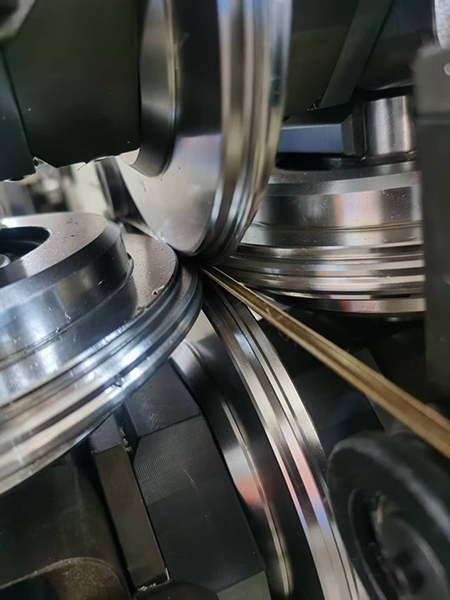
In today's milling industry, efficiency isn't just about speed—it's about precision and adaptability, and custom engineering is at the heart of this transformation. By designing equipment tailored to specific material properties and production goals, mills can drastically reduce waste and energy consumption. For instance, a custom gear system might be optimized for harder grains, minimizing downtime and maintenance compared to off-the-shelf solutions. This targeted approach allows facilities to push beyond generic benchmarks, achieving outputs that standard machinery simply can't match, all while keeping operational costs in check.
Another key aspect is how custom engineering integrates automation seamlessly into existing workflows. Rather than forcing mills to overhaul entire systems, engineers can retrofit sensors and controls that communicate in real-time, adjusting parameters like temperature and pressure on the fly. This isn't just plug-and-play tech; it's a bespoke setup that learns from production data, predicting maintenance needs before breakdowns occur. The result is a smoother, more responsive operation where human oversight is enhanced, not replaced, leading to fewer errors and a consistent product quality that builds trust with clients.
Beyond the machinery itself, custom solutions foster innovation by encouraging mills to rethink traditional processes. Engineers collaborate closely with plant managers to identify bottlenecks, whether it's in material handling or final packaging, and devise unique fixes—like a conveyor system designed for delicate products to prevent damage. This collaborative spirit not only boosts efficiency but also attracts skilled workers eager to engage with cutting-edge technology. In a competitive market, such tailored advancements become a mill's secret weapon, setting it apart as a leader in sustainability and productivity.
Unlocking Superior Product Quality Through Advanced Rolling Technologies
Imagine a world where every sheet of steel, every aluminum profile, or copper coil not only meets but consistently exceeds the tightest quality benchmarks. That's precisely what advanced rolling technologies bring to the table. Gone are the days when rolling was a rudimentary process limited by basic machinery; today, it's a sophisticated art form driven by precision engineering and smart automation. These cutting-edge systems incorporate real-time sensors, adaptive controls, and predictive analytics to fine-tune every pass of the metal, ensuring uniform thickness, flawless surfaces, and optimal material properties. By leveraging innovations like hydrostatic rolling and microstructural modeling, manufacturers can now achieve levels of consistency and performance that were once thought unattainable.
Take a closer look at how these technologies transform production lines. Advanced rolling isn't just about applying more force; it's about intelligent application. For instance, tandem mills equipped with digital feedback loops adjust parameters on-the-fly to counteract variations in raw materials or environmental conditions, slashing defects like warping or inclusions. This proactive approach minimizes waste and rework, directly boosting yield rates and cost-efficiency. Moreover, by integrating thermomechanical processing, these systems tailor the microstructure of metals during rolling, enhancing characteristics such as strength, ductility, and corrosion resistance. The result? Products that are not only high-quality but also tailored for specific applications, from aerospace components to automotive frames.
Ultimately, the impact of advanced rolling extends far beyond the factory floor. By delivering superior product quality, these technologies empower industries to innovate and compete on a global scale. Customers benefit from more durable, reliable goods, while businesses gain a competitive edge through reduced operational costs and enhanced brand reputation. As research pushes boundaries with AI-driven optimization and eco-friendly practices, the future promises even greater strides in unlocking quality. In essence, embracing advanced rolling is less about adopting new equipment and more about committing to a culture of excellence—where every roll of metal tells a story of precision, innovation, and unwavering quality.
Tailored Innovations That Accelerate Manufacturing Workflows
In the ever-evolving manufacturing landscape, companies are increasingly turning to bespoke technological solutions designed specifically to streamline their unique production processes. Unlike off-the-shelf software that often forces workflows into rigid molds, tailored innovations integrate seamlessly with existing systems, cutting down on manual interventions and reducing bottlenecks. By analyzing a facility's specific pain points—whether in assembly lines, quality control, or supply chain management—these custom tools automate repetitive tasks and enhance data visibility, allowing teams to focus on higher-value activities. The result is a more agile operation where real-time adjustments become possible, driving efficiency from the ground up without disrupting the core workflow.
What sets these innovations apart is their ability to adapt and scale alongside a company's growth, rather than becoming obsolete as needs change. By leveraging advanced analytics and machine learning algorithms, tailored systems can predict equipment failures before they occur or optimize material usage based on historical data, preventing costly downtime and waste. This proactive approach transforms reactive manufacturing into a predictive model, where decisions are data-driven and workflows are continuously refined. For instance, a custom IoT sensor network might monitor machinery health in real-time, sending alerts only when anomalies are detected, thus minimizing unnecessary maintenance checks and keeping production lines running smoothly.
Ultimately, the impact of these tailored solutions extends beyond mere speed; they foster a culture of innovation where processes are not just accelerated but also made more resilient and intelligent. By empowering workers with intuitive interfaces and actionable insights, companies can reduce errors and improve quality consistency, leading to higher customer satisfaction and competitive advantage. In a market where every second counts, embracing such customized technological advancements ensures that manufacturing workflows are not only faster but also smarter, setting the stage for sustained growth and adaptability in an unpredictable industrial environment.
Overcoming Industry Challenges with Flexible Mill Designs
Flexible mill designs have emerged as a game-changing solution, enabling industries to tackle persistent challenges such as fluctuating market demands and resource constraints head-on. By integrating adaptable machinery and modular layouts, businesses can shift production lines swiftly in response to new product variations or seasonal peaks, reducing downtime and boosting efficiency. This approach not only cuts operational costs but also minimizes waste, fostering a more sustainable and resilient manufacturing environment that thrives in today's competitive landscape.
One standout advantage is the enhanced agility these designs bring to legacy operations, often bogged down by rigid setups. For instance, in sectors like pharmaceuticals or food processing, where regulatory shifts and consumer trends evolve rapidly, customizable mills allow for seamless adjustments without extensive overhauls. This flexibility supports innovation, empowering companies to experiment with novel materials or processes, ultimately driving growth and maintaining a cutting-edge position in their respective markets.
Beyond mere adaptability, flexible mill designs promote long-term viability by future-proofing facilities against unforeseen disruptions, from supply chain bottlenecks to technological advancements. They encourage a proactive culture that values continuous improvement and staff engagement, as teams can reconfigure workflows more intuitively. This results in a more responsive and motivated workforce, ready to embrace change and overcome hurdles that once seemed insurmountable.
Selecting the Right Engineering Partners for Lasting Performance Gains
When it comes to engineering partnerships, the choice isn't just about who can deliver a quick fix or a one-off project. It's about finding collaborators who grasp the intricacies of your systems and are committed to driving sustained improvements. A strong engineering partner should dive deep into your operational challenges, offering insights that go beyond surface-level solutions. They need to align with your long-term vision, ensuring that every enhancement contributes to a robust foundation rather than creating future technical debt.
Look for partners who prioritize proactive problem-solving and continuous optimization. Instead of merely reacting to issues, they should engage in regular performance reviews and adapt strategies as your needs evolve. This dynamic approach helps maintain momentum, preventing stagnation and keeping performance gains consistent over time. By fostering a relationship built on transparency and shared goals, you can unlock efficiencies that persist through market shifts and technological advancements.
Consider how potential partners integrate with your team and culture. A lasting performance boost often stems from seamless collaboration, where external expertise complements internal strengths. Evaluate their track record for not just meeting targets but also for mentoring and knowledge transfer, empowering your own engineers to sustain improvements independently. In the long run, the right partnership becomes a catalyst for growth, turning short-term wins into a legacy of enhanced performance and resilience.
FAQ
Custom rolling mill engineering solutions integrate advanced technologies like AI-driven control systems and precision materials, allowing manufacturers to optimize production lines for specific alloys or products. This leads to reduced waste, improved product consistency, and faster throughput in operations.
By tailoring equipment to exact production needs, these solutions minimize downtime and energy consumption. For example, smart sensors can monitor roll wear in real-time, enabling proactive maintenance that prevents defects and ensures higher-quality output with fewer rejections.
In automotive manufacturing, a custom rolling mill was designed to produce ultra-thin, high-strength steel sheets for lightweight vehicle components. This allowed the manufacturer to meet strict emissions standards while maintaining durability, showcasing how tailored engineering drives performance gains.
Consulting involves deep analysis of a client's production goals, material specifications, and budget constraints. Engineers collaborate closely to design mills that address unique challenges, such as handling exotic metals or integrating with existing machinery, ensuring solutions are both innovative and practical.
Emerging tech like IoT and machine learning enables predictive analytics and automation, making mills more adaptive and efficient. This shift allows for dynamic adjustments during production, reducing human error and paving the way for smarter, sustainable manufacturing environments.
Custom solutions focus on specific production nuances—like achieving tight tolerances or processing niche materials—that generic mills can't address. This bespoke approach often results in higher ROI through optimized processes and long-term reliability, giving companies a competitive edge in specialized markets.
They enhance sustainability by minimizing material scrap and energy use through efficient designs. For instance, regenerative braking systems in custom mills can recycle energy, cutting operational costs and reducing the environmental footprint of manufacturing operations.
Success metrics include reduced production time, lower defect rates, and increased throughput. Businesses often track ROI through cost savings on maintenance and materials, along with improved product quality that meets or exceeds industry standards, ensuring tangible benefits from the investment.
Conclusion
In the competitive landscape of industrial manufacturing, Custom Rolling Mill Engineering Solutions stands out by revolutionizing metal forming with bespoke rolling systems. By tailoring innovations that accelerate manufacturing workflows, these solutions go beyond one-size-fits-all approaches to address specific production bottlenecks and material requirements. This focus on flexible mill designs enables companies to overcome industry challenges such as fluctuating demand and complex alloy processing, ensuring operations remain agile and resilient. Through advanced rolling technologies, manufacturers unlock superior product quality, achieving tighter tolerances and enhanced material properties that directly translate to better end-products. The strategic integration of custom engineering drives efficiency in modern mills, optimizing energy consumption, reducing downtime, and boosting overall throughput. Ultimately, these tailored innovations empower businesses to stay ahead in a dynamic market by delivering consistent, high-performance results that generic equipment cannot match.
Success with custom rolling mill solutions hinges on selecting the right engineering partners for lasting performance gains. By fostering collaborative relationships with specialized firms, manufacturers gain access to expertise that transforms theoretical designs into practical, high-yield systems. This partnership model ensures that every aspect—from initial concept to ongoing maintenance—is aligned with long-term operational goals, minimizing risks and maximizing return on investment. Custom engineering not only enhances current processes but also future-proofs facilities against emerging trends and regulatory changes. By leveraging innovative technologies and adaptive designs, companies can achieve a sustainable competitive edge, turning raw materials into premium products with precision and reliability. In essence, embracing tailored rolling solutions represents a proactive step toward manufacturing excellence, where continuous improvement and enhanced results become integral to business growth and market leadership.
Contact Us
Contact Person: Rayna
Email: [email protected]
Tel/WhatsApp: 86 -173 1474 6343
Website: https://www.grmrollingmill.com/