
Equestrian Clothing Supplier Guide to Selecting Quality Riding Apparel
2026-08-19
Choosing riding apparel that actually performs—not just looks the part—can feel like a maze of fabrics, fits, and finishings. Whether you’re stocking a boutique or kitting out a riding school, getting the details right matters more than most catalogs admit. That’s where OpeEquestrian comes in: a supplier guide built to help you cut through the noise and select quality riding apparel with confidence.
Fabric Choices That Endure Sweat, Friction, and Frequent Washing
Nylon and polyester get a bad rap in some circles, but for gear that has to survive daily sweat and rough use, they're hard to beat. Nylon offers high abrasion resistance and dries faster than almost any natural fiber, so it won't stay soaked after a hard workout. Polyester, especially in a dense weave, shrugs off repeated washing without losing shape or color, which matters when you're laundering the same pieces every few days.
Merino wool is another workhorse people often overlook. It handles sweat differently—absorbing moisture and releasing it slowly, which keeps odor down even after multiple wears. The finer microns (18.5 or less) resist the itch factor while still standing up to friction better than cotton. A merino-nylon blend, usually around 80/20, gives you the best of both: wool's odor control plus nylon's toughness at stress points like shoulders and cuffs.
Avoid anything with a high cotton content if you need durability. Cotton soaks up sweat, holds it against your skin, and the fibers break down under friction and hot wash cycles far sooner than synthetics or wool blends. For truly punishing routines—think trail running, climbing, or daily gym sessions—look for reinforced stitching and fabrics labeled as ripstop or with a high denier count, because those are built to take the abuse without pilling or tearing at the seams.
Fit Zones That Stop Chafing Without Limiting Leg Aids
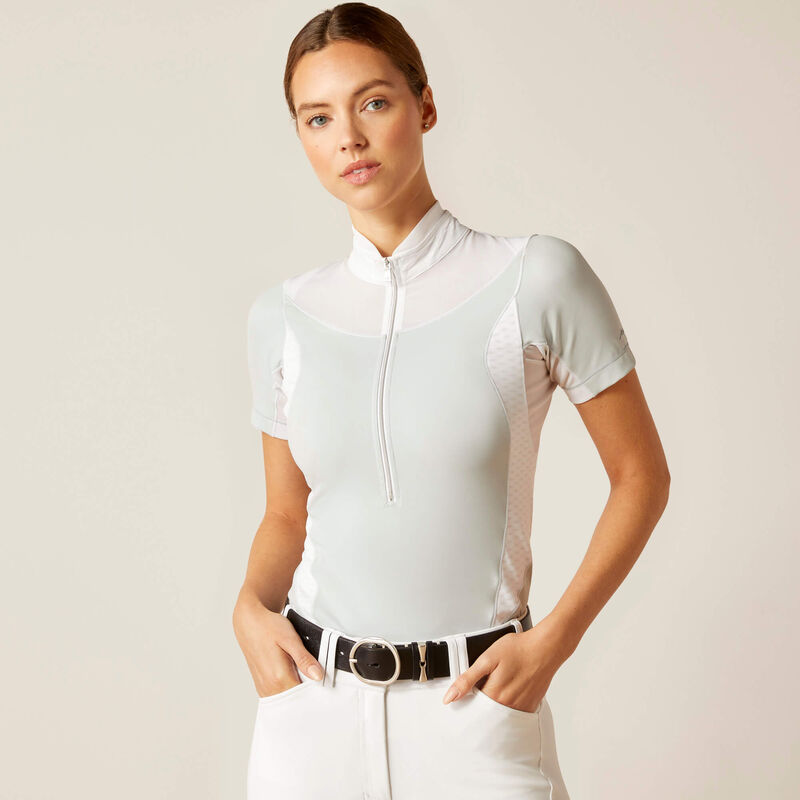
Most chafing isn’t caused by the saddle—it’s caused by fabric that fights your position. The fit zones on these tights are built around the three places your leg actually touches the saddle: inner calf, mid-thigh, and the back of the knee. Each zone uses a different knit density, so the fabric lies flat instead of folding into creases when you shorten your stirrups.
Silicone grip is printed as small hexagonal dots rather than a solid sheet, which keeps the leg aid clear. The dots flex independently, so you can apply a whisper-light calf squeeze without the stickiness lag that makes your horse feel dull to the leg. At the same time, the grip breaks up enough to let air flow through, cutting down on sweat-related rubbing during humid hacks.
Because the stretch panel behind the knee is cut on the bias, it doesn’t bind when you drop your heel or drive your weight down through your thigh. The hem sits smooth under tall boots, with no zipper or thick elastic to dig in. You’ll notice the absence of irritation before you notice the fit—proof that a good riding tight should disappear against your skin from warm-up to cool-down.
Safety Features Hidden in High-Quality Riding Apparel
Most riders fixate on the jacket's silhouette or the price tag, but the real engineering sits deeper. High-end apparel hides CE-rated armor in the shoulders, elbows, and back so cleanly that you'd never guess it's there until you hit the tarmac. The pads follow joint articulation instead of bulging against the fabric, and some brands use viscoelastic foam that hardens on impact while staying flexible during normal movement.
Reflective detailing has quietly evolved too. Gone are the shiny silver strips that scream "commuter gear"; instead, retroreflective threads are woven directly into the textile or tucked inside cuffs, collars, and zipper plackets. By day the jacket looks like casual streetwear, but at night a car's headlights reveal a subtle lattice that keeps you visible from three hundred meters away.
Then there are the less obvious lifesavers: abrasion-resistant blends like Cordura or Dyneema layered only in slide zones, emergency contact tags stitched inside pockets, and even airbag-compatible designs that deploy from a hidden tether. Some pants lock to jackets with a short zipper so the lower back never gets exposed. None of these features are stamped on the outside, but they make the difference between walking away and a long recovery.
Stitching and Seams That Tell You If Gear Will Last
Run your fingers along a seam and pay attention to what's actually holding it together. Cheap thread is thin, shiny, and often snaps when you pick at it. Durable gear uses heavier bonded nylon or polyester—usually with a slightly waxy feel—and you'll see two parallel rows of stitching instead of one. That dual line isn't just for looks; it spreads tension across a wider area so the fabric doesn't tear at the needle holes.
Flip the gear inside out if you can. A flat-felled seam, where the raw edge is folded and sewn flat, or a French seam that encloses the edge, is a strong sign someone cared about longevity. On backpacks and harnesses, look for bar tacks—those dense zigzag stitches at stress points like strap attachments and zipper ends. If you spot loose loops, skipped stitches, or thread that's already fuzzy, that seam will open up long before the fabric wears out.
Give the seam a gentle pull between your hands. On well-made gear, the stitch line shouldn't gap or let light through. Also check the stitch density: too few stitches per inch means each one carries more load, while too many can perforate the fabric like a tear-off stamp. The sweet spot for heavy nylon or canvas is usually around six to eight stitches per inch, consistently spaced. Inconsistent length is a bigger warning sign than a simple missed stitch.
Design Details That Perform in the Ring and the Barn
The stitching along the stress points isn't there for looks. It follows the exact lines where a rider's weight shifts during a tight rollback or a quick dismount to open a gate. The fabric has a slight give, but not so much that it catches on stall latches or saddle horns. There's a reinforced panel on the inner knee that you won't notice until you're kneeling in the aisle to wrap a hoof, and then you'll wonder why every pair of breeches doesn't have it.
Pockets are placed where they won't interfere with a rein hand or a pitchfork grip. A hidden zipper on the thigh fits a hoof pick without bulging under show chaps. The waistband sits higher in the back, so it stays put when you're leaning over to check a tendon or reaching up to bridle a tall horse. Even the hem is cut with a slight curve, so it falls cleanly over paddock boots but doesn't drag in the shavings.
The hardware is plain brass or matte nickel, no bright buckles that reflect sunlight into a horse's eye. Every snap and ring is load-tested for the moment you have to tie a hay net to the trailer and the wind picks up. These aren't decorative touches; they're the reason the same pair can go from a morning schooling session to an afternoon of mucking out without a second thought.
Supplier Questions That Reveal True Apparel Quality
Before you place a bulk order, ask your supplier how they handle raw material inspection. A factory that can walk you through their fiber testing, shrinkage control, and colorfastness checks—without hesitation—usually has nothing to hide. Watch for vague answers like “we follow standard practice.” That phrase often means they cut corners on fabric grading or skip pre-production lab dips.
Another revealing question is about their defect rate and what happens when a shipment falls short. A quality-conscious supplier will give you a specific number, like “under 2% major defects,” and explain their rework or replacement process. If they dodge the question or promise perfection, that’s a red flag. Real apparel production always has some margin of error; honesty about it signals stronger internal controls.
Finally, ask to see their sewing specification sheets and QA checkpoint photos from a recent run. Suppliers who document stitch density, seam allowances, and button pull tests care about durability, not just appearance. If they only send polished marketing samples, you might be buying a look—not a garment that survives the wash.
FAQ
Look beyond the fabric weight. Quality breeches use a blend with enough stretch to follow the leg but also a high recovery percentage, usually from a reputable mill. Check the inner leg panel: if it's a single layer of thin knit with no reinforcement, it will wear through quickly. Full-seat versions should have the grip material bonded, not simply stitched around the edges, and the waistband needs a hidden elastic that doesn't roll. Cheaper pairs often fail at the knee seams within months, while well-made ones last years of daily rides.
Ask for their sample lead time and whether they can match a physical swatch rather than just a Pantone code. A factory that hesitates to send a pre-production sample or wants full payment before sampling is a red flag. Ask how they handle dye lot variations, since quality suppliers keep a record of each batch and can reproduce colors across seasons. Also check if they have experience with technical fabrics like CoolMax or Schoeller, not just basic cotton.
It's not only about unit price. Domestic suppliers usually offer smaller minimums and faster restocking, which matters for seasonal show gear. Overseas suppliers can deliver better margins on larger runs but add freight time and potential tariff surprises. A practical approach is to use domestic for quick-turnaround basics and overseas for private-label jackets where you can plan six months out. Just make sure any overseas partner has an agent or clear communication channel in your time zone.
Technical stretch wovens with a bit of elastane or a bi-stretch weave are the real workhorses, they move with the rider and resist wrinkling in the ring. Fabrics like a wool-polyester blend with a tight twill hold their shape but still breathe. Avoid anything that feels stiff or plastic-like; it may photograph well but will make the rider sweat and restrict shoulder movement. If the label says 'dry clean only' and the fabric is very lightweight, ask if it has been tested for abrasion against saddle flaps.
Never compromise on certification marks. For helmets, look for current ASTM/SEI or CE EN1384 standards, not outdated labels. Body protectors need BETA level 3 or the latest EN13158. Check the manufacturing date, since foam liners degrade over time even in storage. Also confirm the supplier provides a sizing guide with head circumference in centimeters, not just S/M/L, because a poorly fitted helmet is almost as dangerous as no helmet. A reputable supplier will have liability insurance and batch testing reports available on request.
Lean into fit expertise and local service. Stock a curated range where you have personally tested the rise on breeches and the shoulder width on jackets, and offer free hemming or heat-seal logo application. Create a fitting guide based on actual customer measurements, not brand charts. Large retailers cannot easily replicate the trust of a rider who knows you will swap a pair of boots if the calf is too tight after two weeks. Also host seasonal try-on events with a local saddle fitter, since this builds loyalty that price wars cannot beat.
Watch for subtle downgrades: the zipper tape changes from YKK to an unbranded one, the stitching density drops from 8 to 6 stitches per inch, or the inner lining fabric feels thinner than the original sample. Sometimes the weight of the garment decreases by 10 to 15 percent because they switched to a cheaper interlining. Keep a sealed master sample from your first approved order and compare every new shipment against it. If a supplier resists third-party inspection or suddenly offers a lower price for 'the same quality', that is a warning sign.
Develop a central fit model for each key market, say a UK size 10 and a US size 6, and require every factory to use the same grading rules. Do not rely on 'standard' charts; equestrian riders have different body proportions than general fashion, especially in the thigh and upper arm. Provide measurement tolerances, for example plus or minus 1 cm on waist and plus or minus 0.5 cm on inseam, and reject lots outside that range. For a supplier, consistent sizing reduces returns more than any marketing claim.
Conclusion
Riding apparel that holds up over time starts with fabric that can take a beating. Look for blends that wick moisture, resist pilling, and keep their shape after dozens of washes—cheap cotton or flimsy synthetics will quickly show wear on inner knees and seat. Equally important is how the garment sits in the saddle. Breeches and tights need carefully mapped seams and stretch panels that move with your leg, not against it, so you avoid rubs behind the knee or at the waist without losing the close contact needed for subtle leg cues. Many riders overlook the quiet safety work built into premium gear: reinforced knee patches, gripper silicone that stays put, and subtle reflective accents for low-light hacks. But none of that matters if the stitching fails. Turn the garment inside out and check for flat, even seams, double stitching at stress points, and bar tacks at pocket corners—these details signal whether a pair of breeches will survive a season or start fraying after a month.
Beyond construction, smart design decisions separate gear that works in both the show ring and the barn aisle. Zippers with garage covers, glove-friendly closures, and phone pockets placed where they won't interfere with your leg are small touches that make daily use easier. A truly reliable supplier won't shy away from your questions, either. Ask where the fabric is sourced, how they test for abrasion and colorfastness, and what their return rate looks like on riding breeches. Vendors who give vague answers or focus only on style are often hiding thin materials and weak seams. The best suppliers will talk openly about their quality control, offer sample orders for testing, and stand behind their products with clear warranties. When you combine honest fabric specs, rider-informed fit, hidden safety features, and durable stitching with a supplier who answers hard questions, you end up with apparel that performs ride after ride—and saves you money in the long run.
Contact Us
Contact Person: Keven Tong
Email: [email protected]
Tel/WhatsApp: +86 18666477707
Website: https://www.ope-technology.com