

Expansion Valve Manufacturer Insights for Choosing Reliable Thermal Expansion Valves
2026-11-20
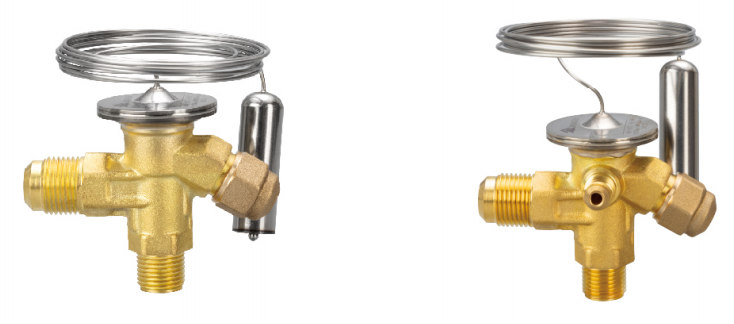
Most cooling failures don’t start with the compressor. They start with a thermal expansion valve that was never matched to the system’s real operating range. A reliable thermal expansion valve should hold superheat steady during partial load, rapid pull-down, and changing ambient conditions—not just on a single test point. That consistency usually traces back to how the expansion valve manufacturer designs, calibrates, and validates each batch. In this guide, we’ll break down the selection criteria that matter in the field and show how partners like HONGSEN approach consistency without overcomplicating the spec.
Superheat Drift Often Begins on the Production Line
A lot of field complaints about superheat drift trace back to details that never show up on a wiring diagram. Small variations in how a thermal bulb is clamped, how much solder wicks into a joint, or how a cap tube is routed during final assembly can shift the refrigerant feed just enough to matter later. These are not dramatic defects; they are the kind of tiny differences that pass a run test but show up after the unit has cycled through a few seasons.
Once those production-line tolerances stack in the same direction, the system leaves the factory with a narrow operating window. A technician who checks superheat months later may assume the charge is wrong or that the metering device has drifted, when the real cause was already built into the unit. That is why identical model numbers can behave differently in the same house on the same afternoon.
Material Choices That Predict a Longer Service Life
The quiet durability of a product often starts before it reaches your hands, in the unglamorous world of tensile strength and corrosion resistance. A steel alloy with a slightly higher nickel content might look identical to its cheaper cousin on a showroom floor, but under years of thermal cycling it resists the micro-cracks that eventually turn into visible fractures. Likewise, a polymer chosen for its resistance to UV degradation rather than its initial gloss will keep its structural integrity long after the shine has faded. These decisions rarely make headlines, yet they quietly separate objects that age gracefully from those that crumble on schedule.
Beyond the raw specifications, there is a deeper logic in pairing materials that share similar expansion rates or chemical inertness. Brass fittings mated to copper piping, for example, avoid the galvanic corrosion that would plague a mismatched aluminum connection. In outdoor furniture, powder-coated aluminum frames paired with stainless steel fasteners outlast painted steel by a wide margin, not because any single component is extraordinary, but because the materials refuse to fight each other. This compatibility, while invisible to the average buyer, becomes the real predictor of whether a product will still be functional a decade from now.
Perhaps the strongest signal of longevity is the deliberate embrace of materials that look worse before they fail. Solid wood scratches and dents, but those marks remain superficial for decades; veneered particleboard looks pristine until a single chip exposes its crumbling core. Cast iron develops surface rust that can be scrubbed away, while thin stamped steel rusts through from the inside. When a manufacturer chooses a material that ages visibly, it signals a confidence in the underlying structure—a confidence that rarely accompanies designs built for a two-year replacement cycle.
Why Nominal Capacity Alone Misleads Valve Selection
Flow coefficient charts and published Cv numbers tend to assume a clean, fully open valve under steady conditions. In practice, a nominal capacity rating tells you almost nothing about how the valve behaves at 30% travel, when cavitation begins, or when the fluid is a slurry rather than water. Two valves can share an identical Cv and still demand completely different actuators, line sizes, and maintenance budgets once installed.
The more revealing question is not "how much can this valve pass?" but "how much control do I actually have across the range I care about?" A high nominal capacity often comes from an oversized body or a trim design that looks efficient on a datasheet but turns mushy near the seat. When the process runs below 40% open for most of its life, that surplus capacity becomes a liability: hunting, erosion, and poor repeatability show up long before the nominal figure ever matters.
Selection improves once you stop treating capacity as a single score. Look instead at installed gain, pressure recovery, and the shape of the flow curve in the region where the valve will spend real operating hours. In many cases, a smaller valve with a lower nominal Cv will outperform a larger one simply because it keeps the plug in a stable, controllable position instead of forcing it to throttle near the stops.
Calibration Habits You Can Spot Before Installation
Some installers chase a perfectly centered bubble as if it were a finish line. Others tap the level twice, glance at the vial from one angle, and call it done. But before a single bracket touches the wall, you can already see how someone thinks about accuracy. Watch how they hold the tool, whether they rotate it end-for-end to double-check, or whether they trust the first read without question. These small rituals reveal more than skill—they show a person's relationship with uncertainty.
A seasoned hand rarely rushes the zero point. They might warm the level in their palms for a moment, wipe the contact surface, or rest it on a known flat reference before the real measurement begins. You will notice them repeating the same motion at every step, not out of habit, but because they understand that calibration is never a one-time event. It is a conversation between the tool, the surface, and the person willing to listen.
Then there are the quiet checks that happen when no one is watching: flipping the level left-to-right, pressing the edge with just enough pressure, squinting at the meniscus as if coaxing the truth out of the liquid. These behaviors do not come from manuals. They come from having been fooled before, and deciding not to be fooled again.
Field Failure Patterns That Point Back to Manufacturing Choices
Some failures only make sense after you look at the plating line. Intermittent opens that appear after a few hundred thermal cycles often trace back to uneven copper deposition in high-aspect-ratio vias. If the throwing power was tuned for speed instead of uniformity, the barrel wall ends up thinner near the center. Field returns then show cracks at the same location, which is a manufacturing signature rather than a design weakness.
Electrochemical migration and dendritic shorts have a similar story. When a board fails in humid service, the fastest conclusion is contamination, but the deeper pattern usually involves rinse chemistry, solder mask adhesion, or exposed glass fibers at routed edges. Certain laminate fillers and oxide treatments leave residues that only become mobile after repeated condensation. Those residues move along specific paths, so the failure map on a returned assembly mirrors a process variable: dwell time, bath temperature, or even the direction boards were hung.
Another visible clue is delamination around buried vias or along weave intersections. Field units that develop open circuits after vibration often show microvoids at the resin-copper interface. Those voids don't come from the vibration event itself; they come from lamination pressure and resin flow choices made months earlier. When enough units return with the same cross-section location, the pattern points upstream to process control limits that were accepted too early.
Traceability Gaps That Quietly Undermine Valve Reliability
Valve traceability often looks solid on paper because certificates and inspection reports are filed, but the chain snaps at the points nobody audits. A casting heat number gets machined off a stem, or a forklift driver tips several leftover valve bodies into one bin to save space, and the assembly log records only the batch number that happens to be on top. When a seat starts weeping after a few hundred cycles, the plant is left guessing whether the cause was chemistry, heat treatment, or a dimension that drifted at the edge of tolerance.
The records that do survive tend to be too thin to support reliability decisions. A test report may say only that a valve passed a shell and seat test, without the actual leakage rate, test duration, media temperature, or the name of the technician who ran it. That missing texture matters when a failure repeats six months later and nobody can tell whether performance is degrading slowly or changed suddenly. Repairs and field modifications widen the gap further: a lapped disc, a swapped gasket, or a shortened spring may never make it back into the maintenance history, so the next engineer works from a parts list that no longer describes the valve on the skid.
These gaps rarely cause an immediate shutdown, which is exactly why they persist. They corrupt the feedback loop quietly. A reliability team may attribute repeated leakage to process upsets while the true contributor is a supplier that changed seal material without notification, or a batch of castings with scattered porosity. Without a continuous line from melt to maintenance, root cause analysis collapses into anecdote, and the same failure moves from one unit to the next wearing a different set of symptoms.
FAQ
It is rarely a single factor. The pairing of the needle and seat materials, diaphragm fatigue life, weld integrity, and whether the manufacturer actually helium-tests every body all matter. Many early field failures come from debris jamming the needle or charge loss in the sensing element, so checking internal filtration and the charge chamber seal process often tells you more than a nominal capacity table.
Refrigerant compatibility drives the diaphragm material, the sensing charge, and the seal compounds. A high-pressure refrigerant like R-410A demands a more robust body, while propane or other flammable refrigerants require dedicated sealing and certification paths. Treating the valve as a universal part is one of the fastest ways to shorten its life.
External equalization becomes important once the pressure drop across the evaporator or distributor exceeds roughly 0.2 bar. Above that, an internally equalized valve sees a false evaporator pressure and tends to run higher superheat, leaving part of the coil starved. For compact single-circuit coils with low pressure drop, internal equalization is simpler and usually sufficient.
Different manufacturers may rate capacity at different evaporating temperatures, condensing temperatures, and subcooling levels. That means two valves with the same nominal tonnage can behave quite differently in the same system. Instead of comparing catalog headline numbers, ask for capacity tables built around your actual operating envelope.
Hunting is often blamed on the valve, but the bulb location, bulb insulation, refrigerant distribution, and system load swings are frequently the real triggers. In some cases an aggressively charged sensing element or an over-responsive valve can amplify instability, but installation details and piping-induced flash gas usually deserve attention first.
Ask whether the manufacturer runs in-house performance test stands, keeps batch traceability, and can support custom charges or capillary lengths when needed. A supplier worth relying on will share real performance curves at off-design conditions and will not hide behind one generic capacity number for every application.
Price alone is a poor filter. Low-cost valves often save money on diaphragm materials, machining tolerances, or leak-test coverage, and those savings become refrigerant leaks, poor control, or shorter service intervals. Since the valve is a small fraction of system cost, the more expensive risk is usually downtime and product loss after a failure.
Keep the system clean and dry, use a proper liquid-line filter-drier, mount and insulate the sensing bulb correctly, and avoid running with flash gas from low subcooling. Checking superheat periodically catches drift before it becomes a failure, and selecting a valve with a replaceable cartridge makes future maintenance far less disruptive.
Conclusion
A thermal expansion valve gives itself away long before installation if you know what to look for. Superheat drift that appears random in the field frequently starts with tiny inconsistencies on the production line—spring rates that vary slightly, a diaphragm formed a few thousandths off, or a body machined without tight enough control. Those small deviations magnify once the valve faces changing evaporator loads. That is also why nominal capacity can be a weak guide. A valve may hit its rated performance in a steady test loop, yet become unstable at partial load or during rapid pull-down if the power element charge, orifice, and seat geometry were optimized for a single operating point. Asking a manufacturer how a valve behaves at low load, not just at catalog conditions, often reveals more than the printed capacity number.
Material and calibration decisions determine whether that initial performance holds up. Stainless steel power elements, hardened seats, and seals selected for the actual refrigerant and oil chemistry resist fatigue and erosion longer than generic alternatives. Pre-installation clues matter as well: individually adjusted or batch-verified valves behave differently from mass-produced assemblies with a fixed spring setting. When failures do occur, the pattern usually points backward—hunting, charge loss, and seat wear often trace to thin diaphragms, inconsistent needle finishing, or uneven calibration from the factory. Traceability ties all of this together. If a serial number cannot connect a valve to its material lot, test records, and calibration data, a defect can spread quietly across jobsites with no clean way to isolate affected units. Manufacturers that treat those records as part of the product give you a clearer path when a system must be diagnosed or contained years later.
Contact Us
Contact Person: KOPASS HO
Email: [email protected]
Tel/WhatsApp: 8613606566112
Website: https://www.hongsenref.com/