

Feeding System Solutions: Revolutionizing Automated Production Lines
2026-05-07
In modern manufacturing, efficiency hinges on seamless material flow. Feeding system solutions are quietly reshaping automated production lines, eliminating bottlenecks and enabling precision at scale. Yet not all systems deliver on their promise—until now. Fanchang Machinery brings a fresh approach, engineered to outperform and adapt. Discover how smart feeding technology is becoming the heartbeat of tomorrow's factories.
Rethinking Material Flow in Modern Manufacturing
Modern manufacturing is no longer just about moving parts from point A to point B; it's about orchestrating a dynamic, information-rich ecosystem where material flow is a strategic asset. The linear, push-based models of the past are giving way to interconnected systems that sense demand, adapt in real time, and even predict disruptions before they occur. This shift demands a fresh look at how materials traverse the factory floor, not as a standalone logistics problem but as an integral part of value creation.
At the heart of this rethinking lies the convergence of digital twins, autonomous vehicles, and decentralized decision-making. Instead of relying on centralized control, factories are adopting agent-based architectures where materials themselves carry processing instructions and negotiate their path through production. This blurs the line between physical and digital, enabling flow patterns that are both more resilient and radically more efficient, cutting down work-in-process inventories and slashing lead times.
Yet, embracing this new paradigm isn't simply a technology upgrade; it's a cultural and organizational challenge. It requires cross-functional teams that view material flow as a continuous improvement canvas, using data not just to monitor but to fundamentally redesign processes. The factories that succeed will be those that treat flow as a living system—constantly learning, self-optimizing, and responsive to both human insight and machine intelligence.
Precision Feeding: The Core of Seamless Assembly
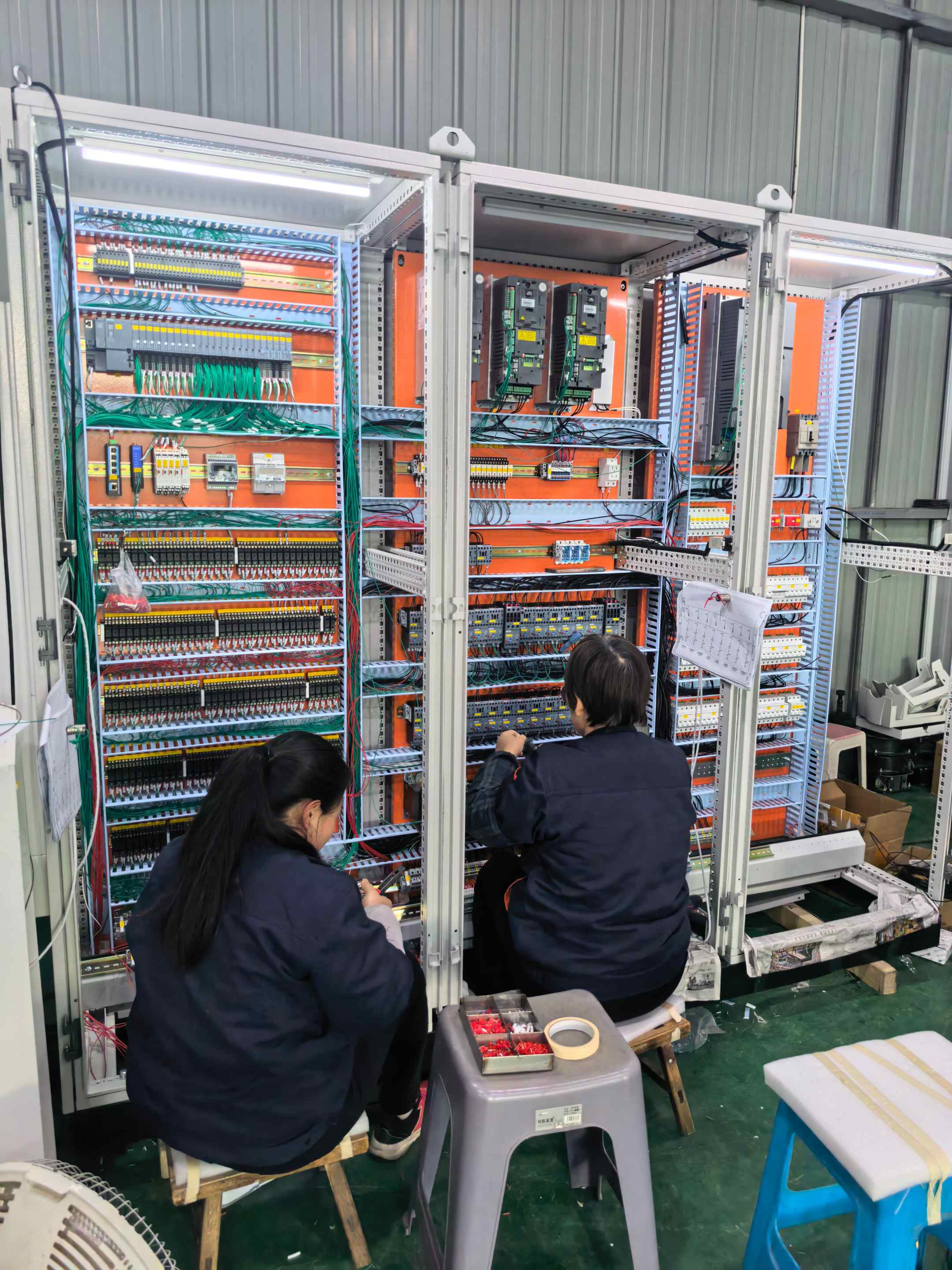
In automated manufacturing, the way components are delivered to the assembly point often determines the rhythm and reliability of the entire line. Precision feeding isn’t just about moving parts—it’s about delivering them at the exact moment and orientation required, with zero margin for error. When the feed mechanism is tuned to the specific geometry and material of each part, misfeeds and jams become rare exceptions rather than daily frustrations. This level of control transforms a potentially chaotic process into a calm, repeatable dance, where every piece arrives exactly where it should, ready for the next operation.
The real strength of precision feeding lies in its ability to adapt without sacrificing speed. Modern systems use vibration, centrifugal force, or step-feeding principles, but the true differentiator is the intelligent design behind the tooling and lane configurations. By carefully profiling guide rails and escapements, even delicate or asymmetrical parts can be singulated and oriented with surprising gentleness. This means fewer scratches, less waste, and a dramatic drop in the need for operator intervention. It’s the kind of quiet efficiency that goes unnoticed when everything works perfectly, but immediately felt when it’s compromised.
Beyond the hardware, precision feeding is increasingly infused with feedback that makes it self-correcting. Sensors that detect orientation or backlog can adjust feed rates on the fly, syncing the supply of parts to the true demand downstream. This closes the loop between bulk storage and final placement, creating a system that breathes with the assembly cycle rather than pushing against it. The result is a seamless connection that feels almost intuitive, where the feeder becomes an invisible partner in the production flow, never the bottleneck.
Custom-Engineered Systems for Complex Parts
When off-the-shelf solutions can’t keep up with the demands of highly specialized components, custom-engineered systems step in to close the gap. These systems are built from the ground up around the unique geometry, material requirements, and production volumes of each part—often integrating multiple processes like precision machining, additive manufacturing, and automated inspection into one seamless workflow. The result isn’t just a machine, but a purpose-built environment that adapts to the part rather than forcing the part to fit a generic process.
Designing for complexity starts with a thorough understanding of the part’s function and failure points. Engineers collaborate directly with manufacturers to reverse-engineer existing constraints, then propose architectures that consolidate operations, reduce handling, and eliminate variables that cause scrap. Whether it’s a turbine blade with internal cooling channels or a surgical implant with porous surfaces, the system is configured to repeatably hit tolerances that would otherwise require manual intervention or costly test runs.
Beyond technical capability, custom systems offer a different economic logic. Instead of spreading risk across multiple standard machines and hoping they coexist, companies invest in a single, validated cell that locks in quality from the first cycle. This reduces lead times, simplifies training, and often uncovers latent productivity gains—because when you design around the part, you stop fighting the process and start refining it.
From Manual to Autonomous: A Feeding Evolution
Feeding routines once demanded constant human presence, whether on farms or in homes. The clatter of buckets, the rhythm of pouring, and the watchful eye of the caretaker were inescapable. This hands-on method, while intimate, tied up time and left little room for precision. Mistakes were common: overfeeding, underfeeding, and missed schedules all took their toll on health and output.
The first wave of automation brought timers and basic dispensers, relieving the most repetitive tasks. Suddenly, meals could arrive without a person in sight. Sensors crept in next, measuring portion sizes and logging consumption. These devices turned feeding into a science, reducing waste and flagging unusual patterns. Yet they still lacked adaptability, operating on rigid scripts rather than genuine need.
Today, autonomy is reshaping the act entirely. Smart systems analyze body condition, activity levels, and even stress markers to tailor meals in real time. They learn preferences and adjust schedules collaboratively, blending data from multiple sources. It is no longer just convenience; it is a dialogue between living beings and machines, where care becomes proactive. The shift marks not just a change in method, but a deeper understanding of nourishment itself.
Smart Integration: Aligning Feeders with Robotics
Achieving true synergy between feeders and robotic systems isn't just a technical checkbox—it’s the heartbeat of modern automation. The challenge lies in the subtle dance of timing, where a fraction of a second misalignment can cascade into production halts. Our approach strips away the complexity, using adaptive learning to let feeders anticipate robotic movements rather than blindly following scripts. This dynamic coupling slashes idle time and eliminates the need for constant recalibration.
It’s one thing to feed components; it’s another to do so with the finesse of a seasoned technician. We’ve moved past the old paradigm of rigid mechanical links and embraced a more fluid handshake between hardware and software. Vision-guided adjustments mean the feeder knows exactly when to release a part, adjusting for wear, variance, and even the robot’s current payload. The result feels almost intuitive—a palletizing arm never waits, and a pick-and-place cell never stutters.
Underneath this seamless operation is a layer of gritty problem-solving that often goes unnoticed. Real-world production floors aren’t pristine labs; they’re chaotic environments with vibrations, dust, and unpredictable input. Our integration logic thrives on this messiness, filtering noise and prioritizing reliability over theoretical precision. The kind of uptime gains that quietly transform a line’s profitability, without ever needing a reboot or a manual override.
Resilient Design for Continuous Production Demands
In manufacturing sectors where downtime isn’t an option, resilient design becomes more than a safety net—it’s the backbone of operational strategy. The goal is to anticipate failures before they cascade, weaving redundancy and adaptability directly into the production line. This isn’t just about backup equipment; it’s about engineering systems that degrade gracefully, reroute workloads instantly, and keep processes humming even when components fail.
Core to this approach is modularity. By compartmentalizing functions, you limit the blast radius of a fault. Coupled with intelligent load balancing and real-time telemetry, the system can make autonomous decisions, shifting tasks to healthy nodes or dialing down non-critical operations to preserve essential output. Material flow, power, and data paths are designed with alternate routes, ensuring that a single blockage or outage doesn’t halt the entire chain.
The payoff goes beyond mere uptime. Resilient systems foster a culture of continuous improvement, where stress tests and chaos engineering reveal weak points without fear of catastrophic loss. Over time, the line becomes self-healing and adaptive, able to ramp up or reconfigure on the fly to meet shifting demand without missing a beat. That’s the real competitive edge: production that bends but never breaks.
FAQ
They streamline the supply of parts or materials to assembly stations, ensuring smooth, continuous production without manual delays.
Unlike older fixed-speed feeders, modern systems use smart sensors and adaptive controls to adjust flow in real time, reducing jams and accommodating varied part geometries.
Yes, flexible systems with quick-change tooling and vision-guided robotics can handle diverse components with minimal setup, making them ideal for mixed-model production.
Automotive, electronics, and packaging industries see the biggest gains, as they require high-speed, precise component placement and assembly.
By synchronizing part delivery with robot pick-and-place cycles, downtime is cut, and throughput rises, as robots don’t wait for parts and feeders don’t overproduce.
Vision systems inspect orientation and quality of each part before feeding, so only correctly aligned, defect-free components reach the assembly line, reducing rejects.
Not necessarily—modular designs allow simple component swaps and scalability; remote monitoring tools enable predictive maintenance, so uptime stays high.
Conclusion
Modern manufacturing is shedding rigid, linear material handling in favor of dynamic and adaptive feeding solutions. By rethinking how components move through a facility, companies are dismantling bottlenecks that once constrained throughput. The shift isn't just about speed—it's about creating a responsive flow that adjusts to real-time demand, part variability, and line reconfigurations. Precision feeding stands at the heart of this transformation, ensuring that each piece, no matter how delicate or irregular, arrives exactly where and when it's needed. Custom-engineered systems tackle the quirks of complex parts—asymmetric shapes, fragile surfaces, or entangled geometries—that off-the-shelf equipment simply can't handle. These tailored mechanisms combine clever orientation, vibration, and gentle guidance, turning chaos into a disciplined stream of components ready for seamless assembly.
The journey from manual loading to autonomous feeding unlocks consistency and frees operators for higher-value tasks. As feeders evolve from isolated machines into intelligent nodes within a connected ecosystem, smart integration with robotics and vision systems becomes the linchpin. Sensors, real-time tracking, and adaptive algorithms harmonize part delivery with robotic pick points, eliminating misalignments and reducing cycle times. This cohesion isn't a luxury—it's the backbone of resilient design built to withstand continuous production demands, from high-mix low-volume runs to around-the-clock pressure. When interruptions occur, intelligent feeders self-correct or flag issues before they cascade, preserving uptime in unforgiving environments. Through these interwoven advances, feeding system solutions are rewriting the rules of automated production, turning a once-overlooked support function into a strategic driver of efficiency and quality.
Contact Us
Contact Person: Darye WANG
Email: [email protected]
Tel/WhatsApp: 86-13501017897
Website: https://www.fcntd.com/