

High Pressure Hydraulic Ceramic Filter Press Piston Pump Solutions for Enhanced Efficiency
2026-08-04
In high-stakes industrial filtration, every drop of efficiency counts—and pump performance is the silent make-or-break factor. That’s where Sinou’s high-pressure hydraulic ceramic filter press piston pump steps in, purpose-built to turn pressure into productivity. With a design that thrives under punishing cycles and slurries, this solution cuts downtime and energy waste while squeezing out more filtrate per stroke. Ready to rethink what your filter press can achieve? Let’s dive into the engineering that makes it happen.
Core Mechanics Behind High-Pressure Hydraulic Piston Pumps
At the heart of every high-pressure piston pump lies a rotating cylinder block housing a set of reciprocating pistons. These pistons are driven by a swashplate or a bent-axis mechanism, which converts rotational input into linear motion. As the cylinder turns, each piston cycles through suction and discharge strokes, precisely timed by the pump's porting system. The geometry of the swashplate angle directly dictates stroke length and, consequently, displacement. This mechanical marriage of rotation and oscillation is what enables continuous, high-pressure flow with minimal pulsation when designed correctly.
The sealing and lubrication strategy is equally critical. Unlike low-pressure systems, these pumps rely on hydrostatic and hydrodynamic bearings to manage the extreme loads between pistons and their bores, as well as between the cylinder block and valve plate. A thin, carefully balanced oil film prevents metal-to-metal contact, reducing wear while maintaining volumetric efficiency. Advanced designs often incorporate pressure-balanced port plates and specialized coatings to minimize leakage and friction. This self-lubricating aspect is what sets piston pumps apart, allowing them to operate reliably at pressures exceeding 400 bar without external lubrication circuits.
What makes the system truly robust is the integration of variable displacement control. By adjusting the swashplate angle—often through a servo piston linked to a pressure-sensitive compensator—the pump can regulate output flow on demand. This not only saves energy but also reduces heat generation. The feedback loop is mechanical and instantaneous: when system pressure rises, the compensator tilts the swashplate to shorten the piston stroke, cutting flow until a balance point is reached. It's a self-regulating principle that underpins the pump's adaptability across applications ranging from mobile hydraulics to heavy industrial presses.
Why Ceramic Filter Presses Demand Robust Pump Solutions
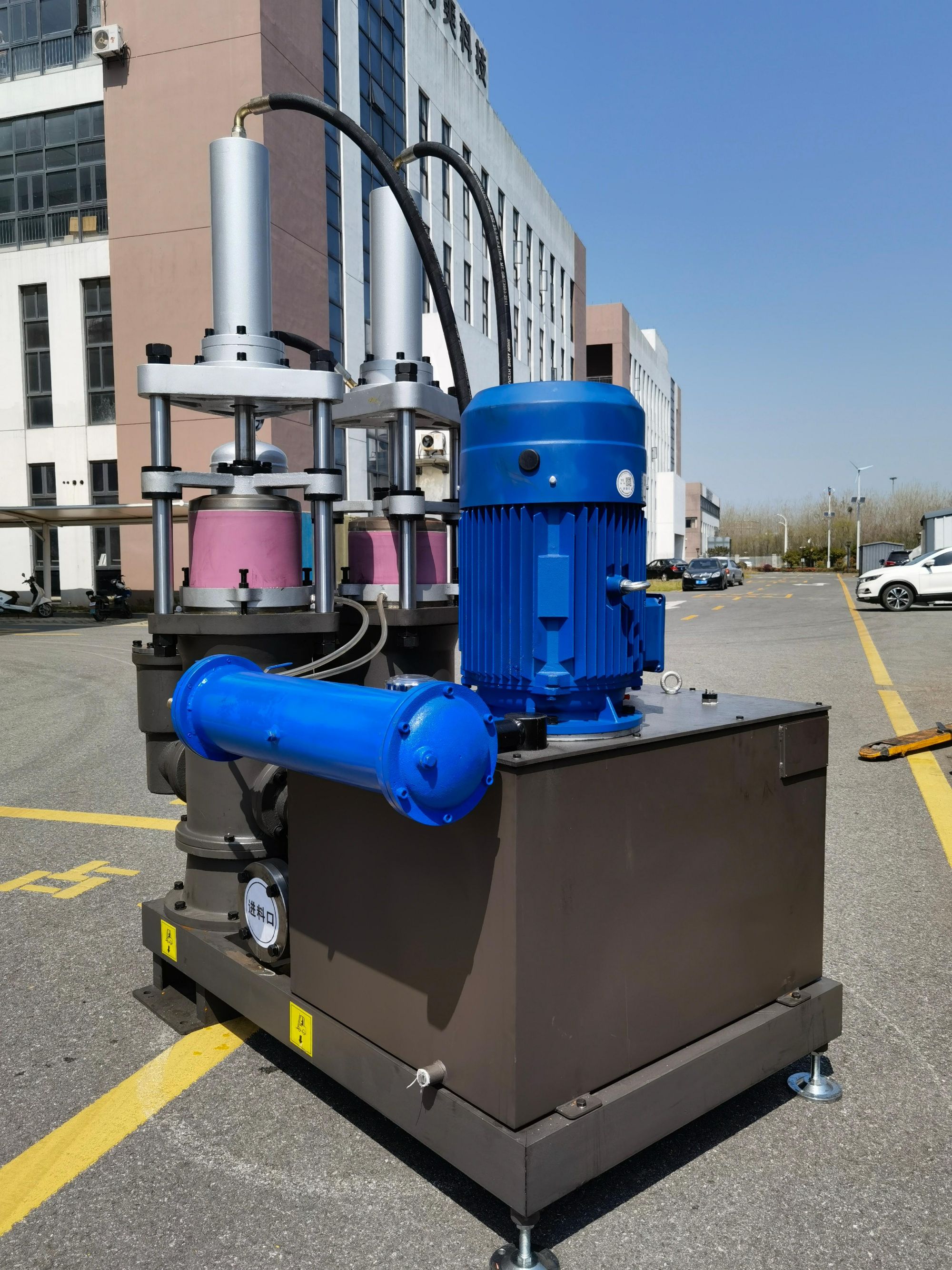
Ceramic filter presses operate on a unique principle that combines pressure filtration with capillary action through microporous ceramic plates. This process demands a steady, controlled slurry feed to maintain the delicate balance between pressure buildup and moisture extraction. Unlike conventional cloth-based presses, the ceramic medium requires precise pressure management to avoid clogging the submicron pores or causing uneven cake formation. A robust pump solution is essential here—it must deliver consistent flow without pulsation, as any surge can disrupt the capillary effect and compromise the dry solids content of the cake.
The aggressive nature of mineral slurries and chemical suspensions further underscores the need for durable pumping systems. Ceramic plates, while chemically resistant, can suffer from abrasive wear if the feed pump introduces turbulent flow or fails to maintain the designed pressure profile. A heavy-duty diaphragm or peristaltic pump with wear-resistant components ensures that the slurry is delivered smoothly, protecting both the feed lines and the filter media. This not only extends the lifespan of the ceramic plates but also reduces maintenance intervals, directly impacting operational uptime and overall process economics.
Ultimately, the integration of a thoughtfully selected pump safeguards the high throughput and low moisture output that make ceramic filter presses a superior choice in dewatering applications. By providing reliable, low-shear conveyance, the right pump allows the filter to function at peak efficiency, yielding cakes with moisture content often below those achievable by other methods. This synergy between the press and its pumping system is what turns a good filtration process into an exceptional one.
Engineering Efficiency: How These Pumps Reduce Energy Waste
Every industrial process relies on pumps to move fluids, but many systems push far more energy into the task than necessary. The core of the problem lies in traditional pump designs that run at constant speeds regardless of actual demand—wasting electricity through throttling valves, excess pressure, and simple oversizing. The latest pump technologies rethink this from the ground up, embedding efficiency into the very mechanics of how they operate.
One key advance is the integration of variable-speed drives paired with high-efficiency motors that adjust output in real time. Instead of brutal forcing flow against a half-closed valve, these pumps respond to system curves with precision, trimming power draw during low-demand periods. Add to this impeller geometries refined through computational fluid dynamics, and you get a double gain: less fluid slip and reduced turbulence, both silent thieves of energy. The result is a machine that conforms to the work, rather than demanding the work conform to it.
In practice, this shift translates into energy reductions that accumulate hour by hour across entire facilities. Because the savings come from smarter control rather than bigger components, retrofits often pay back investment within months—and the quiet, cooler-running hardware extends service intervals. It's a design philosophy where engineering intelligence does the heavy lifting, leaving waste as an afterthought.
Material Innovations That Extend Pump Lifespan Under Extreme Loads
Pumps operating under extreme loads face relentless mechanical and thermal stress, pushing conventional materials to their limits. Advanced alloy design has become a cornerstone of longevity, with duplex stainless steels and nickel-based superalloys engineered to resist both abrasive wear and corrosive attack simultaneously. These materials form passive oxide layers that self-repair under friction, while their refined grain structures arrest crack propagation long before catastrophic failure occurs. In high-pressure slurry applications, such alloys can double service intervals compared to standard cast iron, not through brute hardness alone but through a balanced combination of toughness and work-hardening capacity that absorbs shock loads without permanent deformation.
Beyond metallic solutions, ceramic-metal composites and silicon carbide bearings are reshaping what pump internals can endure. Ceramic matrix composites infused with carbon fiber offer the low density of polymers with the erosion resistance of ceramics, enabling lighter rotating assemblies that reduce centrifugal stresses in high-speed units. Meanwhile, solid silicon carbide seals and bushings operate dry or with minimal lubrication at temperatures exceeding 400°C, a feat impossible for traditional graphite-phenolic materials. The real breakthrough lies in tailored interfacial engineering—coatings like diamond-like carbon or tungsten carbide applied via high-velocity oxygen fuel spraying bond metallurgically to substrate metals, creating a gradient that transitions from a wear-resistant surface to a ductile core, preventing delamination under cyclic loading.
Modern computational materials science accelerates innovation by simulating atomic-level interactions under operational stresses. Density functional theory calculations predict how alloying elements segregate to grain boundaries, allowing designers to formulate martensitic steels that maintain compressive residual stresses even after millions of cycles. Additive manufacturing further expands possibilities, printing impellers with lattice structures that damp vibrations while channeling lubricants through internal capillaries—a design impossible by casting. These microstructural customizations, paired with in-situ sensors that monitor material degradation through magnetic permeability shifts, are shifting the maintenance paradigm from reactive replacement to truly predictive resurfacing, slashing downtime in mining and deep-well applications.
Real-World Performance Gains in Filtration Operations
When a mid-sized chemical plant swapped their standard bag filters for a nanofiber-coated media, they didn't just see better test results in the lab—their daily throughput increased by 12% within the first month. This kind of quiet shift happens more often than glossy brochures suggest, driven by small material tweaks that change how particles are captured and released cycle after cycle.
On the maintenance side, a wastewater facility in Ohio cut cleaning downtime by nearly 30 hours per quarter after replacing rigid schedules with differential pressure monitoring. Instead of changing cartridges on a fixed calendar, operators now respond to actual loading curves, which keeps pumps running smoother and slashes the cost of premature disposal. The real win isn't a single dramatic overhaul—it's the accumulation of these adjustments that compound into steadier pressures and longer filter life.
What often goes unnoticed is how subtle changes in pre-coat techniques or pulsation timing can unlock extra capacity without buying bigger equipment. One food processing line gained 18% higher solids removal simply by altering the flocculant injection point by a few feet. These gains rarely show up in standard bid comparisons, but they're what separate a system that merely works from one that quietly outperforms the specs month after month.
Selecting the Right Pump Configuration for Your Specific Setup
Every setup has its own set of demands, and blindly picking a pump based on brand or price often leads to inefficiency or early failure. You need to match the pump’s flow rate, head pressure, and material compatibility to your specific application. Start by clearly defining what you’re moving—water, chemicals, slurry—and the required lift and distance. A pump that excels in one scenario may falter in another, so resist the temptation to oversimplify the specification process.
Physical installation constraints can make or break long-term reliability. Consider the available space, power source, and whether the pump will run continuously or intermittently. Submersible designs save floor space and reduce noise, while self-priming models offer flexibility in suction lift situations. Also factor in ambient conditions like temperature and humidity; a pump rated for indoor use may quickly degrade if exposed to direct sunlight or washdown environments.
Maintenance access is often overlooked during selection, yet it dictates how much downtime you’ll face later. Choose a configuration that allows routine checks—seal replacements, impeller clearance adjustments—without a major teardown. If your setup involves varying load conditions, consider variable speed drives or bypass arrangements to keep the pump operating near its best efficiency point. The goal is a matched system that delivers performance without constant nursing, and that starts with honest evaluation of real-world conditions rather than catalog specs alone.
FAQ
It's a rugged displacement pump designed to feed filter presses with slurries at high pressure. The 'ceramic' part refers to key internal components—pistons, liners, or valve seats—made from engineered ceramics to withstand aggressive wear. The hydraulic drive ensures steady, pulseless flow even under demanding conditions.
Ceramic surfaces are extremely hard and resist abrasion, corrosion, and chemical attack far better than metals. This means tighter clearances stay tight longer, reducing internal leakage and maintaining volumetric efficiency. You get consistent pressure and flow cycle after cycle without the rapid degradation common with metal parts.
Anywhere you need to dewater abrasive or corrosive slurries: mining (tailings, concentrate), wastewater treatment, chemical processing, ceramic and pigment manufacturing, and even some food processing lines where filtration is critical. The common thread is high solids content and a need for reliable, long-running equipment.
It's the combination of low internal slip from the ceramic internals and the smooth hydraulic drive. You waste less energy as heat, the pump holds pressure without constant overspeed, and the cycle times often shorten because the pressure ramps up more predictably. Plus, less downtime for rebuilding means overall process efficiency stays high.
Absolutely—that's its sweet spot. The ceramic plunger and liner sets are designed specifically to shrug off the grit. While no pump is immortal, these routinely outlast stainless or hardened steel units by a factor of three or more in similar conditions, and the maintenance intervals are far more predictable.
The hydraulic power pack acts like a buffer. It stores energy and releases it smoothly, so the piston moves at a near-constant speed regardless of minor fluctuations in the slurry's viscosity or the filter cake's resistance. This evens out the pressure curve and protects the pump and piping from shock loads.
Beyond the ceramics, look for a robust crankcase with oversized bearings, positive lubrication to all moving parts, and effective sealing between the hydraulic and slurry sections. Many designs also include a flushing ring or isolation chamber to keep abrasive particles away from the shaft seals, which drastically cuts premature failure.
Keep the suction line as short and straight as possible with a generous diameter to avoid cavitation. Use a pulsation dampener on the discharge side to smooth out transient spikes. And regularly check the hydraulic oil condition—contaminated oil is the fastest way to lose that smooth drive. Simple stuff, but it makes a noticeable difference in how the pump behaves over years.
Conclusion
High-pressure hydraulic piston pumps have become indispensable in ceramic filter press operations, where consistent pressure and durability under abrasive conditions are critical. At the heart of these systems lies a sophisticated blend of precision engineering and material science. The core mechanics involve a reciprocating plunger or piston assembly that displaces hydraulic fluid to generate the immense pressures needed for efficient solid-liquid separation. Unlike conventional pumps, these high-pressure variants leverage advanced sealing technologies and hardened internal components to withstand the rigorous cyclic loads imposed by filter presses. Their design minimizes internal leakage and volumetric losses, translating to more stable pressure curves throughout the filtration cycle. This stability is crucial for ceramic filter presses, which rely on uniform pressure distribution to form consistently dry, homogeneous filter cakes without cracking or compromising structural integrity.
Beyond raw pressure capability, modern piston pump solutions integrate energy-saving features such as variable displacement mechanisms and intelligent control algorithms that adjust flow rates in real time. This not only reduces power consumption but also mitigates heat buildup and wear, extending service intervals significantly. Material innovations—like ceramic-lined cylinders, tungsten carbide valves, and diamond-like carbon coatings—boost resilience against abrasive slurries and corrosive filtrates, dramatically extending pump lifespan even under extreme loads. In practice, operators report tangible gains: less downtime, lower maintenance costs, and higher throughput. Selecting the optimal pump configuration demands careful consideration of slurry characteristics, cycle time targets, and automation requirements, ensuring that the pump’s pressure profile and flow capacity align precisely with the press’s design. Ultimately, the right high-pressure piston pump transforms filtration efficiency, turning a robust mechanical process into a refined, cost-effective solution for demanding industrial separations.
Contact Us
Contact Person: HaiYan
Email: [email protected]
Tel/WhatsApp: +86 18957325588
Website: https://www.senyoubeton.com/