

High Tenacity Nylon 6 Filament Yarn Factory: A Look Inside Advanced Production and Quality Control
2026-08-20
Step onto the production floor where high tenacity nylon 6 filament yarn is drawn, heat-set, and tested to withstand the toughest demands—welcome to the inner workings of Changshu Polyester. Behind every uniform denier and knot-free spool lies a blend of precision engineering and obsessive quality control that few factories are willing to show. In this post, we pull back the curtain on the machinery, the metrics, and the people who turn polymer chips into yarn strong enough for automotive airbags, industrial webbing, and beyond.
Raw Polymer Handling: Why Viscosity and Moisture Are Controlled Before Extrusion
Before raw polymer ever reaches an extruder, its moisture level and melt viscosity are checked and adjusted because these two properties dictate whether downstream processing stays stable or turns into a troubleshooting exercise. Excess moisture, even fractions of a percent, vaporizes inside the barrel and leads to surface splay, microvoids, and weak weld lines. In moisture-sensitive resins like PET or polycarbonate, hydrolysis occurs rapidly at processing temperatures, permanently shortening molecular chains and slashing mechanical strength. Controlling moisture before extrusion is therefore not a quality nicety; it is the difference between parts that pass a tensile test and parts that fail in the field.
Viscosity receives the same level of scrutiny because it determines how evenly the melt flows through the die and how much backpressure the screw has to work against. A batch with lower-than-expected viscosity may fill thin walls easily but brings sagging and dimensional drift. A higher viscosity lot can hold tighter tolerances but demands more torque and creates shear heating that degrades the polymer. By measuring and blending incoming lots to a narrow viscosity window before extrusion, processors avoid constantly chasing barrel temperatures and screw speeds. The pre-extrusion adjustments turn raw material variation into a controlled variable instead of an unpredictable one.
Spinning and Drawing: The Two-Stage Process That Locks in Tensile Strength
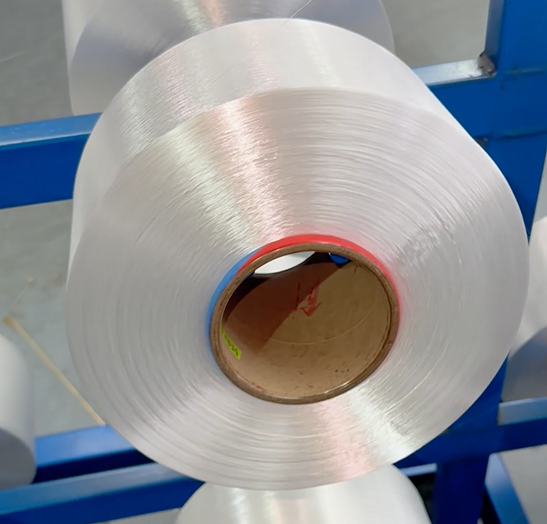
In the spinning step, a molten or dissolved polymer is forced through a spinneret—a plate with dozens of tiny holes—to create continuous filaments. Right off the spinneret, those filaments are surprisingly weak. The polymer chains inside are tangled and randomly oriented, so they slide past one another easily when pulled.
Drawing fixes that. The freshly spun fibers are reheated just enough to soften them, then stretched to three, five, or even ten times their original length. That stretching pulls the polymer chains into parallel alignment along the fiber’s axis. It also lets neighboring chains pack closer together, forming tiny crystalline regions that act like anchor points.
The result is a fiber that can carry a much higher load before breaking. The drawing ratio, temperature, and speed all have to be tuned carefully—too little stretch leaves the fiber weak, too much can snap it. But when the two stages are done right, the tensile strength is locked in at the molecular level, and it stays there through downstream processing and final use.
On-Line Monitoring Points That Catch Diameter and Tension Drift Early
Conventional tension and diameter monitoring often relies on periodic manual checks or delayed batch sampling, leaving production lines exposed to gradual drift that quietly degrades wire quality. The real advantage of strategic on-line monitoring points is not just data collection but early intervention—catching subtle deviations in cross-sectional geometry and tensile stress before they become costly defects.
By positioning contactless laser micrometers and high-resolution tension load cells at critical transitions—after drawing dies, around capstans, and before take-up reels—operators gain continuous, synchronized feedback. These points detect micron-level diameter shifts and tension oscillations tied to die wear, lubrication breakdown, or spool imbalance, often hours before traditional inspection methods would flag an issue.
What makes these monitoring points truly effective is their ability to correlate the two variables in real time. A slight diameter increase paired with a tension drop signals die clearance change, while a diameter reduction with higher tension points to material hardening or guide misalignment. This cross-parameter insight allows automatic line speed adjustments or targeted maintenance without stopping production, transforming drift detection from a reactive chore into a predictive quality shield.
Custom Denier, Luster, and Finish Adjustments for Niche Applications
Tailoring denier from 0.3 to 200+ opens up uses that off-the-shelf yarns can't touch. In ophthalmic sutures, a 0.5 denier microfilament reduces tissue drag and scarring, while a 150 denier high-tenacity variant anchors ligament repair meshes. Luster adjustments go beyond matte versus bright; adding titanium dioxide at 0.03% by weight creates a semi-dull finish that hides fiber defects in cleanroom wipes without sacrificing filtration efficiency.
Finish chemistry is where niche performance really diverges. A hydrophobic fluoropolymer coating on 20 denier nylon allows moisture barriers in avionics connectors, yet the same base yarn with a quaternary ammonium antistatic finish works in explosive atmosphere conveyor belts. Custom finishes can also alter hand feel—silicone emulsions give a cool, dry touch for next-to-skin athletic compression fabrics, while wax-based lubricants reduce needle friction during high-speed knitting of automotive airbag fabrics.
The real differentiator is small-batch flexibility. Adjusting spinneret hole geometry changes filament cross-section from round to trilobal, which shifts luster and soil-hiding properties without altering denier. Combining a 15% lower draw ratio with a heat-set finish yields a low-shrinkage yarn for spacecraft insulation blankets, where dimensional stability at -150°C matters more than tensile strength. Such tweaks demand close collaboration between polymer suppliers and end users, but they eliminate the compromises of standard catalog products.
How the Yarn Performs in Ropes, Nets, Webbing, and Reinforced Fabrics
Yarn isn't just a raw material—its behavior shifts depending on the structure it's woven or twisted into. In ropes, the yarn's twist level and fiber alignment dictate how load is distributed. A high-twist yarn compacts the fibers, boosting abrasion resistance and tensile strength, which matters when a rope runs over a rough edge or through a pulley. Low-twist yarns, by contrast, offer more stretch and a softer hand, making them better for shock-absorbing applications like mooring lines or climbing ropes where sudden jolts need to dissipate.
Move into nets and webbing, and the demands change again. For nets, the yarn must resist unraveling under repeated stress—knots and mesh intersections are weak points. A yarn with moderate twist and a balanced ply structure holds knots securely without excessive slippage, while still allowing the net to flex and recover. In webbing, flatness and edge stability become critical. The yarn needs enough cohesion to stay tightly bound under tension, yet enough flexibility to weave into a dense, load-bearing tape. If the yarn has too much memory or stiffness, the webbing edges curl or the weave becomes uneven, reducing its effective strength.
Reinforced fabrics push yarn performance further. Here, the yarn acts as the skeleton inside a matrix—whether rubber, resin, or another polymer. Its surface characteristics, like filament count and finish, determine how well it bonds with the surrounding material. A yarn with a high filament count offers more surface area for adhesion, while a textured or coated yarn can improve mechanical interlocking. At the same time, the yarn must maintain dimensional stability under heat and tension during the fabric's curing or laminating process. Any shrinkage or elongation mismatch can lead to wrinkles, voids, or premature delamination in the final composite.
Plant Floor Discipline: Batch Tracking, Waste Reduction, and Tight Tolerances
On the floor, batch tracking starts with a simple rule: if it is not written down, it did not happen. Operators log raw material lots, mixer run times, and line changeovers in a shared logbook or scanner system as they move through each shift. When a quality issue surfaces two weeks later, the team can trace a finished pallet back to a specific silo fill and the operator who signed off on the blend. That level of detail does not come from software alone—it comes from making the log entry part of the job, not an afterthought.
Waste reduction on a disciplined floor is less about big sustainability programs and more about catching small leaks before they become dumpster loads. A line lead might notice that the third filler consistently leaves 40 grams of product in the hopper after each cycle. Instead of accepting that as normal, they adjust the suck-back timing and check again at the next break. Scrap bins get weighed at the end of every shift, and any spike over the previous week triggers a ten-minute stand-up meeting. Teams that track waste in pounds, not percentages, tend to find the fixes faster because the numbers are tangible to everyone on the line.
Tight tolerances only matter if the measuring tools are trusted. Calipers and micrometers on the floor go through a weekly verification against gauge blocks, not just an annual calibration sticker. Operators are trained to measure a part, write down the actual reading, and then compare it to the print—not to decide if it looks close enough. When a dimension drifts by 0.02 millimeters, the adjustment is made at the machine before the next part cycles, not after a batch of rejects reaches quality control. This habit of measuring what you make, right at the point of production, keeps variation from compounding.
FAQ
The key difference lies in the drawing and heat-setting stages. High tenacity variants undergo a more aggressive multi-stage drawing process that aligns polymer chains almost perfectly, followed by precise thermal stabilization to lock in that orientation. Factories often use specialized godet rolls with exact speed ratios and controlled cooling zones to achieve tensile strengths well above standard yarn.
Modern lines rely on laser micrometers and capacitance sensors placed right after the spinneret. These devices collect thousands of readings per second and feed data into a closed-loop system that adjusts pump speed or quench air temperature in real time. Any drift beyond a tight tolerance—often ±1.5%—triggers an automatic alert, preventing off-spec material from moving downstream.
Quench air controls the rate at which the molten nylon solidifies, and for high tenacity yarn you need a very uniform, laminar airflow. Factories use perforated quench cabinets with individually adjustable zones. If air velocity varies by more than a few percent, the filament develops uneven crystallinity, which weakens the final yarn. Some facilities even condition the air to a constant temperature and humidity before it hits the threadline.
Beyond standard denier and tenacity checks, advanced plants run automatic tensile testers on every doff, measure elongation at break, hot air shrinkage, and inter-filament friction. They also perform dye uptake tests on sample packages to catch any variation in polymer batch. For high-end applications like airbags or tire cord, additional fatigue and abrasion cycling tests simulate long-term use.
A common practice is to use continuous polymer filtration with fine mesh screens and automatic screen changers. These remove gels and char particles that form over time in the extruder. Some factories also purge the system with fresh polymer at scheduled intervals and monitor filter pressure differential as an early warning sign. Cleanliness of the spinning pack and spinneret holes is verified under magnification before each run.
A narrow molecular weight distribution leads to more consistent drawing behavior and fewer weak points in the filament. Factories control it by carefully regulating polymerization time, temperature, and the amount of chain terminators. Some use online viscometers that sample the melt and provide real-time relative viscosity readings, allowing operators to adjust reactor conditions before off-spec polymer reaches the spinning heads.
Safety-critical uses like automotive airbags, seat belts, and parachute cords require the tightest tolerances. These products cannot tolerate weak spots or uneven shrinkage because failure would be catastrophic. Industrial ropes, geotextiles, and heavy-duty sewing threads also push factories to maintain high tenacity and consistent elongation, but the acceptance criteria are usually slightly less stringent than for airbag-grade yarn.
Robotic doffers now remove full packages from winders and place them onto automated guided vehicles that carry them to testing and packing stations. This reduces human handling damage and contamination. Automated packaging lines also apply consistent tension when wrapping, which prevents yarn distortion. Data from each doff is automatically logged with a barcode, so if a quality issue arises later, the factory can trace it back to the exact spinning position and time.
Conclusion
At the heart of this factory is a deliberate sequence that begins long before the spinnerets engage. Incoming nylon 6 polymer chips are conditioned for stable viscosity and low moisture content, because even minor hydrolytic degradation during extrusion can weaken the final yarn. Once the melt is ready, it passes through a two-stage spinning and drawing operation where molecular chains are stretched and aligned under controlled tension. This orientation step is what locks in the high tenacity that users expect, and it is verified continuously by on-line sensors that track filament diameter and draw tension. Any subtle drift triggers immediate correction, preventing off-spec product from moving further down the line.
Flexibility is built into the same line: denier, luster level, and surface finish can be adjusted for specialty ropes, nets, webbing, or reinforced fabrics without sacrificing consistency. Each production batch carries full traceability from raw resin lot to finished package, and waste is minimized through tight tolerance windows and real-time process feedback. The result is a high tenacity nylon 6 filament yarn that performs reliably under load, whether in marine mooring lines, industrial slings, or heavy-duty textile structures. This blend of disciplined floor practices, early defect detection, and tailored finishing sets the operation apart from commodity yarn producers.
Contact Us
Contact Person: CONNIE
Email: [email protected]
Tel/WhatsApp: 86-0512-53671634
Website: https://www.lida-yarn.com/