

INNOMOTICS Frequency Converter Wholesale Sourcing Tips for Industrial Buyers
2026-11-16
Sourcing INNOMOTICS frequency converters at wholesale prices can feel straightforward until a spec mismatch shows up on the factory floor. Voltage tolerances, communication protocols, and after-sales support can change the real cost of a purchase long after the invoice is paid. This guide lays out the checks industrial buyers often miss, so you can compare suppliers with confidence. When you start building a shortlist, Soochee is worth a closer look for practical options and direct sourcing support.
Duty Cycle First, Drive Frame Second
Most teams jump straight into frame geometry or motor mounting before they know how the system will actually be used. That order creates problems. Duty cycle sets the thermal and mechanical limits: how long a drive runs under load, how often it reverses, and how much time it spends at peak torque. Once those numbers are clear, the drive frame can be sized around real stress instead of guesswork.
A drive frame chosen first often looks strong on paper but becomes a liability in service. Continuous operation exposes weak bearing supports, poor heat paths, and mounting points that flex under repeated load. Starting from duty cycle shifts attention to those failure modes early. The frame is then treated as a housing for a defined work pattern, not as a standalone structure that forces the motor and gearbox into an uncomfortable fit.
This sequence also simplifies later changes. If a new application demands longer runs or more frequent starts, the duty data tells you exactly which part of the frame needs reinforcement or which joints need better cooling. Reversing the priority means redesigning brackets and plates after the fact, often at higher cost and with less design freedom.
The Stock Depth Question Distributors Hope You Skip
There is one question that makes a distributor glance at the clock: 'How much stock do you actually have?' It sounds harmless, but it corners them into revealing whether they are sitting on too much dead inventory, protecting key accounts, or simply guessing at availability.
Most will answer with vague assurances because a precise figure hands leverage to the buyer. If real depth is high, price pressure follows. If it is thin, competitors catch wind and panic ordering begins. Either way, the distributor loses room to negotiate.
Instead of pushing for a count, watch the operational signals. Request the last shipment date, ask what can be loaded by Friday, or mention a larger order for next month. The response often tells you more about real availability than a reluctant number ever would.
That Cheaper Bulk Quote Usually Hides a Hotter Panel
A lower price per watt rarely comes from thinner margins alone. In many bulk quotes, the savings show up in the thermal behavior of the modules. Cheaper panels often post a weaker temperature coefficient, meaning every degree of cell temperature rise shaves more output than it would on a better-built panel. The datasheet may still promise the same STC wattage, but once the array sits in the sun, that hotter-running module gives back part of the discount in lost production.
Heat also does quiet damage over time. Hotter cells can accelerate solder joint fatigue, backsheet embrittlement, and the kind of micro-cracking that doesn't show up until a thermal scan flags scattered hot spots. A bank of hot panels on a commercial roof may be within spec on day one and still degrade faster than a slightly more expensive alternative, narrowing the payback gap long after the invoice is forgotten.
Before accepting a cheap bulk quote, pull the temperature coefficient of Pmax and the NOCT figures, not just the headline wattage. Compare output at a realistic cell temperature of 60°C or higher, and ask for flash test data from the same batch. If the supplier won't share thermal performance details, the lower upfront cost probably has a heat problem attached.
Grid Code Differences That Turn Identical Drives into Different Risks
Same drive, same firmware, different grid code. Two variable frequency drives can be built back-to-back on a production line and still age differently because the local connection rules force them into different operating corners. One jurisdiction may require reactive current injection during voltage sags and fast recovery afterwards; another may allow the drive to ride through with no injection or trip early. That first drive collects high-current transients and thermal cycles in the DC bus and IGBTs that the second never experiences, so the same hardware is effectively living a harder life.
Frequency rules cut the other way too. A grid code with a tight over-frequency deadband may force active power curtailment at 50.2 Hz, while a neighboring code allows a wider band or slower droop. The tighter setting can make a drive repeatedly throttle and recover, which shows up as DC link ripple and mechanical fatigue in the driven pump or fan. The looser setting avoids that wear but raises the chance of nuisance trips during grid events. Neither condition is safer in absolute terms; the risk just lands in a different component.
Grounding and unbalance requirements add another layer. Some codes demand immediate disconnection on phase loss because anti-islanding is the priority. Others expect the drive to stay online and tolerate unbalanced voltage for a specified window, which forces negative-sequence current through the rectifier and heats the bus capacitors. An owner comparing failure histories across sites may blame the drive model, but the actual difference is usually the grid code envelope that one site never had to satisfy.
A Real Warranty Is More Than a Promised Replacement
Most warranties quietly vanish the moment you need them. They hide behind fine print, exclude the exact part that fails, or ask you to ship a broken item across the country and wait weeks for an answer. A real warranty works differently. It shows up before you realize something is wrong, covers the unglamorous details, and treats the replacement as the beginning of the relationship, not the end of it.
Think about what actually matters when a product stops working: a short phone call instead of a ticket queue, a human who knows the product line, and a repair or replacement that doesn't require you to become a logistics coordinator. That level of support doesn't come from a marketing promise. It comes from a company that has already budgeted for mistakes, stocked spare parts, and trained people to resolve problems without making you beg.
A promised replacement can be delayed, downgraded, or argued away. A real warranty includes turnaround time, shipping cost, diagnostic honesty, and a clear path when the first fix doesn't hold. If the only thing a brand can promise is a new box in the mail eventually, then there isn't much standing behind the product at all. The strongest warranties are boringly dependable, rarely celebrated, and exactly what you remember when the second purchase happens.
Commissioning Support Before the First Drive Is Installed
Early involvement from the commissioning team often uncovers small wiring and labeling issues long before they turn into costly delays on site. During this phase, we review panel layouts, cable schedules, and power distribution drawings against the drive submittals, checking that control voltage levels, spare I/O, and communication terminations match what the installation team will actually encounter. The goal is not to second-guess the design but to make sure the drive arrives ready to connect without forcing field modifications.
One of the more overlooked parts of pre-installation support is verifying that the drive's parameters and protective settings can be loaded once the unit is powered. We walk through the intended sequence of operations, confirm where interlocks and safeties need to land, and flag any mismatch between the drive's factory defaults and the site's grounding or harmonic requirements. A short checklist at this stage tends to save several hours of troubleshooting later.
When the first drive is still weeks away, there is also time to align software versions, network addressing, and access levels with the facility's standards. This means the commissioning engineer can arrive with a clear plan for communication checks, rotation testing, and load runs instead of spending the first day sorting out firmware mismatches. It is a practical way to keep startup momentum without waiting for hardware to be in place.
FAQ
Look for documented stock levels, factory-authorized status, and the ability to supply firmware and serial-matched units. A broker often quotes fast but delays once payment lands; a genuine wholesale partner gives you a written lead time, a named technical contact, and options for buffer stock.
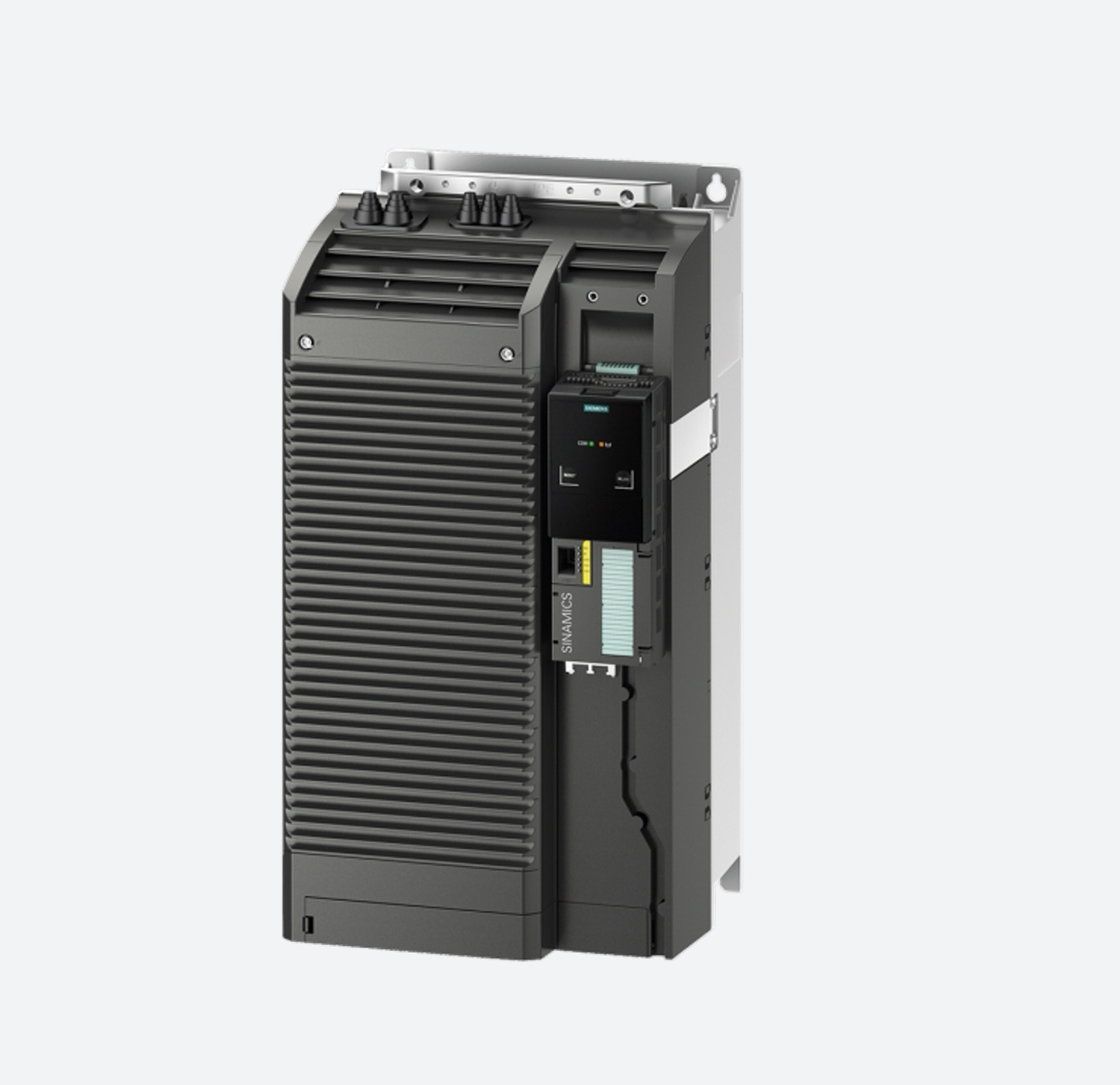
SINAMICS G120 and G120X are the workhorses for pumps, fans and conveyors, while V20 suits cost-sensitive standalone machines. For larger plants, G130/G150 and the medium-voltage Perfect Harmony line often require more application review before stocking, because the wrong voltage or cooling option can make inventory sit.
Overload duty, supply voltage tolerance, EMC category, and communication interface. A quote based on a 400V light-duty rating may not fit a 480V heavy-duty application. Ask suppliers to confirm part numbers against the exact order code, not just the series name.
Enough to cover your longest documented repair loop, plus the supplier's actual lead time during holiday periods. For a plant running 24/5, two to three spare units per common rating is often cheaper than one emergency air-freight order per year.
Price validity windows, firmware revision policy, warranty start date, and whether the wholesaler covers out-of-box failures with advance replacement. Also define who owns the freight risk for damaged terminals or coolant residue claims.
Usually yes if the units end up in process-critical applications. Authorized partners can escalate firmware and hardware issues to INNOMOTICS without a third-party delay. Unauthorized sources may have genuine stock, but the support path gets thin when a drive fails at 2 a.m.
Missing part number suffixes, vague delivery windows like 'soon' or 'ex-works Asia', quoted lead times that shift after PO placement, and no answer on warranty processing. If they cannot explain the difference between a G120X and G120 in your application, the price probably hides gaps in configuration.
Standardize where practical, especially for maintenance teams. A smaller number of frame sizes, control modules and spare fans reduces training and shelf complexity. Mix models only when a specific application, such as harsh environment or high overload, clearly demands a different series.
Conclusion
Industrial buyers often anchor sourcing decisions to frame size or horsepower, but with INNOMOTICS frequency converters the more useful starting point is duty cycle. A drive running a mixer with constant torque at low speed makes different thermal demands than a pump operating near full load for a few hours. Choosing the overload profile first, then matching frame size, avoids the common mistake of paying for a larger enclosure that still runs hot. The second issue is stock depth. Distributors may quote attractive lead times, but ask how many units are physically available, not just available to order. If a line fails, partial shipments of five drives do not keep a plant running. Also be cautious with bulk pricing. A cheaper offer often hides a smaller heat sink or tighter component spacing, which means a hotter panel and shorter capacitor life in the same footprint.
Grid code differences matter more than many buyers expect. Two identical-looking INNOMOTICS drives configured for different regions can behave differently during voltage dips, harmonic limits, or grid faults. What worked in one plant may trip or reduce output in another, so confirm the specific regional settings before comparing prices. Warranty language deserves a close read as well. A promise to replace a failed drive is not the same as coverage for labor, freight, fault diagnosis, and firmware updates. If those are excluded, the savings disappear after the first failure. Finally, look for commissioning support that starts before the first drive is installed. A supplier who reviews the panel layout, cable lengths, braking requirements, and parameter settings early can prevent nuisance trips and derating surprises. Taken together, these points shift sourcing away from a simple price-per-kilowatt decision and toward total cost of ownership.
Contact Us
Contact Person: Jenny Jaa
Email: [email protected]
Tel/WhatsApp: 0086 152 9510 6006
Website: https://www.china-motor-supplier.com