

Inside a Piezo Inkjet Printer Factory: How Precision Manufacturing Drives Print Quality
2026-05-21
Step inside the world of precision engineering where every droplet counts. At Danmajet, the making of piezo inkjet printers is a blend of science and artistry, where manufacturing perfection directly translates into print quality you can see. Curious how tiny piezo elements and meticulous assembly shape the sharpness of every character? Join us as we explore the factory floor and uncover the hidden processes that set exceptional printing apart.
The Blueprint of Precision: Inside the Factory's Design Philosophy
Every corner of this facility was conceived around a single, relentless question: how do we eliminate the gap between intention and outcome? The design team mapped the entire production lifecycle before a single brick was laid, tracing material flows, human movement, and data streams. The result is a layout that feels almost organic—raw materials enter at one end, and finished products emerge at the other, with no backtracking and no wasted motion. Workers don't need to hunt for tools; they're placed exactly where muscle memory expects them. It's an architecture built on choreography, not just square footage.
Underpinning this physical layout is a tiered system of tolerances that governs everything from room temperature to vibration thresholds. Rather than chasing absolute perfection in every zone—an expensive and brittle approach—the factory uses graded precision. Areas handling micro-assembly are sealed and stabilized to limits normally reserved for optical labs, while adjacent spaces gradually relax their controls. This cascading model keeps costs grounded without sacrificing performance where it matters. The lines between these zones aren't arbitrary either; they follow the actual sequence of value addition, so a component's precision environment intensifies exactly as its complexity grows.
What makes the philosophy truly stick, though, is its insistence on visibility. Glass walls, open gantries, and shared dashboards aren't aesthetic choices—they're enablers of collective accountability. When a pressure gauge drifts, it's not buried in a log file; it's displayed on a screen that a passerby can glance at. Shift handovers happen in front of a live map of the floor, not a conference room whiteboard. By making the state of the factory transparent, the design quietly dissolves the boundary between operation and improvement. Every person inside becomes a custodian of precision, not just an executor of instructions.
Growing Perfection: The Art of Piezo Crystal Fabrication
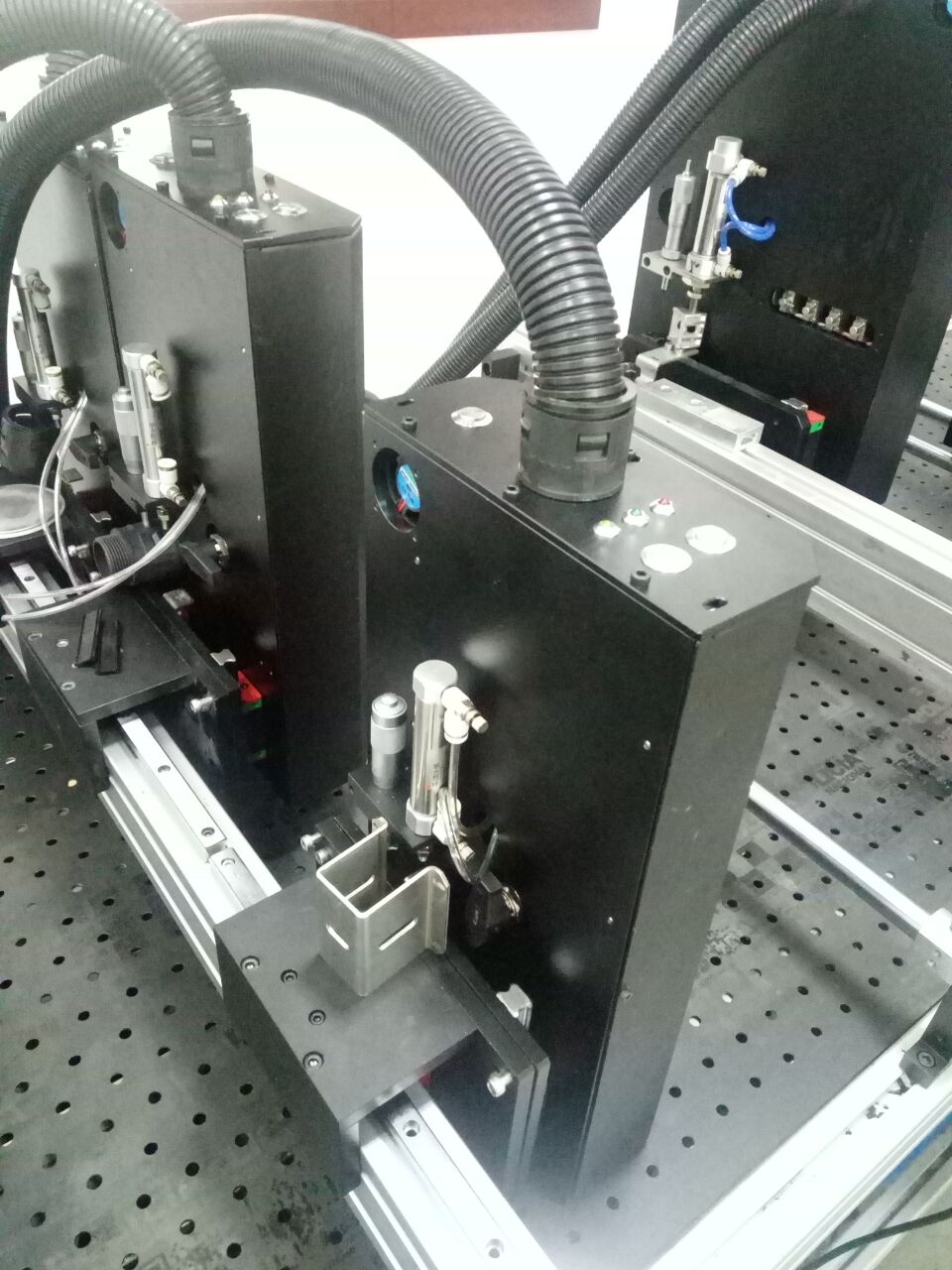
Piezo crystal fabrication is a delicate dance of chemistry, thermodynamics, and precision engineering. At its heart lies the hydrothermal growth method, where a seed crystal is suspended in a high-pressure autoclave filled with a nutrient solution. The solution, rich in dissolved silica or other precursor materials, slowly deposits onto the seed over weeks or even months. Temperature gradients and carefully controlled pressure coax the atoms into a flawless lattice, layer by layer. It’s a process that demands patience; a single flaw can compromise the crystal’s piezoelectric performance, turning what could be a perfect oscillator into a dud.
Mastery comes from understanding the subtleties: the exact mineralizer concentration that enhances solubility without encouraging parasitic nucleation, the baffle design that ensures convection currents deliver nutrients evenly, and the thermal cycling that releases internal stresses. Many fabricators develop proprietary tweaks—like using a specific grade of stainless steel for the autoclave liner or adding trace ions to fine-tune the crystal’s mechanical quality factor. It’s as much an art as a science, with skilled technicians often relying on intuition honed over decades to decide when a crystal is truly ready to harvest.
The final product, a synthetic quartz or langasite boule gleaming with geometric precision, belies the intense effort behind its creation. These crystals become the heartbeat of electronic devices, from satellite communications to medical ultrasound. Each one is a testament to the quiet craft of the fabricators who push the boundaries of perfection in a world grown from solution. Their work remains largely unseen, but its impact resonates everywhere.
Cleanroom Chronicles: Where Air Control Shapes Printheads
In the high-stakes world of printhead manufacturing, the air itself becomes a critical tool. Class 100 cleanrooms hum with a silent vigilance, filtering out particles thousands of times smaller than a human hair. Every cubic meter is scrubbed, temperature and humidity pinned to narrow bands, because a stray speck of dust or a faint drift in moisture can clog micron-wide nozzles or warp delicate circuitry. This obsessive environmental control isn't just precaution—it's the foundation upon which precision is built, transforming ordinary rooms into chambers where chaos is methodically starved of the very atmosphere it needs to thrive.
But air control here goes beyond mere filtration. It's about choreographing airflow so that any generated contaminant—from a technician’s glove or a machine’s subtle vibration—is whisked away before it can settle. Laminar streams cascade downward, creating an invisible curtain that isolates each production step. This dynamic purity shapes not only the physical integrity of printheads but their performance personalities: jetting accuracy, drop volume consistency, and long-term reliability all trace their lineage back to these meticulously scripted air currents. In this space, the absence of interference is engineered with as much care as the components themselves.
The legacy of this rarefied atmosphere is embedded in every printed output. When a wide-format printer lays down flawless gradients or an industrial coder marks bottles at blazing speeds without a single misfire, it’s a quiet testament to the cleanroom’s discipline. The controlled air doesn’t just shape printheads; it leaves a fingerprint on every drop they ever eject. And so the chronicle continues: a story where the most invisible element becomes the most defining character, ensuring that precision manufacturing remains a breath of meticulously managed fresh air.
Merging Ink and Electronics: The Nozzle Assembly Ballet
Within the printer’s core, a nozzle assembly glides with mechanical grace, choreographing the marriage of liquid ink and silicon logic. Each microscopic jet pulses in precise tempo, depositing conductive traces and insulating layers that give form to unseen circuits. The ballet is one of timing and tension—where a droplet misplaced by a micron can disrupt an entire design, yet when perfectly aligned, it breathes life into a board with the delicacy of a calligrapher’s stroke.
Beyond the Spec Sheet: Real-World Reliability Testing
Lab measurements and spec sheets only tell part of the story. Numbers like MTBF or IP ratings are reassuring, but they don’t capture how a device behaves when it’s jostled in a backpack, exposed to fluctuating humidity for weeks, or accidentally knocked off a desk. Real-world reliability testing digs into these unscripted moments, putting products through scenarios that mirror actual daily abuse rather than sterile, controlled conditions.
It’s about cumulative stress, not just one-time extremes. A keyboard might survive a single coffee spill in a lab, but what about the hundredth time a droplet sneaks past the keys? Testing teams simulate years of wear in accelerated time, cycling through dust, vibration, cable yanks, and thermal swings that slowly erode weak points. The goal is to surface failures that only emerge when multiple minor insults add up over time, something a pristine spec sheet never reveals.
This approach also accounts for human unpredictability. Devices get dropped at odd angles, operated with greasy fingers, or left in a hot car for hours. By blending data from field returns with imaginative torture testing, engineers can harden designs against the messy reality of everyday use. The result isn’t just a tougher product—it’s one that earns trust because it’s proven in the wild, not just on paper.
From Micro-Drops to Masterpieces: The Final Print Quality Leap
Every print begins its life as an impossibly tiny droplet, ejected with precision that borders on the miraculous. These micro-drops, often smaller than a human hair, are the raw ingredients of what will become a photograph, a fine art reproduction, or a commercial graphic. The leap from a controlled spray of ink to a tangible masterpiece isn't just about resolution or dot density—it’s about how those droplets interact with the paper, how they layer and blend, and how the final surface reflects light. When it all clicks, there's a moment where the sum of a million specks transcends its parts, and you’re not looking at ink anymore; you’re looking at depth, texture, and emotion.
Traditional printing often treats the drop as a fixed unit, but the real quality gain comes from viewing each droplet as a variable actor in a larger performance. Modern printheads can modulate drop size mid-flight, creating a subtle gradient of tones that mimic the continuous color of traditional painting. Meanwhile, advances in ink chemistry mean those drops don’t just sit on the surface—they bond, penetrate, or even react with the coating to produce richer blacks and a wider gamut. The result is a print that doesn’t shout “I am ink on paper”; it quietly whispers a story you want to lean in and hear.
That final leap—from a technically acceptable print to one that stops you in your tracks—often happens in the details that specifications can’t capture. It’s the absence of bronzing in deep shadows, the smooth roll-off in highlights that recall a darkroom print, and the way the image seems to shift with ambient light rather than fight it. This quality isn’t achieved by following a standard profile; it’s earned through iterative testing, understanding the peculiar dance between a specific paper and ink set, and accepting that perfection is a moving target. When a print finally crosses that threshold, you realize the micro-drops have been crafting a silent masterpiece all along.
FAQ
Precision in piezo printhead assembly comes down to aligning microscopic piezoelectric actuators and nozzle plates with sub-micron tolerances. Cleanroom environments, automated optical inspection, and laser calibration ensure each nozzle fires identically, which directly sharpens print output.
Temperature, humidity, and airborne particles are tightly controlled because even a speck of dust can block a nozzle or deflect droplet placement. Maintaining Class 100 cleanrooms minimizes defects that would otherwise cause banding or streaking in prints.
Inconsistent droplet sizes lead to visible color shifts and grainy images. Factories use high-speed cameras and stroboscopic analysis to verify that every nozzle ejects droplets within a few picoliters of the target volume, ensuring smooth gradients and accurate colors.
Vibrations from nearby machinery or foot traffic can throw off delicate assembly alignments. Vibration-isolated tables and active damping systems are used to keep positioning stages stable, preserving the repeatability needed for uniform printhead performance.
Raw piezoelectric ceramics undergo resonant frequency scanning and displacement mapping to detect micro-cracks or inconsistent polarization. Only batches with uniform electromechanical response are approved, because weak elements would cause dead nozzles or drifting ink ejection.
Scaling up without sacrificing quality means replicating ultra-fine MEMS processes across thousands of units. The main hurdles are maintaining yield rates as nozzle density increases and ensuring the same adhesive curing, poling, and bonding parameters translate uniformly from prototype batches to full-scale runs.
If the nozzle plate isn't perfectly flat, the ink droplets land slightly off target, especially in bidirectional printing. Factories lap and interferometrically measure each plate to within a few hundred nanometers of flatness, which helps maintain pixel-perfect registration across the entire print swath.
Conclusion
Walking through a piezo inkjet printer factory reveals that print quality isn't just a spec—it's baked into every square inch of the manufacturing floor. The design philosophy here treats precision not as a target but as the baseline, engineering machines that stabilize temperature within fractions of a degree and damp vibrations invisible to the human eye. At the heart of it all lies the piezo crystal, grown in controlled chambers over weeks, its lattice structure perfected to flex predictably under voltage. This isn't mass production; it's crystal farming, where each wafer's composition is tuned to deliver the exact mechanical pulse needed to eject ink droplets with micron-level accuracy.
Move deeper, and the obsession intensifies. In cleanrooms stricter than hospital operating theaters, airborne particles are scrubbed away, preventing a single speck from clogging a nozzle orifice narrower than a hair. The nozzle plate marriage with electronics is a ballet of alignment—robotic hands place thousands of channels with sub-micron precision, bonding materials that must cooperate flawlessly under relentless jetting. But real confidence comes from torture tests: printers run nonstop, subjected to temperature swings, humidity spikes, and ink chemistries designed to push limits. It's only when these machines survive conditions far beyond any real-world use that they earn approval. Ultimately, what arrives on your desk isn't just a printer; it's a masterpiece of micro-droplets, crafted by a factory where every step is an act of precision worship.
Contact Us
Contact Person: Jacky
Email: [email protected]
Tel/WhatsApp: 086 15000607053
Website: https://www.danmajet.com