

Knitted Bag Company Ideas Redefining Everyday Carry Style
2026-11-18
Everyday carry has quietly drifted toward the same shapes, same zippers, same forgettable nylon. Then you spot a knitted bag that doesn't just hold your things—it changes how an outfit feels. In this post, we look at the ideas shaping the next wave of knitted bag design, with YONGFENG leading a shift toward softer structure, tactile texture, and bags that feel less like accessories and more like part of your daily rhythm. From slouchy totes to sculptural crossbodies, these are the concepts redefining what you reach for on the way out.
A Knitted Bag That Feels Like a Hoodie for Your Belongings
The first thing you notice isn't the silhouette or the strap drop—it's the way the knit gives under your fingers. There's a broken-in softness here, closer to a favorite hoodie than to structured canvas or stiff nylon. Your sunglasses, phone, and keys slide into that cushiony space instead of knocking against a hard shell.
The opening gathers the way a hood does when you pull the drawstring, creating a loose but secure pocket around whatever you carry. That slight stretch means a water bottle or a folded paperback won't make the bag bulge awkwardly, and the bag still holds its shape when it's only half full.
Over a shoulder or carried by hand, it moves with your body instead of fighting it. The fabric absorbs small bumps and settles against your side, so the contents feel more like they're tucked into a sleeve than packed into luggage.
Soft Carryalls Are Quietly Taking Over the Daily Errand Run
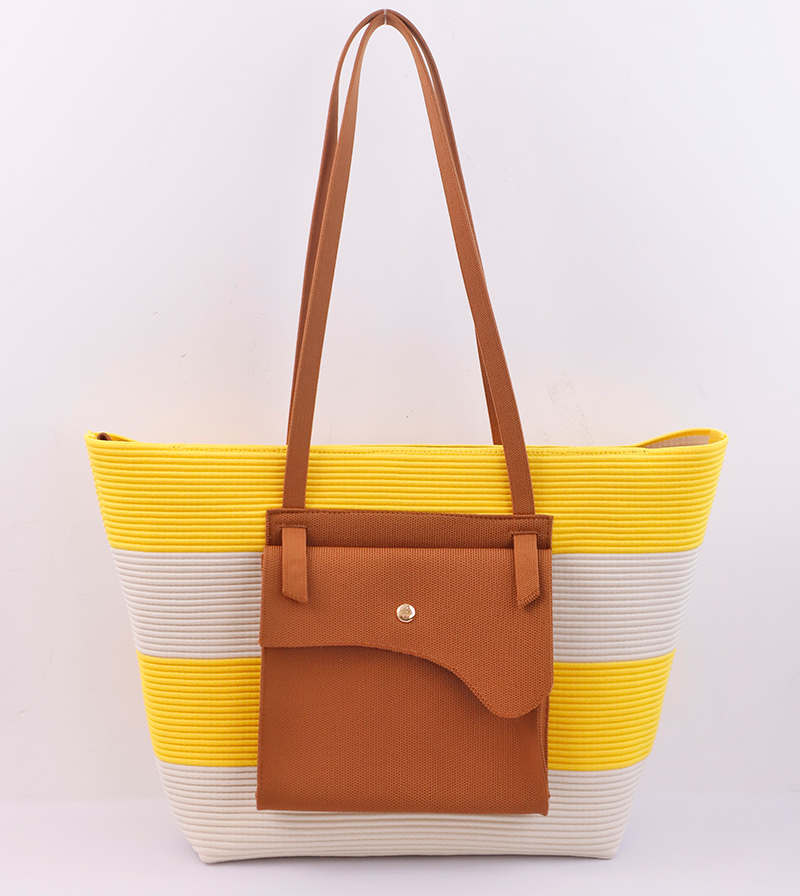
The shift is subtle enough to miss until you are standing behind someone at the corner store and notice they are balancing a bunch of kale, a bag of oranges, and a small carton of oat milk in one slouchy canvas tote. The bag sags comfortably, settles against their hip, and still leaves a hand free for keys. That ease is exactly why soft carryalls are replacing the stiff, structured totes that used to make a quick errand feel like a minor packing challenge.
What makes them work for the daily run is not just the extra room but the lack of rules. A soft leather or thick cotton carryall bends around whatever you toss inside, whether it is a damp umbrella, a last-minute six-pack, or a sweater peeled off halfway through the afternoon. There are no sharp corners digging into your ribs, no delicate lining to protect, and the handles tend to soften into a more forgiving shape after a few weeks of use.
Styling has tipped in the same direction. The newest versions show up in faded neutrals, washed-out olive, and chocolate brown, looking less like a beach bag and more like an extension of an off-duty uniform. Paired with leggings, wide-leg jeans, or a long coat, the carryall reads as relaxed rather than messy, which is probably why it has become the unspoken default for the kind of day that involves four stops, a loose plan, and no desire to overthink a bag.
The Stitch Logic Behind Everyday Bags That Move With Your Body
The bags that feel effortless on the shoulder usually hide their structure in the seams. Instead of running straight down the strap, the stitching angles slightly across the grain, letting the threads take tension in short bursts rather than one long pull. That small shift keeps the seam from digging into the fabric every time you reach for a handle or twist to grab something from a side pocket.
At the base and along the back panel, the stitch length changes. Short, dense stitches hold the bottom where abrasion and weight concentrate, while longer stitches near the upper edges allow just enough give for the bag to flex with your hip or ribcage. The panels themselves are often cut on the bias, so the weave opens and closes with your stride instead of fighting it.
Pockets and zippers get their own logic too. They are placed just outside the main fold lines, and the stitching around them follows a shallow curve rather than a sharp corner. When you bend forward or lean into a turn, the bag folds along paths where the seams are interrupted, not across dense bar tacks, which is why the bag moves with you instead of against you.
Your Work Bag Does Not Need to Stand Up on Its Own
A work bag that slumps against your desk is not failing at its job. Soft sides and an unstructured base let it settle into narrow gaps, squeeze under airplane seats, and mold around whatever you actually carry. The demand for a bag to stand at attention often has more to do with how it looks in a product photo than how it behaves during a commute.
Chasing that upright silhouette usually means hauling extra bulk. Stiff linings, heavy base plates, or reinforced corners add weight before you have packed a single item. A bag that folds a little at the bottom is often lighter to carry and easier to stow, especially when space is tight or the day runs long.
Let the bag lean, fold, or rest against a chair leg. The real test is whether it keeps your things organized and stays comfortable on your shoulder, not whether it can pose by itself. Once you stop treating a soft bag as a flaw, you might prefer the way it travels.
The Studio Treating Knit Tension Like an Engineering Problem
At this studio, a sweater panel isn't judged by hand feel alone. Tension gets measured the way a machine shop checks tolerances: stitch gauge under load, yarn feed rate, and recovery after stretch. Small batches of each yarn are knit into reference swatches before production, and the numbers are logged against room temperature and humidity because both change how the fiber slides through the carriers.
That data then shapes the machine setup. Instead of relying on a knitter's instinct to spot tight or loose courses, they adjust cams, takedown tension, and needle timing until the gauge falls within a narrow band. When a new yarn drifts, they treat it as a calibration problem rather than a flaw in the material—swapping stitch size isn't guesswork, it's a measured response to what the swatch showed.
Carrying Less While Feeling More in a Hand-Knit Tote
A hand-knit tote does not ask to be filled to capacity. Its soft structure encourages a lighter edit: wallet, keys, a slim book, maybe an apple. What you leave behind is just as intentional as what you carry.
The weight you notice instead comes from the fiber itself—wool with a bit of lanolin, thick cotton with visible irregularities, or linen softened by repeated use. Each stitch holds the rhythm of the person who made it, so carrying it feels less like hauling belongings and more like keeping a quiet companion at your side.
Over time the handles ease into your hand and the knit molds to your body. It becomes one of those rare objects that does not shout for attention but still draws glances, not because it is flawless, but because it looks lived with and meant for a slower kind of day.
FAQ
It started with a desire for texture and warmth in accessories that usually feel stiff. A soft, handcrafted surface makes an ordinary commute bag feel less like equipment and more like something you actually want to reach for.
The trick is pairing the knit with a structured lining or a firm base panel. A good lining stops the yarn from sagging under weight while the outer layer keeps that relaxed, tactile look.
Dense cotton, wool blends, and recycled acrylics tend to perform well because they resist pilling and bounce back after being stretched. Linen mixes can also add a nice dry hand feel, though they may need a lining for extra stability.
They can if the pattern is tight and the handles are reinforced. Many designs hide a padded sleeve inside, so the knit is the exterior personality while the load-bearing part stays practical.
Clean silhouettes, minimal color blocking, and matte hardware help a lot. Replacing wooden buttons with tonal zippers or magnetic snaps and sticking to one stitch across the body gives it a more refined, modern finish.
Spot cleaning with cool water and a mild soap is usually the safest route. For deeper cleaning, check the fiber label first and dry the bag flat away from direct heat so the wool or cotton does not shrink or warp.
It comes down to personality. A knitted bag softens an outfit, shows the mark of human hands, and often uses less rigid production methods, which appeals to people who want their daily carry to feel warmer and less uniform.
Conclusion
The push toward softer everyday carry starts with a simple material shift. A knitted bag acts less like a rigid container and more like a hoodie for your things—slight give in the fabric, a forgiving shape, and a surface that feels better against your side. On short errand runs, these soft carryalls are replacing structured totes because they collapse into a car seat or basket without tipping over, and they accept odd-shaped items without the usual fight. The stitch pattern is not decoration alone; it lets the bag stretch where your body moves and hold firm where weight gathers. That balance comes from reading knit tension as a structural factor rather than a textile afterthought.
A work bag made this way does not have to stand upright on a desk to be useful. It can slump against a chair leg, drape over a shoulder, or sit half-open on a passenger seat and still keep its contents organized. The studio behind this approach treats tension charts and stitch counts the way others treat load paths and seams, adjusting gauge to control sag, rebound, and carry feel. A hand-knit tote built around that thinking asks you to carry fewer things but notice them more—keys, wallet, a folded jacket, maybe a book. The result is less about adding another bag to a collection and more about changing what everyday carry feels like when the material finally works with you.
Contact Us
Contact Person: Mr Deng
Email: [email protected]
Tel/WhatsApp: +86-18926872657
Website: https://www.uniyongfeng.com/