
Leading HDPE Geomembrane Company Delivers High-Performance Lining Solutions
2026-06-15
In the world of environmental engineering and containment, quality liners are the unseen heroes. When it comes to HDPE geomembrane solutions, one name stands out for its commitment to performance and durability: WEN FENG STONE. As a leading manufacturer, they don’t just supply materials—they engineer confidence. Discover how their high-performance lining systems are redefining project safety and longevity.
The Science Behind Our Toughest Geomembranes
Our geomembranes are engineered from high-density polyethylene (HDPE) resins that undergo a specialized polymerization process, creating a dense molecular structure with minimal branching. This linear configuration gives the material its exceptional tensile strength and resistance to environmental stress cracking, allowing it to withstand decades of exposure without becoming brittle or compromised.
To further enhance durability, we incorporate a proprietary blend of carbon black and thermal stabilizers. The carbon black is dispersed at a microscopic level, absorbing and scattering ultraviolet radiation to prevent photo-oxidative degradation, while the stabilizers neutralize free radicals generated by heat during manufacturing and field conditions. This combination acts as a shield, preserving the physical properties of the liner over time.
The sheet is then extruded through a flat die and embossed with a textured surface, a step that does more than create friction. By precisely controlling the cooling rate and the depth of the embossing pattern, we induce a uniform crystal orientation within the polymer chains. This process enhances flexibility and multi-axial elongation capacity, ensuring the geomembrane can conform to subgrade irregularities without sacrificing its barrier performance, even under extreme hydrostatic pressure or seismic loading.
Where HDPE Liners Make the Biggest Impact
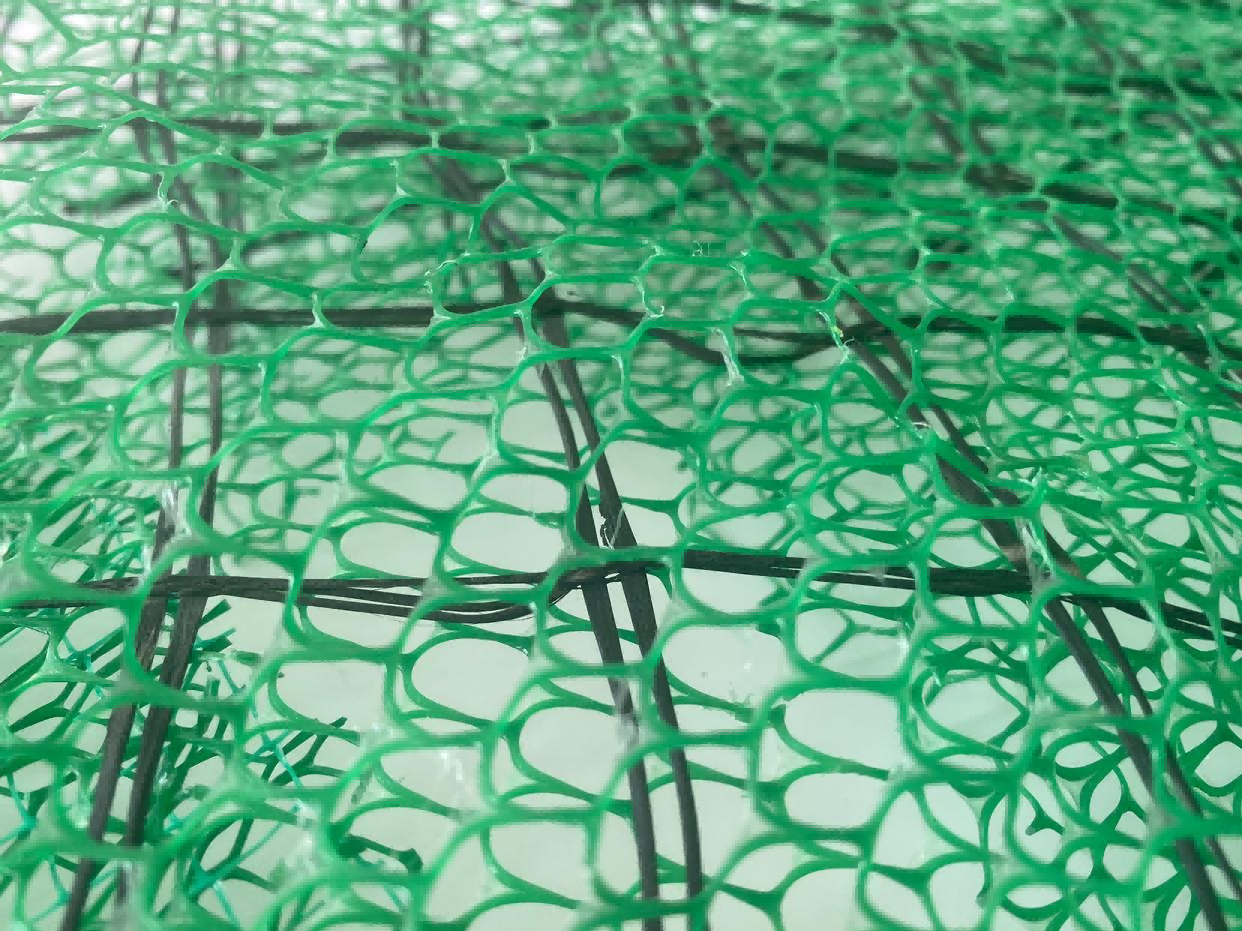
Landfill engineering depends on HDPE liners more than anywhere else. Without them, leachate would seep unchecked into groundwater, turning a contained waste site into a slow-moving environmental disaster. The barrier they create is stubbornly effective, resisting chemical attack and physical stress for decades, which is why modern landfills rely on them as a primary line of defense beneath every ton of buried refuse.
Mining operations show another side of their value, where harsh chemical processes are the norm. Heap leach pads used for extracting metals like gold and copper need a liner that can withstand constant exposure to acidic solutions without degrading. HDPE delivers that reliability on a massive scale, preventing toxic fluids from poisoning surrounding soil and watersheds. The same goes for tailings storage, where failures can be catastrophic—a thick, welded HDPE system is often the quiet hero holding back a slurry of fine particles and residual chemicals.
In water infrastructure, the impact is quieter but no less critical. Irrigation canals lined with HDPE stop water loss into porous ground, which matters immensely in drought-prone regions. Aquaculture farms use these liners not just to prevent seepage but to create clean, isolated environments that keep stock healthy and production steady. Even artificial lakes and stormwater retention basins lean on them to maintain integrity without constant maintenance. In each case, the liner works invisibly, yet the difference it makes—in saved water, protected ecosystems, or operational safety—is profound.
How We Engineer for Extreme Conditions
When temperatures plummet below -40°F or soar past 130°F, standard engineering rules don't apply. We start by selecting materials that laugh at thermal shock—specialized alloys that maintain ductility in the cold and resist creep in the heat. Our design philosophy isn't about overbuilding everything; it's about finding the precise balance where a component is just strong enough to survive, yet efficient enough to perform. We've learned that nature often provides the best blueprints, so we study organisms thriving in volcanic vents or Arctic ice to inspire our solutions.
Testing is where most designs meet reality, and we don't rely on simulated environments alone. Our prototypes undergo accelerated life testing that packs decades of thermal cycling, salt spray, and vibration into days. But we also drag them into the field—mountains, deserts, and off-shore platforms—because controlled labs can't mimic the chaos of real-world extremes. A sensor that works perfectly on a bench might fail when a sandstorm fuses silica onto its housing, or when ice buildup shifts its resonant frequency. By doing the unglamorous work of breaking things early, we discover the margins that textbooks can't predict.
The hardest lesson we've internalized is that extremes don't happen in isolation. It's rarely just heat; it's heat plus humidity plus salt fog that corrodes connections within hours. So we design for compound stresses, using techniques like hermetic sealing with glass-to-metal bonds and introducing intentional sacrificial points that direct failure away from critical subsystems. Every joint, coating, and tolerance is chosen not for a single challenge, but for the cascade of conditions that define truly harsh environments.
Real Projects, Uncompromised Performance
Every line of code we ship is forged in the fire of real-world applications, not synthetic benchmarks. When a dashboard handles millions of live data points or a checkout flow faces flash-sale traffic, performance isn't a luxury—it's the difference between a user staying or leaving forever. We build with that urgency, treating latency like a bug and throughput like a feature, because we've seen how a 100-millisecond delay ripples through conversion rates and user trust. No one ever praised a loading spinner.
Our approach strips away the non-essential. Instead of piling on abstractions, we favor lean architectures that respect the hardware and the end user’s patience. Recently, we took a legacy inventory system that choked on concurrent writes and slimmed it down to handle five times the load with half the CPU. The secret wasn’t magic—it was understanding the actual query patterns, cutting out wasteful ORMs, and aligning data structures with how the business actually uses them. Performance isn't about what’s trendy; it’s about what works when the traffic hits.
We benchmark against reality, not theory. By profiling under peak loads and simulating genuine user chaos—think slow networks, bursty traffic, aberrant client behavior—we find the cracks before they break. One client’s streaming pipeline started dropping frames only when a specific mobile ISP throttled certain payloads. We caught it not through standard QA, but by replaying a month of production traffic in a shadow environment. That granular focus lets us deliver systems where performance isn’t bolted on later—it’s baked in from the first commit. Compromise isn't in our vocabulary.
Tailored Lining Systems for Unique Challenges
Every industrial application carries its own set of demands—temperature swings, chemical exposure, abrasive wear, or unconventional geometries. That’s why off-the-shelf solutions often fall short. We build lining systems from the ground up, selecting high-performance polymers, ceramics, or composite materials specifically tailored to withstand the exact conditions your process throws at them. It’s not about forcing a square peg into a round hole; it’s about engineering a flawless fit from day one.
Whether it’s a reactor vessel that sees both acid at dawn and caustic at dusk, or a chute that grinds down standard liners in weeks, our approach digs into the root cause of failure. We combine field data, wear patterns, and material science to design a barrier that literally adapts to the abuse. The result isn’t just a lining—it’s a bespoke defense system that buys you years of uninterrupted operation.
Installation teams trained in confined spaces and complex setups bring those designs to life on site, often without the luxury of perfect conditions. We’ve lined tanks in howling winds, retrofitted scrubbers during short maintenance windows, and handled geometries that make laser scanning essential. If your challenge is unique, your lining should be too.
Behind the Scenes of Quality Control
Quality control often gets reduced to a final check, but that’s just the tip of the iceberg. Long before a product reaches the inspection table, teams are already analyzing raw materials, tweaking supplier specs, and mapping out potential failure points. This early involvement prevents issues from ever reaching the assembly line, saving time and resources that would otherwise go into rework.
Data plays a quiet but powerful role behind the curtain. Every test result, calibration log, and nonconformance report feeds into a central system that spots trends invisible to the human eye. When a specific machine shows a 0.02% drift in output, it triggers a maintenance call before that drift becomes a defect. This kind of proactive monitoring keeps processes stable without anyone needing to sound the alarm.
There’s also a deeply collaborative side rarely seen by outsiders. Quality engineers, line operators, and suppliers huddle around whiteboards weekly, debating root causes and brainstorming fixes. It’s less about assigning blame and more about owning the outcome together. That shared responsibility is what turns a decent product into one that lasts.
FAQ
Our geomembrane is manufactured with a high-density polyethylene formula that ensures exceptional chemical resistance and durability. It maintains flexibility even in extreme temperatures, which reduces the risk of cracking during installation or long-term use. Plus, we incorporate a multi-layer co-extrusion process that enhances tear resistance without adding unnecessary weight.
We serve a broad range of sectors, including mining, waste management, water containment, and agriculture. For instance, our liners are used in heap leach pads to prevent chemical leakage, in landfill caps to control gas emissions, and in irrigation ponds to minimize water loss. Each application has unique demands, and we tailor our products to match those needs exactly.
Quality control begins at the raw material stage, where we only source certified virgin polyethylene. During production, automated monitoring systems track thickness, tensile strength, and elongation in real time. Finished rolls undergo a battery of tests—like stress cracking resistance and oxidative induction time—to verify they meet both ASTM and GRI-GM standards before shipping.
Yes, it’s designed with a textured surface option that increases friction against soil or geotextiles, making it ideal for steep slopes. Our installation teams also provide guidance on seam welding techniques and anchoring methods to ensure a secure fit on any terrain. We’ve completed projects with gradients exceeding 30 degrees without any liner slippage.
The HDPE formulation includes UV stabilizers and antioxidants that protect against sunlight degradation and thermal oxidation. In arid climates, it resists brittleness from prolonged sun exposure; in humid areas, it doesn’t swell or lose integrity. This means a service life that often exceeds 25 years, even under direct exposure or in chemically aggressive environments.
Absolutely. Our manufacturing capacity is sized to produce millions of square feet per month, and we keep substantial inventory in regional warehouses. We also coordinate directly with contractors to align production schedules with site logistics, often delivering in staged shipments to avoid on-site storage issues. Several recent projects with fast-track timelines were completed without delays.
We offer on-site technical assistance during installation, including welding supervision and leak detection services. Our engineers are available for remote consultations to troubleshoot any unexpected conditions. Additionally, we provide a comprehensive warranty that covers material defects, and we maintain a client portal with detailed documentation for long-term maintenance planning.
Conclusion
Our position as a leading HDPE geomembrane manufacturer rests on rigorous material science and a deep understanding of polymer behavior under stress. We blend high-density polyethylene with precisely engineered additives to create liners that resist chemical attack, ultraviolet degradation, and stress cracking far beyond standard thresholds. This foundation enables us to serve sectors where containment is non-negotiable—mining heap leach pads, hazardous waste cells, water reservoirs, and agricultural digesters all rely on our membranes to safeguard soil and groundwater. The result is a lining solution that maintains its integrity through decades of thermal cycling and aggressive leachate exposure, redefining how the industry views long-term environmental protection.
Engineering for extremes is where we truly differentiate. Our team configures each installation to withstand seismic shifts, subzero brittleness, and high-load compaction without compromising flexibility or weld strength. On a recent tailings dam retrofit in the Andes, our liner handled temperature swings of 40°C and retained full containment capacity under heavy equipment traffic. That project, along with a coastal landfill expansion that demanded both slope stability and saltwater resistance, showcases our ability to tailor geometry, thickness, and surface texture to site-specific challenges. Behind every shipment is a quality control framework that tests peel adhesion, carbon black dispersion, and dimensional stability beyond ASTM standards. We don’t just deliver sheets of plastic; we deliver precise, proven barriers that clients can stake their reputation on, project after project.
Contact Us
Contact Person: Jennifer LEE
Email: [email protected]
Tel/WhatsApp: 8618553418999
Website: https://vip.e-baixing.com/wenfengshitong