

Leading Pyrolysis Equipment Supplier for Reliable Waste-to-Energy Solutions
2026-08-04
Transforming waste into energy is no longer a distant dream—it’s a pressing necessity, and the right technology makes all the difference. When reliability meets innovation, the results can reshape industries. Among the pioneers, Tundrr stands out as a leading pyrolysis equipment supplier, turning complex waste challenges into clean, profitable energy solutions. But what truly sets their approach apart? Let’s explore the engineering and vision driving the next generation of waste-to-energy systems.
How Pyrolysis Turns Waste into Valuable Energy
Imagine a process that can transform everyday trash—old tires, plastic packaging, and agricultural leftovers—into something as useful as fuel, without needing oxygen. That’s exactly what pyrolysis does. By heating organic materials in a sealed, low-oxygen environment, it breaks them down into simpler compounds. Instead of burning, the waste thermally decomposes into three main products: a liquid oil, a combustible gas, and a solid char. This approach sidesteps the emissions-heavy incineration that has long dominated waste disposal, offering a cleaner pathway to energy recovery.
The beauty of pyrolysis lies in its flexibility. Depending on the temperature and speed of the process, the outcome can be fine-tuned. For example, slow pyrolysis at lower temperatures tends to produce more char—a carbon-rich material that can improve soil health or serve as a feedstock for activated carbon. Fast pyrolysis, with a quick burst of heat, maximizes the liquid yield, known as pyrolysis oil or bio-oil. This oil can be upgraded into transportation fuels or used directly in industrial burners. Meanwhile, the gas fraction, rich in hydrogen and carbon monoxide, can power the pyrolysis unit itself, creating a self-sustaining loop that reduces external energy needs.
What sets this technology apart is its ability to handle mixed and contaminated waste streams that conventional recycling often rejects. Plastics that are too dirty, multi-layered, or co-mingled can be converted into liquid and gaseous fuels, displacing virgin fossil resources. Even in a single batch, the outputs are marketable: char as a green coal substitute or soil amendment, oil as a refinery blendstock, and gas for heat or power generation. Rather than viewing trash as an endpoint, pyrolysis reframes it as a resource reservoir, turning a costly disposal problem into a distributed energy solution.
What Sets Our Pyrolysis Systems Apart from Standard Options
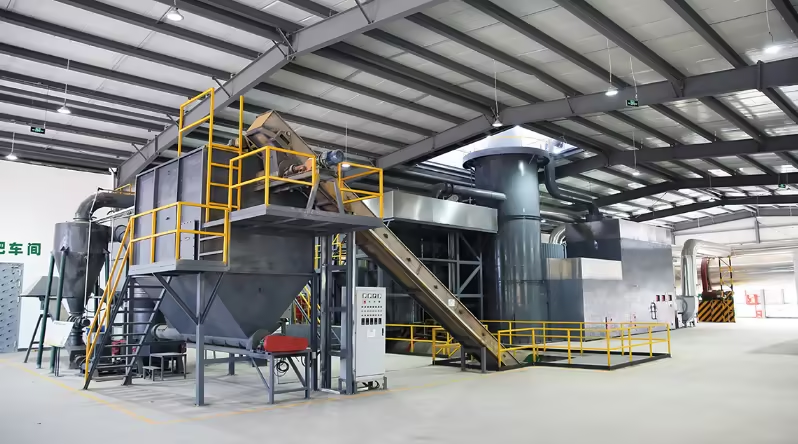
Most standard pyrolysis units operate with a one-size-fits-all approach, but our systems are engineered around a modular, process-intensified core that adapts to widely varying feedstocks without sacrificing throughput. Instead of relying on external heat sources or excessive residence times, we integrate a proprietary thermal shock method that cracks complex hydrocarbons faster and more uniformly. This means you'll see consistent oil quality and fewer char blockages, even when switching between waste plastics, tires, and biomass.
The difference really shows in the operational details. Standard options often require frequent cooldowns for cleaning, but our self-cleaning reactor internals maintain heat transfer efficiency over much longer runs. We've also stripped away the need for carrier gases or vacuum pumps in many setups, simplifying the balance of plant and slashing utility costs. Add to that a real-time adaptive control suite—far beyond a basic PLC—that adjusts temperatures and feed rates on the fly, and you get a system that essentially optimizes itself for whatever you're feeding it.
Ultimately, the gap comes down to reliability and ownership cost. Typical pyrolysis systems quietly bleed money through catalyst replacement, high maintenance, and energy waste. Our design eliminates consumable catalysts, uses a closed-loop condensation circuit to recover nearly all the heat, and is built around field-replaceable cartridge assemblies—so a major service doesn't mean a line shutdown for weeks. It's this practical, no-nonsense engineering that lets operators in remote or harsh environments keep running profitably, day after day.
A Look Inside a High-Performance Pyrolysis Reactor
Inside this advanced pyrolysis reactor, temperatures surge past 800°C within a precisely controlled oxygen-starved environment. The absence of oxygen prevents combustion, forcing complex hydrocarbons to thermally decompose into stable, shorter-chain molecules. A continuous feed system transports shredded waste through the heated chamber, where proprietary agitation mechanisms ensure uniform exposure and prevent hot spots.
The reactor walls are lined with advanced ceramic refractories that withstand thermal shock and resist corrosive byproducts. Strategically placed heating elements maintain a steady gradient, while a closed-loop vapor recovery system captures and condenses the resulting syngas and pyrolysis oil. Every parameter—residence time, temperature profile, and pressure—is monitored in real time by a network of thermocouples and optical sensors, feeding data to adaptive control algorithms that fine-tune the process dynamically.
What sets this design apart is the integration of a self-cleaning carbon removal mechanism that continuously scrapes the inner surfaces, preventing char buildup and sustaining heat transfer efficiency. The resulting output—a mix of non-condensable gases, liquid bio-oil, and solid char—is separated and filtered through a multi-stage cyclone and electrostatic precipitation system, ensuring maximum purity and yield. Every component is modular, allowing rapid maintenance and scalability without interrupting continuous operations.
From Tires to Plastics: The Many Feedstocks We Convert
Scrap tires, discarded plastics, and industrial residues all find a second life through our process. These aren’t just waste streams—they’re the raw ingredients that feed our conversion systems daily. A worn-out tire from a landfill, a jumble of mixed plastic packaging, or even agricultural plastic film gets broken down into molecular building blocks. The beauty lies in handling such unpredictable inputs without needing them sorted or spotless. That variability, which often trips up traditional recycling, is exactly what our technology thrives on.
What arrives at our facilities ranges from shredded rubber crumbs to baled agricultural film, and the chemical makeup can shift from load to load. Instead of forcing uniformity, we lean into the messiness. By fine-tuning temperature, pressure, and residence time on the fly, we maintain steady output whether the feedstock is a half-buried tire or a batch of grocery bags. This adaptability means we’re not just converting one material—we’re unlocking value from a whole spectrum of carbon-rich waste that others can’t touch.
Real-World Impact: Helping Industries Cut Costs and Emissions
Across manufacturing floors, a quiet but dramatic shift is underway. Sensors now feed real-time energy consumption data into adaptive systems that automatically throttle machinery during peak tariff windows or switch to onsite renewables when grid prices spike. One automotive plant in the Midwest slashed its electricity bill by 18% in the first year—without a single line of code rewritten—simply by letting algorithms orchestrate production schedules around the cleanest, cheapest power available. The emissions drop followed naturally: fewer fossil‑fueled megawatt‑hours pulled from the grid meant a direct cut in Scope 2 carbon, all while maintaining output targets.
Logistics operators are discovering that route efficiency isn’t just a fuel conversation anymore. By overlaying traffic pattern predictions, vehicle telemetry, and delivery density maps, a regional freight company managed to shrink its diesel usage by nearly a quarter while increasing daily stops per truck. The secret? Dynamic dispatching that bunched deliveries in tighter geographic clusters and rerouted drivers away from chronic congestion before they ever left the yard. Drivers reported less idle time, customers got narrower delivery windows, and the CFO celebrated a cost line that dipped even as order volumes climbed. Those exhaust reductions are now part of the firm’s annual sustainability report—not as a pledge, but as a bottom‑line fact.
Even in heavy process industries like cement and chemicals, where thermal loads seem non‑negotiable, low‑cost retrofits are rewriting the rules. Waste‑heat recovery units, once deemed too finicky for legacy plants, are now paired with compact thermal storage, allowing kilns to bank excess energy during off‑peak hours and release it when production ramps. A limestone quarry in Portugal cut its natural gas dependency by a third within six months, paying back the equipment in under two years. Meanwhile, the CO₂ saved per ton of product has caught the attention of regulators and investors alike—not because it was forced, but because the economics became irresistible.
Partnering with Us for End-to-End Waste-to-Energy Implementation
Taking a waste-to-energy project from concept to full-scale operation demands more than just technology—it requires a partner who understands the intricate dance between legislation, community needs, and engineering realities. We don't simply deliver equipment; we embed ourselves in every phase, from the initial feasibility studies that map out local waste profiles to the final commissioning of the plant. Our team acts as a single point of accountability, navigating the regulatory maze, managing logistics, and ensuring that the project remains financially viable without compromising on environmental standards.
What sets our approach apart is that we treat each project as a unique ecosystem. Rather than forcing a standardised design, we adapt to the specific waste streams and energy demands of the area. Whether it's integrating with existing recycling programmes or designing a facility that can evolve as the local market matures, our end-to-end involvement guarantees continuity and minimises the risks that so often plague large infrastructure ventures. The result is a facility that earns genuine community support and becomes a lasting asset, not a stranded liability.
FAQ
Our systems are built with decades of engineering refinement, focusing on thermal efficiency and continuous operation. Unlike generic setups, we use proprietary reactor designs that handle mixed waste streams without extensive preprocessing, cutting operational complexity.
It thermally decomposes waste in an oxygen-starved environment, breaking down materials like plastics and biomass into syngas, bio-oil, and char. The syngas can directly fuel generators or be upgraded, while bio-oil serves as industrial fuel, giving waste a second productive life.
Absolutely. Our advanced feeding and reactor systems tolerate a wide range of moisture, size, and composition variations. This means you can minimize sorting costs and still achieve stable output—something many competitors struggle with.
We design for low-touch maintenance: automated ash removal, self-cleaning condensers, and remote performance monitoring. Our service packages include regular virtual health checks, on-site annual inspections, and a guaranteed parts supply for over 15 years, so you're never left stranded.
While upfront costs are higher than basic landfilling, our systems often break even within 3 to 5 years thanks to reduced gate fees, energy sales, and lower environmental compliance costs. In many regions, the avoided carbon taxes and cleaner profile also unlock green incentives that incineration doesn't qualify for.
The closed-loop process inherently avoids direct combustion emissions. We further integrate multi-stage scrubbing, activated carbon filters, and continuous emission monitoring. Our standard configuration meets EU and US EPA standards, and we can tailor it to tighter local laws.
Definitely. We start with a detailed waste audit and then tweak parameters like residence time, temperature zones, and catalyst use. Even the physical layout can be adapted to your site footprint. You get a solution that fits your exact situation, not an off-the-shelf compromise.
We provide a blended onboarding program: three weeks of on-site hands-on training, comprehensive operations manuals, and a simulator tool to practice scenarios. Plus, our support engineers stay with you through the first several production cycles until your team is confident running independently.
Conclusion
When faced with mounting waste challenges, facilities across the globe are turning to pyrolysis technology to transform discarded tires, plastics, and other materials into dependable energy streams. Our team has spent years refining systems that truly lead the market—not through buzzwords, but through tangible uptime, consistent yields, and designs that operators actually enjoy running. The heart of this reliability lies in the reactor itself, where carefully controlled temperatures and material flow ensure that each batch breaks down predictably into fuel oil, carbon black, and syngas, without the hiccups that plague lesser equipment. Whether processing shredded truck tires or mixed post-consumer plastics, the versatility built into our feedstock handling means you can pivot with market conditions, not be locked into one narrow recipe.
What really separates our approach from standard offerings, though, is how deeply we embed efficiency into everyday operations. The reactors are engineered to recapture heat, minimize residue, and slash the kind of maintenance headaches that eat into margins. We’ve seen mid-sized plants cut their disposal costs by over forty percent while simultaneously slashing carbon footprints—a dual win that procurement teams and sustainability officers both celebrate. But we don’t just drop off hardware and wish you luck. Clients come to us seeking a partner who can walk them from initial feasibility studies through commissioning and long-term optimization. It’s that end-to-end commitment, paired with machinery that simply works shift after shift, that has quietly earned the trust of waste-to-energy pioneers who demand proven results over promises.
Contact Us
Contact Person: Ellen Zhang
Email: [email protected]
Tel/WhatsApp: +86(21) 2287 6756
Website: https://www.tundrr.com/en/