

Precision Turning Machine Manufacturer Insights for Modern Manufacturing
2026-08-02
In modern manufacturing, precision isn't just a goal—it's the baseline. From aerospace to medical devices, the demand for flawless turned components has never been higher. Yet behind every tight tolerance and mirror finish lies a question: who can deliver that level of consistency at scale? That's where deep-dive insights from a seasoned WINNRUI CNC partner become invaluable. We're pulling back the curtain on what truly drives excellence in precision turning—and why machine choice, process control, and real-world expertise matter more than most spec sheets admit. If you're ready to rethink your production benchmarks, you're in the right place.
How Precision Turning Shops Are Redefining Speed Without Sacrificing Accuracy
Modern precision turning shops have quietly engineered a shift that once seemed contradictory: accelerating production timelines while holding tolerances tighter than ever. Walk through any top-tier facility today and you’ll notice the rhythm is different. Machines don’t just spin faster—they think. Real-time measurement systems probe workpieces mid-cycle, adjusting tool offsets in microseconds to compensate for thermal drift or tool wear. This isn’t the reactive quality control of a decade ago. It’s a continuous, automated feedback loop that lets shops push speeds into territory that would have scrapped parts just a few years back.
The secret often lies in how they’ve reimagined the entire workflow, not just the cutting parameters. Instead of relying on a single high-speed pass, many shops now blend roughing and finishing strategies with adaptive toolpaths that keep chip loads constant. Paired with high-pressure coolant delivered exactly where it’s needed, cutting edges stay cool and stable even at aggressive removal rates. Some have even started using vibration-damping toolholders and custom workholding that eliminates micro-shifts during heavy cuts. It’s a holistic approach—where every element from the spindle bearing to the chip conveyor communicates—and it’s quietly making the old trade-off between haste and precision feel like a relic.
What’s emerging isn’t just a faster lathe or a smarter control. It’s a culture where speed is engineered into the process from the first print review. Shops that once guarded their tribal knowledge now simulate cycles in software, predicting deflection and chatter before metal ever meets the spindle. The result? Lead times that used to be measured in weeks now close in days, with first-article inspections passing at rates that seemed unattainable. The real redefinition is that accuracy is no longer the brake on speed—it’s the engine.
The Unseen Material Innovations Driving Swiss-Type Lathe Performance
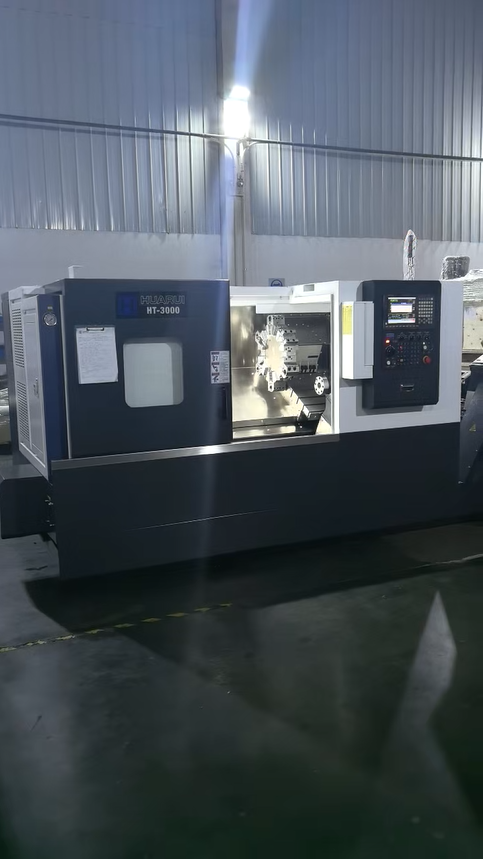
When you watch a Swiss-type lathe in action, it's easy to fixate on the whirring spindles and the blur of cutting tools. But the real magic often lies beneath the polished exterior, in the very materials that make up the machine's core. Recent shifts in metallurgy and composites have quietly reshaped what these lathes can achieve. We're not talking about simple upgrades—these are fundamental changes that allow for tighter tolerances and longer tool life without much fanfare.
One standout development is the use of cermet and nano-coated guide bushings. Traditional steel bearings and bushings, even when perfectly machined, introduce vibration and thermal drift over time. The newer cermet blends, however, combine ceramic hardness with metallic toughness at a microscopic level. This not only dampens vibration more effectively but also resists temperature-related expansion, keeping bar stock centered with almost eerie consistency. Operators report noticeably smoother surface finishes and fewer adjustments during long runs.
Beyond bushings, the structural bones of the lathe have also evolved. Cast iron bases, once the default, are increasingly being replaced with mineral composite or polymer granite formulations. These materials absorb vibrations far better than metal, turning what used to be a noisy, high-frequency buzz into a soft hum. The result? Tool tips encounter less erratic motion, so tiny diameter drills and delicate threading operations last far longer. It's a silent revolution, one that doesn't show up in flashy brochures but directly impacts the bottom line of precision shops.
Beyond Standard Tolerances: When Custom Micro-Machining Becomes a Necessity
In many high-stakes industries, off-the-shelf components with standard tolerances simply cannot meet the demands of the application. When you're dealing with implantable medical devices, aerospace fuel nozzles, or fiber-optic alignment fixtures, deviations of even a few microns can lead to catastrophic failure or significant performance loss. This is the point where conventional machining bows out and custom micro-machining steps in—not just as an option, but as the only viable path forward.
The shift from standard to custom isn't triggered by a single factor. It might start with an exotic material that refuses to behave under generic tooling, a geometry too delicate for standard CNC, or a surface finish requirement that surpasses typical capabilities. In these scenarios, a tailored approach allows engineers to control every variable—cutter path, feed rate, cooling strategy, even the vibration signature of the machine itself. Suddenly, achieving true position tolerances under 5 µm or creating burr-free edges on a 50 µm wall becomes not just possible, but repeatable.
What makes custom micro-machining truly indispensable, however, is its role in bridging the gap between design intent and physical reality. Prototypes and low-volume production runs often reveal that standard tolerances were optimistic at best. Custom processes let you iterate quickly, refining toolpaths and fixturing in ways that off-the-shelf solutions never could. It's the difference between living with 'good enough' and delivering exactly what the application demands—even when that means holding tolerances the rest of the industry wouldn't dare to quote.
Rethinking Workflow Automation: Case Studies from High-Mix, Low-Volume Turning Facilities
In high-mix, low-volume turning facilities, the concept of workflow automation often clashes with the reality of constant change. Traditional automation, designed for repetitive, high-volume production, rarely fits. Shops must rethink automation not as a fixed system, but as a flexible framework that adapts to varying part designs, materials, and batch sizes. Real-world case studies show that successful automation in these environments hinges on modular, programmable equipment and intelligent scheduling software. Operators become facilitators rather than machine tenders, overseeing multiple processes while the system handles part loading, tool changes, and in-process measurement.
One case from a precision aerospace components supplier illustrates this shift. They moved from dedicated robotic cells for each machine to a fleet of mobile collaborative robots serving multiple lathes. Combined with a dynamic scheduling engine that prioritizes jobs based on due dates and available tooling, the shop reduced setup times by 40% and improved spindle utilization. The key was treating automation as a services layer that connects machine tools, inspection stations, and material storage, rather than isolated islands. This approach demands a rethinking of the entire workflow—from how jobs are released to the floor to how quality data flows back for process adjustments.
Another facility, a contract manufacturer specializing in medical implants, faced challenges with frequent setups and complex geometry inspections. Their solution involved integrating on-machine probing and laser scanning directly into the automated cycle. Instead of moving parts to a CMM, the robot loaded parts into a dedicated scanning station adjacent to the lathe, feeding dimensional data back to the control system for automatic offset updates. This closed-loop automation minimized human intervention and scrap, demonstrating that in high-mix settings, the real value lies in data-driven adaptability rather than raw speed. These examples underscore that rethinking automation means prioritizing flexibility, cross-system communication, and scalable solutions that grow with the business.
The Quiet Shift Toward Energy-Efficient Turning Centers in Modern Factories
For decades, the humble turning center has been the workhorse of machine shops, reliably churning out parts with little fanfare. But a quiet transformation is underway, driven not by flashy new capabilities but by a growing need to reduce energy consumption. Manufacturers are increasingly scrutinizing every kilowatt-hour, and turning centers—often running continuously—are a prime target for optimization. The shift isn't about replacing entire fleets overnight; it's a gradual refinement of components, controls, and practices that cumulatively deliver substantial savings.
One of the most impactful changes hides in the spindle and servo motors. Modern designs incorporate high-efficiency permanent magnet motors that maintain torque at low speeds without the wasteful heat generation of older induction types. Paired with regenerative drives, these systems can capture braking energy and feed it back into the factory grid rather than dissipating it as heat. It's not just the big-ticket items either—automated lubrication systems now use precisely metered oil instead of constant floods, and standby modes intelligently power down subsystems during idle periods without sacrificing quick restart times.
Beyond the hardware, the real differentiator is data. Smart turning centers now monitor their own energy profile, learning from cutting patterns to suggest more efficient toolpaths or spindle speeds. A shop might discover that slightly reducing roughing speed and increasing feed rate cuts cycle time while drawing less current. These insights often come from cloud-based analytics, but the human element remains crucial—operators and engineers need to trust and act on the recommendations. The factories leading this quiet shift understand that energy efficiency isn't a feature to be bolted on; it's a design philosophy that starts with the first blueprint and continues through every chip made.
Mastering Complex Geometries: Lessons from Multi-Axis Turning Applications
Multi-axis turning has redefined what’s possible when it comes to machining intricate components. Unlike conventional lathes limited to linear cuts, these advanced machines synchronize multiple axes of motion, allowing the tool to approach the workpiece from virtually any angle. This capability is crucial for parts with undercuts, eccentric features, or complex profiles that would otherwise require multiple setups or specialized fixtures. The real lesson from years of application is that mastering complex geometries isn’t just about the machine’s technical specs—it’s about rethinking your entire approach to process planning. By leveraging simultaneous interpolation, you can consolidate operations, reduce handling errors, and achieve surface finishes that once demanded secondary finishing steps.
One of the most valuable insights from multi-axis turning applications is the importance of toolpath strategy over raw power. Early on, many shops invest heavily in high-end machines but still program them with a 2-axis mindset, missing out on curvilinear toolpaths that maintain constant tool engagement and chip load. For instance, when turning a complex aerospace fitting with varying wall thicknesses, dynamic toolpaths that continuously adjust the lead angle can prevent chatter and deflection. Another lesson centers on workholding: multi-axis turning often enables single-setup machining, but that demands creative clamping solutions that don’t interfere with the tool’s reach. Smart use of auxiliary spindles and driven tooling further blurs the line between turning and milling, letting you drill off-axis holes or mill flats without moving the part.
Adapting to the learning curve is perhaps the most underrated aspect of mastering these geometries. It’s tempting to rely on CAD/CAM defaults, but fine-tuning parameters—like adjusting the tool’s lead-in/out moves to avoid dwell marks—can make the difference between a scrapped part and a flawless one. Shops that excel often build a library of proven strategies for different material families, which they refine over dozens of jobs. Ultimately, the mastery comes from a blend of simulation-driven trial and error, deep awareness of tooling limits, and a willingness to challenge traditional sequences. The technology is ready; the real key lies in developing the intuition to match the complexity of the part with the right kinematic dance.
FAQ
It comes down to thermal stability and swarf management. Machines that hold tight tolerances across thousands of cycles without constant adjustment are the ones that thrive. Look for designs with integrated cooling systems and chip conveyors that actually keep up with the pace, not just the ones that look good on a spec sheet.
Multi-axis turning centers have blurred the lines between turning, milling, and drilling. We’re seeing more shops consolidate ops, reducing setups and work-in-progress. The real advantage is the ability to machine intricate geometries in one clamping, which slashes lead times and improves positional accuracy, especially on medical and aerospace components.
People obsess over spindle speed and horsepower but ignore the base casting quality and linear guide construction. A heavy, well-ribbed casting dampens vibration better, and premium linear guides with proper lubrication systems extend precision life. Also, the electrical cabinet design—how well it’s sealed against coolant mist and dust—can prevent downtime down the road.
It’s not just about dashboards. Practical things like real-time tool wear monitoring and adaptive control are making a tangible difference. When a machine can automatically adjust feed rates to compensate for insert wear, you get consistent part quality longer. Plus, predictive maintenance alerts based on spindle load patterns help avoid catastrophic failures.
It’s a total cost of ownership equation. A cheaper machine might meet today’s tolerance but could require more frequent intervention and produce more scrap as it ages. The high-end option often includes better service, easier access to spare parts, and features like automatic tool presetting that cut setup time. If you’re running lights-out, the premium for reliability pays back quickly.
The control can be the bottleneck or the differentiator. Modern CNCs with conversational programming and simulation let operators prove out programs on screen, slashing prove-out waste. Look for controls that support advanced functions like full 5-axis interpolation and have enough processing speed to handle complex contouring without stuttering—critical for maintaining surface finish on tight radii.
Even the best turning center can underperform if it’s not dialed in for your specific parts. A manufacturer with deep application expertise will help you select the right tooling, optimize cutting parameters, and even tailor the machine layout. That partnership reduces the learning curve and often reveals process improvements you hadn’t considered, like combining operations or using sub-spindles for part-off.
Conclusion
Precision turning shops are rewriting the rules of high-speed production by integrating advanced real-time monitoring and adaptive control systems that maintain tight tolerances even as cycle times shrink. This balance between velocity and accuracy is no longer a trade-off but a design philosophy, driven by toolpath optimization and vibration damping technologies. At the material level, Swiss-type lathes are benefiting from new carbide grades, coatings, and high-temperature alloys that withstand aggressive cutting parameters, while developments in micro-grain steels reduce wear and extend tool life. As components shrink across medical and electronics sectors, custom micro-machining has moved from niche to necessity, demanding spindle runout in the single-digit microns and temperature-controlled environments to achieve features once thought impossible.
On the shop floor, high-mix, low-volume producers are leveraging flexible automation—robotic loading, palletized systems, and quick-change tooling—to cut setup times and handle diverse part families without dedicated fixturing. Case studies reveal that even small batches can be profitable when software ties together scheduling, in-process measurement, and tool management. Concurrently, a quiet shift is underway toward energy-efficient turning centers that recover braking energy, use variable-displacement pumps, and minimize idle consumption, aligning with sustainability goals and cost pressures. Finally, multi-axis turning applications are pushing the envelope on complex geometries, with simultaneous 5-axis work and live tooling enabling the completion of intricate parts in a single clamping. The collective lessons from these trends highlight a manufacturing landscape where precision is no longer just about holding dimensions—it’s about intelligent integration of materials, processes, and data to deliver reliable output at scale.
Contact Us
Contact Person: Tim
Email: [email protected]
Tel/WhatsApp: +86 15522553731
Website: https://www.winnrui-cnc.com/