

RFID Warehouse Management: Optimizing ODM Operations and Inventory Control
2026-10-15
If your ODM team still relies on barcode scans to track incoming materials and finished goods, you already know where the gaps are: missed reads, delayed counts, and inventory records that only match the floor on a good day. RFID changes that equation. With no line-of-sight required, every tagged item can be captured automatically as it moves through receiving, production, and shipping. OSRFID works with ODM operations to build warehouse systems that turn this real-time visibility into tighter inventory control and fewer disruptions. Here is what that looks like in practice.
RFID Checkpoints That Slash ODM Inventory Discrepancies
ODM warehouses often struggle with inventory records that drift away from physical reality, especially when components move between production lines and staging areas without a reliable handshake. RFID checkpoints placed at dock doors, transfer gates, and high-traffic corridors force every tagged bin or pallet to announce itself, updating the system in real time rather than relying on end-of-shift manual counts. This continuous visibility closes the small gaps that usually snowball into large discrepancies by month-end.
Unlike barcode scans that demand line-of-sight and human discipline, these RFID gates work in the background while forklifts and carts keep moving. A pallet passing through a checkpoint triggers an automatic read of every item on it, even if tags are partially obscured or stacked tightly. The result is a sharper picture of what is actually on hand, which lets planners reorder with confidence and stop padding safety stock to cover for ghost inventory.
The most stubborn discrepancies come from items that are physically present but missing from the system, or recorded as available while actually sitting in a quarantine area. RFID checkpoints at those specific transition points act as tripwires that flag mismatches the moment they cross. Over time, the data also reveals patterns, such as a receiving dock that routinely fails to log returns or a staging area where picks go unconfirmed until someone fixes them days later.
Real-Time Raw Material Visibility for Just-in-Time ODM Builds
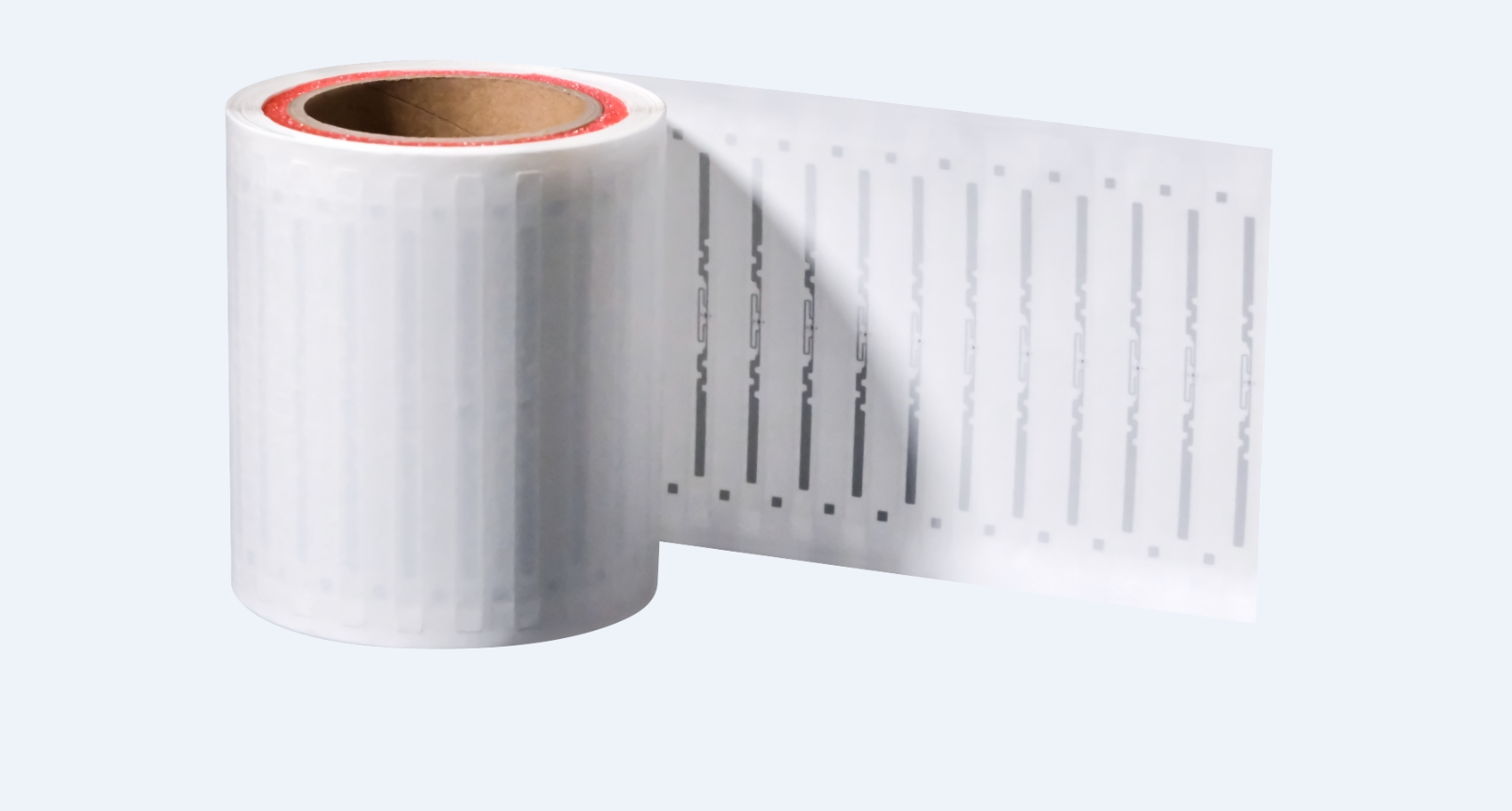
In high-mix, low-volume ODM production, the line between on-time delivery and costly downtime often comes down to whether the right raw material is at the right workstation at the right moment. Real-time visibility into incoming materials—tracked from supplier dispatch through dock receipt, quality inspection, and kitting—eliminates the guesswork that undermines just-in-time builds. Instead of relying on static ERP snapshots or daily inventory reports, production planners can see actual material status as it changes, allowing them to re-sequence work orders, adjust line assignments, or expedite a critical component before a bottleneck forms.
This level of transparency transforms supplier collaboration from a series of transactional updates into a shared operational flow. When suppliers transmit shipping notices with serialized or batch-level granularity, the ODM gains early warning of any deviation—whether a customs delay, a partial shipment, or a rejected lot at incoming QC. The system then automatically recalibrates the build schedule, so that no assembly station waits idle for a missing cable or a late-arriving PCB. The result is not just fewer line stoppages, but a tighter coupling between material flow and takt time, which is exactly what just-in-time manufacturing demands.
For ODMs managing multiple concurrent customer programs, real-time raw material visibility also enables smarter allocation under constraint. A component originally earmarked for one build can be instantly re-routed to a more urgent order without triggering manual reconciliation or inventory adjustments. Dashboards tuned to role-based views—showing only what the planner, buyer, or line lead needs—prevent information overload while keeping every critical material movement visible. Over time, the accrued data on supplier lead-time variability and in-house staging dwell reveals patterns that help fine-tune safety stock levels and vendor scorecards, so the entire supply chain learns to breathe with the rhythm of the build.
Eliminating Manual Cycle Counts with Continuous RFID Audits
For years, warehouse managers treated the periodic cycle count as a necessary evil—shutting down aisles, pulling staff from their regular duties, and still ending up with variances that took days to reconcile. The introduction of continuous RFID audits changes this entirely. Instead of counting a subset of inventory once a week or month, RFID readers positioned at key chokepoints and storage zones silently verify every tagged item as it moves, rests, or gets picked. The result is a live, always-current view of stock levels without a single clipboard or barcode scanner in sight.
The operational shift is more than just convenience. Manual counts introduce their own errors: fatigue, double-scanning, misplaced tallies, and the simple impossibility of counting everything. RFID audits capture data passively, often multiple times per item per day, so discrepancies surface the moment they occur—not at the end of a count cycle. A misplaced pallet or a missed putaway shows up as an exception within minutes, allowing the team to correct it before it snowballs into a shipping delay or a stockout.
Adopting this approach also frees up labor hours that were previously burned on repetitive counting tasks. Those employees can be redeployed to higher-value work like order accuracy checks, receiving inspections, or customer-specific kitting. Over time, the accumulated time savings and the sharp drop in inventory write-offs justify the RFID infrastructure investment many times over. Manual cycle counts become a relic of a less connected era, replaced by a system that simply never stops counting.
Warehouse Slotting Strategies Powered by RFID Movement Data
Slotting decisions have long relied on static rules like velocity or cubic movement, but those snapshots miss the messy, real-world paths that products actually travel. RFID movement data captures every pause, turn, and dwell at the reader level, turning warehouse aisles into a living heat map. Instead of assuming a pick face is optimal because it sits near shipping, you can see that a supposedly fast mover spends most of its day staged in a corner because of poor replenishment timing. That kind of granular truth lets you rebuild slot assignments around actual travel arcs rather than theoretical throughput.
One underused angle is using RFID timestamps to detect “micro-dwells” — those two- or three-second stops that don’t show up in a WMS but reveal where workers hesitate or double-handle items. When you cluster those micro-dwells across thousands of reads, patterns emerge that point to slot adjustments no spreadsheet would ever suggest. A pallet rack near a conveyor junction might seem convenient, but if RFID shows repeated back-and-forth motion there, it’s quietly adding meters to every order. Moving that SKU one bay over can cut total travel distance without changing any formal process.
The real advantage comes when you pair movement data with shift-level variance. A slot that works beautifully during first shift may become a bottleneck after lunch because of different picking styles or cart paths. RFID lets you segment slotting performance by hour and crew, so you can assign dual-location strategies or rotate fast movers to secondary forward-pick areas only when the data says they’ll actually be grabbed. Over time, this creates a self-correcting slotting logic that adapts to the warehouse’s true rhythm instead of a one-time static re-profile.
How RFID Safeguards High-Value Components in ODM Storage
In ODM storage facilities, high-value components such as custom ASICs, optical transceivers, and precision-machined enclosures are often kept in shared bins or modular shelving, making manual reconciliation slow and error-prone. RFID changes this by attaching a passive tag to each component tray or sealed ESD bag at receiving. The tag carries a unique serial number linked to the purchase order, customer project, and required firmware revision, so a handheld or fixed reader can verify identity without opening packaging or scanning a barcode line-of-sight.
As components move between quarantine, kitting, and production buffer zones, overhead readers at doorways and smart shelves record each transition automatically. If a tray bound for one customer's build is routed toward a different project area, the system flags the mismatch immediately. Storage staff also use RFID to run cycle counts in minutes by walking a reader down an aisle; missing or misplaced items show up as gaps in the expected tag population. This closed-loop visibility keeps expensive parts from walking off, getting mixed into wrong lots, or sitting past their moisture sensitivity handling window without triggering a re-bake process.
Scaling RFID Across Multiple ODM Warehouse Zones Without Downtime
Expanding an RFID system across several ODM warehouse zones rarely works as a big-bang switchover. Instead, the rollout is broken into short, zone-specific phases that let existing receiving, putaway, and shipping flows keep moving. Each phase starts with a fixed reader and antenna survey in a live but contained area, using sample tagged pallets to verify read accuracy before any process depends on the new hardware. If a dock door or conveyor shows weak coverage, the team adjusts antenna angles or adds a local edge reader without touching the rest of the building.
The more useful pattern is to separate data collection from business systems at the start. RFID readers push raw tag events to a local message buffer per zone, and only those events that pass a light validation layer are forwarded to the warehouse management system. That buffer absorbs network latency or a temporary server restart, so a brief backend hiccup does not cause missed reads or double handling on the floor. It also gives the rollout team a clean way to compare old barcode scans with new RFID captures during the transition, which makes it easier to correct tag placement or encoding rules without shutting down a line.
After the first two zones stabilize, the remaining sites are brought up using a repeatable but not rigid template: same device models and firmware where possible, but separate tuning thresholds for metal racking, liquid-heavy goods, or high-speed conveyors. This keeps local teams from re-solving the same problems while still respecting the physical differences between zones. By the time the last zone is live, the system has already been running in mixed mode for weeks, so there is no single cutover date and no downtime to announce.
FAQ
Barcode scanning requires line-of-sight and one-at-a-time reads, so operators often skip items when time is short. RFID reads dozens of tags per second without aiming, and it updates counts automatically as pallets or bins pass through gates. In ODM warehouses where similar components from different clients sit side by side, that difference cuts cycle-count time from days to hours and pushes accuracy above 99%.
ODM lines switch between customer products frequently, and the biggest risk is feeding the wrong reel or carton into a line. RFID tags can carry customer code, work order, and revision data. Before changeover, a handheld or fixed reader verifies all staged materials in one pass. If something doesn't match the current BOM, the system blocks the setup immediately.
When the same part comes from multiple suppliers, traceability is not optional. RFID tags record supplier lot, date code, receiving time, and storage location. During a quality hold or recall, you can query which work orders consumed a specific lot and where remaining stock sits, often within minutes instead of days of paper chasing.
Metal racking and liquids cause signal reflections and absorption, so tag placement and type need careful testing. Integration with existing WMS/ERP can be messy if the warehouse team tries to map RFID data onto old barcode fields. Tag cost allocation across clients is also political. Most successful deployments start with receiving and shipping doors before expanding to bin-level tracking.
Each work-in-process container or pallet gets a tag that records the last station and timestamp. As material moves through assembly, test, and pack, readers log transitions automatically. Planners see live bottlenecks—like a queue building at SMT or functional test—and can reroute or prioritize without waiting for hourly reports.
For a mid-sized ODM with high SKU variety and frequent changeovers, the payback usually comes within 12 to 24 months from fewer stockouts, less obsolete inventory, and faster cycle counts. If the operation has only a few hundred SKUs and stable schedules, a barcode system might still be adequate. The decision should be based on measured error rates and labor hours spent searching for material, not on RFID hype.
ODM warehouses often accumulate customer-specific materials that become dead stock after forecast changes. RFID gives real-time visibility into how long each tagged batch has been sitting and where it is. Planners can spot slow-moving items early and either negotiate with the customer to consume them or reallocate to another program. This reduces write-offs and frees up floor space.
Conclusion
RFID warehouse management fundamentally changes how ODM operations handle inventory accuracy and material flow. Instead of relying on periodic manual cycle counts that often miss discrepancies, continuous RFID audits at strategic checkpoints deliver near-real-time reconciliation of stock movements. This slashes the typical inventory variance caused by misplaced raw materials or untracked work-in-progress. For just-in-time ODM builds, real-time visibility into raw material locations means planners can confidently release production orders without buffering excess inventory. Meanwhile, RFID movement data feeds slotting algorithms that reposition fast-moving components closer to dispatch areas, cutting pick travel time and reducing congestion in high-traffic zones.
Beyond day-to-day efficiency, RFID acts as a safeguard for high-value components stored in ODM warehouses. Tagged assets trigger alerts if they leave designated zones without authorization, effectively deterring pilferage and accidental misplacement. Scaling this infrastructure across multiple warehouse zones doesn't require shutting down operations; phased reader installation and edge-based data processing allow new areas to come online gradually without interrupting existing workflows. The result is a unified control layer where every tagged item, from tiny connectors to finished subassemblies, remains accounted for in real time. This shifts warehouse management from reactive stocktaking to proactive, data-driven orchestration of ODM supply chains.
Contact Us
Contact Person: Esme Mo
Email: [email protected]
Tel/WhatsApp: 0086 191 2931 7837
Website: https://www.osrfidglobal.com/