

Robotic Bending Company Redefines Precision Sheet Metal Work
2026-10-28
Most sheet metal shops still rely on hand-fed bends and guesswork, but one company is changing that narrative. HUNSONE, a robotic bending specialist, is pushing precision to levels that were once thought impossible for automated systems. The result? Tighter tolerances, faster turnaround, and a whole new standard for quality. Here’s what that shift means for manufacturers and engineers alike.
Bending Metal With Robotic Patience
A robotic arm lowers its gripper toward a sheet of aluminum, pausing just above the surface. It waits for the perfect moment, then presses down with a force that would crush a human hand, yet it applies that force so gradually the metal seems to flow rather than break. This is not brute strength; it is the quiet precision of a machine that has learned to feel the metal's resistance, adjusting its angle by fractions of a degree until the bend is exactly right.
In older factories, workers would hammer or press sheet metal into shape through trial and error, leaving behind scrap bins full of cracked or misaligned pieces. The robotic approach replaces that guesswork with sensor feedback and slow, deliberate motion. Each pass might take minutes, but the result is a fold so clean it looks like the metal was born that way. The robot's patience becomes its greatest tool, turning a violent act of deformation into something almost gentle.
What makes this method stand out is not the software or the hydraulic systems alone, but the unhurried rhythm they create together. The machine never rushes, never gets frustrated, never overcorrects. It simply holds the metal, waits for the data, and bends. That kind of robotic patience is hard to imitate, and it is why manufacturers are now using these systems for everything from aircraft panels to custom architectural details that demand both strength and grace.
Precision That Does Not Drift
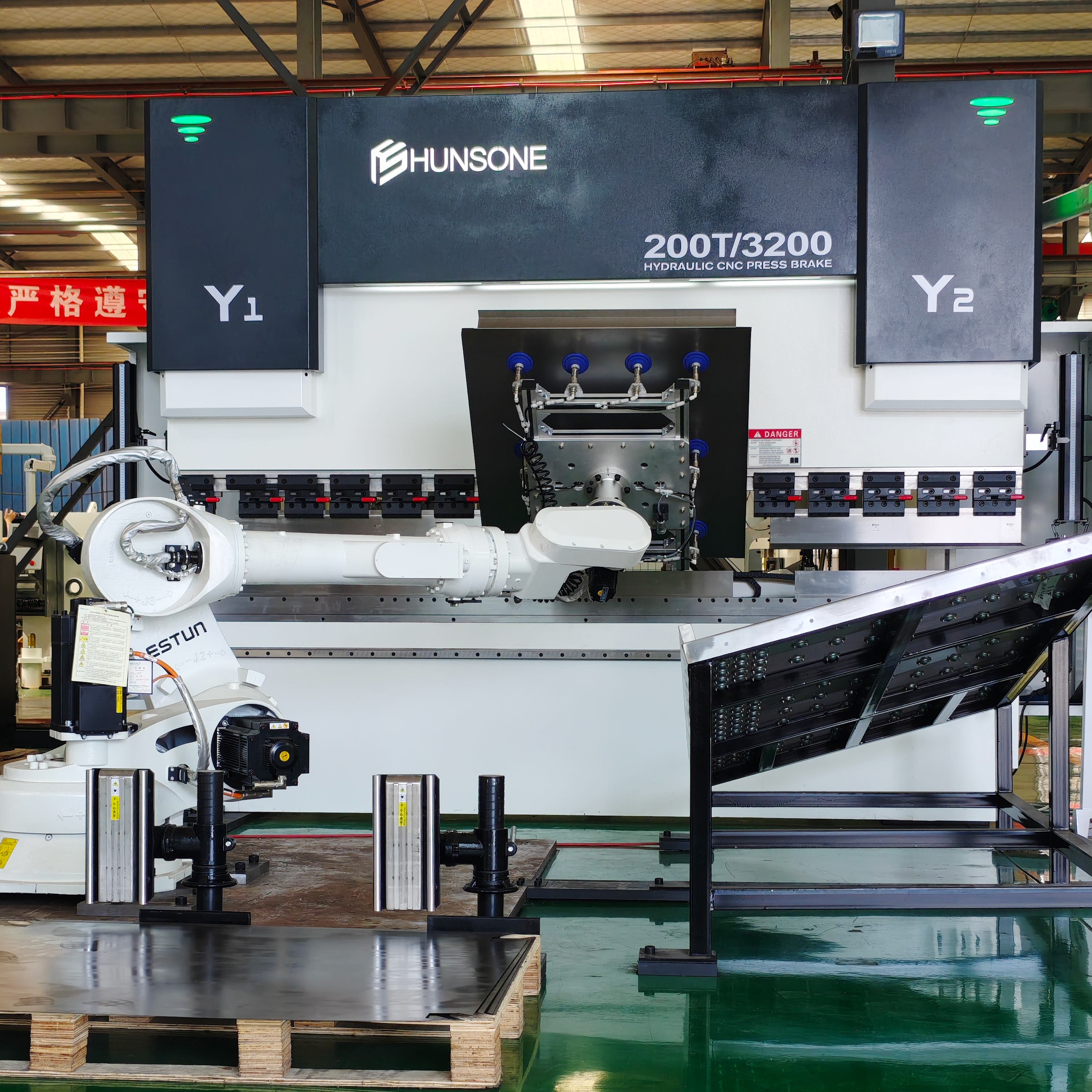
Every measurement cycle introduces variables—temperature shifts, mechanical wear, pressure fluctuations. In conventional systems these accumulate as invisible drift, quietly eroding repeatability until the data becomes unreliable. Our approach locks the reference plane at the sensor level, using a closed-loop feedback that corrects for micro-deviations before they can propagate. The result is a calibration curve that stays flat across hours of continuous operation, not just minutes.
What sets this apart is the absence of periodic re-zeroing routines. Most instruments demand a pause, a reset, a manual intervention that interrupts workflow and introduces operator bias. Here the drift component is actively canceled through dual-path sampling—one path measures the signal, the other continuously tracks the baseline. That differential output is what you read, not a single-ended value that has quietly wandered from its original zero point.
In practice this means a thousandth of a unit stays a thousandth, whether you are ten minutes into a run or ten hours. The first reading and the ten-thousandth share the same confidence interval. For applications where small errors compound—batch consistency, long-duration monitoring, comparative analysis—that stability is not a convenience. It is the difference between a trend you can act on and a chart you have to second-guess.
From Prototype to Production Without the Usual Wait
Most teams brace for a long, tedious handoff between the first working prototype and a production-ready build. The usual wait comes from reworking layouts, swapping out placeholder components, and chasing down supply chain gaps that only surface late. Here, that gap shrinks because the prototype is built on the same core modules and assembly rules as the final unit. What you validate in the lab is what the line actually builds, so the transition feels less like a restart and more like a continuation.
Early prototypes often rely on one-off parts or shortcuts that look great in a demo but fall apart under real tolerances. By keeping the design-for-manufacturing checks active from day one, the first physical build already reflects actual material behavior, thermal limits, and connector placement. That means fewer surprise revisions, faster pilot runs, and a much shorter road from bench test to boxing the first customer shipment.
The Quiet End of Manual Setup
Not long ago, setting up a new device or piece of software meant wading through menus, entering license keys, and hoping the driver disk wasn't scratched. Today, that ritual has largely vanished—not with a bang, but with a quiet shrug. Open a laptop for the first time and it asks only for a Wi-Fi password. Plug in a printer and it works before you've even found the manual. The era of manual setup didn't end because we demanded it; it ended because the tools quietly got smart enough to handle themselves.
Underneath this shift is a move toward tacit configuration. Devices now negotiate with each other in the background, exchanging capabilities and preferences without asking for input. Your phone knows your calendar, your car knows your seat position, and your apps share just enough data to skip the tedious parts of first use. What's striking is how little we notice. We no longer compliment a gadget for being easy to set up—we simply expect it to vanish into the background, ready to serve.
Yet this quiet end carries a subtle trade-off. When setup becomes automatic, the opportunity to understand how something works, to tweak it before first use, fades as well. Most people never adjust default privacy settings, never change the default font, never question why the cloud sync is on. Manual setup was slow and often annoying, but it forced a moment of engagement. Now, we gain speed and lose that pause—a small price, perhaps, but one worth remembering as the last dial-up tone fades from memory.
Why Complex Geometry No Longer Means Extra Cost
Not long ago, a curved wall or a twisted facade meant custom formwork, hand-bent rebar, and a budget that swelled with every degree of curvature. That logic has now flipped. Digital fabrication tools read the same 3D model architects use, so a CNC router or robotic arm can produce one-off components with the same precision as a mass-produced part. The expensive part is no longer the shape itself; it is the data. And once that data exists, replicating or adjusting a complex form costs almost nothing.
What changed is the relationship between repetition and economy. Mass production used to reward identical units because setup costs were high and mistakes were expensive. With additive manufacturing and laser cutting, there is no mold to amortize, no jig to rebuild. A batch of fifty unique brackets can be cut in the same run as fifty identical ones. This shifts the cost driver from geometric complexity to material and machine time, which are far more predictable and easier to optimize.
Design teams have also learned to work with tolerances instead of fighting them. Parametric models allow small variations to be absorbed by adjustable joints or printed shims, so site labor no longer spends weeks making a complex envelope fit. The result is that ambitious geometry can be delivered without a premium, as long as the workflow is digital end-to-end.
A Sheet Metal Shop That Runs on Data
Walk past the loading dock and you won't hear much beyond the hum of lasers and the occasional clatter of a dropped blank. But inside this sheet metal shop, the real work unfolds in a quiet stream of numbers: material thickness, bend angles, tool wear, job queue times. Every cut and every bend feeds a living model of the floor, one that nudges schedules, flags a dulling punch before it ruins a run, and tells the night shift which machine needs a bearing swap by 2 a.m.
That's the odd thing about a data-driven fab shop — it feels less like a factory and more like a patient, slightly obsessive coworker. The press brake operator still reads the print, still feels the back gauge snap into place, but there's a second pair of eyes tallying springback deviations across a thousand parts. When a new alloy shows up with a temper slightly off spec, the system already knows to adjust the bend compensation before the first scrap part hits the bin.
It's not magic, just attention. A shop that runs on data doesn't replace the hands that load sheets and weld seams; it gives them a longer memory and a sharper hunch. The best ones still smell the cutting fluid and hear a bad bearing before any sensor beeps. They just pair that instinct with a logbook that never sleeps, so the next hundred parts look less like a guess and more like a promise kept.
FAQ
They've paired adaptive robotics with real-time angle correction, so instead of relying on operator experience for every bend, the system measures and adjusts on the fly. That closes the gap between digital model and finished part in a way manual setups rarely match.
It's not just about hitting a tighter tolerance on paper. The robot compensates for springback and material variation within milliseconds, often holding repeatability to a few thousandths of an inch across production runs, even on tricky alloys.
Complex brackets, enclosures with multiple flanges, and low-to-mid volume runs where tooling changes used to eat up hours. The system excels at parts that demand consistency across many bends but don't justify dedicated hard tooling.
Not really. It shifts their role from manual bending to process oversight. A good operator still programs bend sequences and inspects first articles, but the robot handles the repetitive, physically demanding work, which cuts down on injuries and inconsistencies.
Sensors measure each blank before bending and feed that data to the controller. If a sheet is slightly thicker or harder than nominal, the robot adjusts force and angle automatically, so the same program works across batches without constant tweaking.
Medical device housings, aerospace brackets, EV battery enclosures, and custom electronics enclosures are early adopters. They need tight tolerances and traceability, and robotic bending gives them both without the lead time of progressive dies.
Because there's no hard tooling to cut and no manual trial-and-error on the first bend. A CAD file can be imported, simulated offline, and sent to the cell. First articles often come off the robot in hours instead of days.
They're working on integrating AI-driven bend sequence optimization and automated material handling from laser cutting to bending. The goal is a lights-out cell where a flat blank enters and a finished, inspected part exits.
Conclusion
Robotic bending has moved far beyond the clumsy automation of the past. At this company, a robot arm works through each bend with a patience that no human operator could sustain hour after hour. The metal is formed in a single, uninterrupted sequence, and the repeatability is so tight that parts come out identical whether it is the first or the five-hundredth piece. That kind of precision does not drift with fatigue or shift changes. Manual setup, once the hidden bottleneck of every sheet metal shop, has quietly disappeared. Fixtures and back gauges are now adjusted by the machine itself, often in seconds, while the operator oversees several cells at once.
Prototypes no longer sit in a queue behind long production runs. The same robotic cell can switch from a one-off bracket to a full batch of enclosures without the usual wait for tooling changes. Complex geometry used to mean extra cost because each bend required a new setup or a skilled hand. Now the robot reads the part data and adapts its path, so a part with ten unusual angles costs little more than a simple box. Behind it all, the shop runs on data: sensors record every bend angle, springback, and material variation, feeding that information back into the control system. The result is a sheet metal operation that behaves less like a traditional job shop and more like a self-correcting production system.
Contact Us
Contact Person: James Chen
Email: [email protected]
Tel/WhatsApp: 86 13770803946
Website: https://www.hunsone.com/