

Stainless Steel Self Tapping Screws Company Delivering Durable Fastening Solutions
2026-11-16
Why do some stainless steel self-tapping screws hold for decades while others snap on day one? The difference isn't just the alloy—it's the manufacturing mindset. Wanluo has spent years refining durable fastening solutions that don't just meet spec sheets, but survive real-world torque, vibration, and weather. In this post, we'll break down what actually separates reliable fasteners from the rest.
How Our Stainless Steel Screws Keep Their Grip Through Temperature Swings
A screw that holds at room temperature can loosen after a few hot-cold cycles if the materials expand at different rates. Our stainless steel screws are made from an austenitic alloy with a thermal expansion coefficient that closely matches common aluminum and steel housings, so the joint moves as a unit instead of fighting itself. The thread roots are rolled rather than cut, which leaves a denser grain structure and keeps micro-cracks from starting when the metal stretches and shrinks.
We also set the initial preload higher than standard torque tables suggest, but still well within the elastic range of the fastener. That extra stretch acts like a spring reserve: when the assembly heats up and the clamped parts push apart, the screw has enough stored elongation to follow the movement without losing clamp force. During cooling, the same reserve pulls the joint back tight instead of letting the head lift off the bearing surface.
Finally, the threads receive a light molybdenum disulfide coating before packaging. This is not for corrosion alone - it stops the sliding contact between male and female threads from galling during thermal cycling, especially on the first few cycles when the oxide layer is still thin. Galling is a common hidden cause of "mystery" loosening in stainless fasteners, and eliminating it means the screw keeps its grip long after installation.
The Difference a Properly Cut Thread Makes on the First Drive
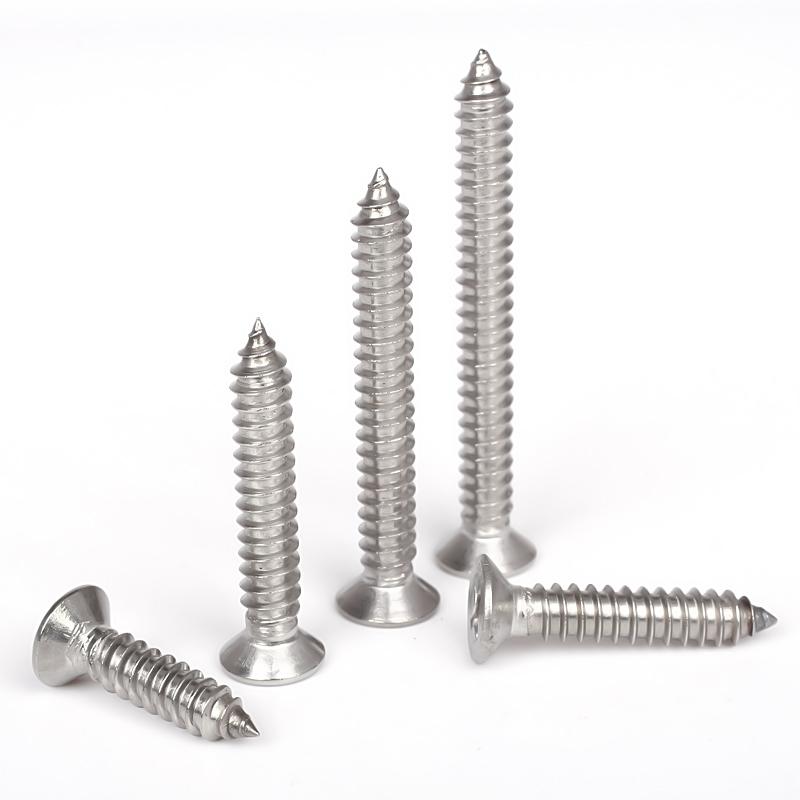
A properly cut thread bites into the mating surface on the very first turn, so the fastener seats without that subtle hesitation that forces you to back off and try again. That initial engagement is what sets the tone for the entire installation—clean spiral edges distribute pressure evenly instead of concentrating it on one or two sharp points, which is exactly where cross-threading starts.
When the thread geometry is off even slightly, the first drive feels different: more resistance in one spot, a faint grinding as the helix climbs, or a sudden need to add extra torque just to keep the screw moving straight. With a well-machined thread, the drive is smooth from entry to final seating, and the joint holds its intended clamp load without the hidden stress risers that lead to loosening later.
The practical difference shows up most in high-vibration or load-bearing assemblies. A thread cut cleanly on the first attempt stays tight after heat cycles and repeated loading, while one that started with a poor first drive often works itself loose or requires a thread insert to salvage. It's not just about getting the screw in—it's about how confidently that first drive predicts the life of the connection.
Why We Test Beyond Standard Salt Spray Hours
Standard salt spray tests, typically capped at 96 or 240 hours, were never designed to mimic real-world corrosion. They accelerate a single, uniform attack under constant fog, which tells you little about how a coating performs through wet-dry cycles, UV exposure, or temperature swings. When we push beyond those benchmarks, we're not chasing a higher number for its own sake—we're looking for the failure modes that only appear after the standard test ends.
Extended testing reveals the weak points that shorter runs miss: edge creep at scratches, blistering under layered contaminants, or loss of adhesion after repeated drying. These are the conditions a part actually faces on a coastal bridge or under a vehicle chassis. By running our own long-duration cycles, we catch premature failures before they reach the field, which saves rework and warranty claims.
The goal isn't to declare a product "better" because it survived 1,000 hours. It's to understand where and why it eventually breaks down, then redesign the coating system with that knowledge. Standard hours give you a pass/fail box; extended hours give you a roadmap for improvement.
What We Tell Buyers Who've Been Burned by Cheap Self-Tappers
When someone comes to us after a batch of cheap self-tappers snapped mid-install or stripped out under normal torque, we don't lead with a lecture. We start by asking what the fasteners were holding and what the failure looked like. That usually tells us whether the problem was material, thread geometry, or a coating that hid a brittle core. From there, the conversation gets practical.
Most buyers assume 'self-tapping' means the screw does all the work, but the truth is the pilot hole and the material matter just as much as the screw. We've seen cases where the only thing wrong was a drill speed that was too high, which work-hardened stainless and caused the tip to burn out. So we walk through the job step by step before we ever recommend a replacement.
Then we get into what to look for next time: a clear spec sheet that lists hardness and coating thickness, a supplier who will send samples, and a price that doesn't feel like a gamble. Cheap self-tappers aren't a bargain if half of them end up in the scrap bin or worse, in a customer's complaint. We'd rather tell you that upfront than sell you a box you'll regret.
Point Design That Works From Thin Sheet Metal to Hard Plastics
In product enclosures, a small raised dot or recessed point often solves multiple problems at once. On thin stainless steel covers, the feature offers a tactile reference without compromising material integrity, while on rigid ABS or polycarbonate, the same geometry can guide assembly or indicate button zones. The trick lies in proportion—keeping the point shallow enough to form cleanly, yet defined enough to feel under a fingertip.
Sheet metal presents its own constraints. Deep draws tear, narrow bosses distort, and overly sharp details create stress risers. A low-profile point, whether coined, stamped, or laser-etched, sidesteps these failures. It survives bending and finishing processes, and after powder coating or anodizing, the feature remains legible. That durability transfers directly to hard plastics, where mold filling and ejection become easier with a gentle conical or hemispherical point rather than a sharp pin.
The same point can do different jobs depending on material and placement. In a metal enclosure, it might align a gasket or snap feature. In a plastic housing, it could act as a standoff, a living hinge stop, or a drain detail. Designers who reuse a proven point geometry across material changes avoid reinventing tooling and reduce tolerance stackups, which keeps production smoother and scrap rates lower.
The Logistics Behind Getting Stainless Fasteners to Your Site on Time
Most stainless fastener shortages trace back to mill allocation, not warehouse picking. A domestic distributor carrying 18-8 and 316 stock has to plan around rolling schedules at offshore producers, where heat lots can shift by two to three weeks without notice. We hold buffer inventory by diameter and thread pitch, not just part number, and use a weekly open-to-buy review that triggers transfers from regional hubs before a backorder forms.
Freight timing matters more than freight mode. For mixed pallets of hex bolts, washers, and hanger bolts, consolidation at a port-side cross-dock prevents partial shipments from stranding small boxes. We also align delivery windows with jobsite gate hours and crane schedules, so a truck arriving at 6:15 a.m. does not sit until first break. When a project runs ahead, the same route can be shifted to a will-call location within four hours.
Documentation keeps fasteners moving when hardware fails inspection. Lot-specific mill certs, passivation reports, and RoHS/REACH declarations are pre-staged in the shipment record before the pallet leaves. If a torque test flags a batch, the replacement lot is already cross-referenced by heat number, so the site gets a matching grade without re-sourcing. That back-office prep is usually what separates an on-time delivery from a two-day delay.
FAQ
They resist corrosion from saltwater and rain, which prevents rust buildup and keeps the fastening point secure for years without replacement.
We inspect thread geometry with optical comparators and perform random torque tests on each batch, so every screw meets the same cutting and holding specs.
Common uses include metal framing, ductwork, trailer assembly, fence installation, and sheet metal enclosures where speed and grip are essential.
Yes, we can adjust length, thread pitch, head style, and drive recess based on your specifications, and we provide samples for approval before production.
The sharp self-drilling tip pierces thin sheet metal cleanly, while the threads engage quickly to avoid walking or stripping during installation.
Options include bulk cartons, small boxes with labeled counts, and custom-assembled kits that simplify distribution or on-site handling.
We keep raw material stock for common grades and can adjust line schedules to meet rush orders, plus we offer partial shipments to keep jobs moving.
Each shipment includes material certifications and test reports on request, and our technical staff can help with torque recommendations and installation guidance.
Conclusion
Every stainless steel self-tapping screw we ship is expected to hold through temperature swings that would loosen ordinary fasteners. Our threads are cut with a precision that matters from the very first drive—no wobble, no stripping, just a clean bite into thin sheet metal or tough plastics. Point geometry is tuned per material, so the same screw line can handle everything from HVAC ductwork to injection-molded housings without a pilot hole. Buyers who have been burned by cheap self-tappers often come to us after snapping heads or rounding out drives; we show them the difference a properly formed thread and a hardened core make. Instead of just meeting standard salt spray hours, we run extended corrosion tests because stainless steel should look and perform the same years later, not just pass a 48-hour chamber.
The logistics behind our stainless fasteners are as deliberate as the thread form itself. We keep regional stock so that jobsite deliveries arrive when promised, not after the crew has moved on. That reliability matters when a contractor is mid-install and cannot afford a mismatch between screw length, head style, and material thickness. We talk buyers through the specifics: whether a flange head or a countersunk head suits the application, how thread pitch affects pull-out resistance, and why our self-tappers do not need pre-drilling in most cases. The result is a fastening solution that feels less like a commodity and more like a specified component—durable enough to outlast the warranty, predictable enough to avoid callbacks, and backed by a company that treats stainless steel selection as engineering, not just inventory.
Contact Us
Contact Person: Shane
Email: [email protected]
Tel/WhatsApp: 8613357785029
Website: https://www.wanluohardware.com