

Tire Inner Tube Production Line Solutions Streamlining Your Manufacturing Process
2026-11-16
Every tire starts with a perfectly formed inner tube, yet for many manufacturers, the production line itself remains a bottleneck hidden in plain sight. At AUGU AUTOMATION, we saw this as an opportunity—not just to speed things up, but to completely rethink how inner tube manufacturing can flow. Imagine a system where curing, cooling, trimming, and testing move in seamless rhythm, cutting waste and manual intervention without compromising on the precision that keeps your name on the road. In this blog, we pull back the curtain on the engineering decisions, modular designs, and smart integrations that transform scattered machines into a unified, responsive production solution. If you’ve ever wondered what it takes to turn raw compound into flawless tubes at a pace that matches your ambition, you’re in the right place.
Redefining Raw Material Handling for Seamless Flow
What if raw materials could glide from intake to processing without the usual hiccups—no bridging in silos, no unexpected downtime at the conveyor, no last-minute scrambling because a bin ran empty? That vision of uninterrupted movement sits at the heart of rethinking material handling. It starts by treating the physical flow as a living, breathing system rather than a collection of standalone equipment. When sensors, smart routing, and adaptive discharge rates work in concert, the line between raw storage and active production blurs. Operators stop firefighting and start fine-tuning, turning what used to be a constant source of variability into a steady, predictable rhythm.
The shift away from rigid, scheduled transfers toward a demand-driven model takes the pressure off both people and machinery. Instead of running conveyors at full throttle regardless of actual need, the system pulses material forward in precise amounts, exactly when downstream processes call for it. This not only cuts energy waste but also preserves the integrity of sensitive raw materials that degrade with excessive handling. A flour mill avoiding over-conveying, a plastics plant keeping pellets dust-free—these aren't distant ideals but everyday outcomes of a flow that's been designed to breathe with production demand.
Perhaps the most overlooked piece of seamless flow is how it reshapes the operator's role. When the guesswork around stock levels and transfer timing evaporates, people spend less time monitoring and more time improving. One plant manager described it as swapping a constant series of urgent phone calls for a dashboard that simply says everything is in sync. That quiet confidence—where raw materials appear at the right place, in the right quantity, without drama—is the real measure of a redefined handling philosophy. It turns a cost center into an invisible advantage that hums along in the background, day after day.
Intelligent Extrusion Systems That Minimize Waste
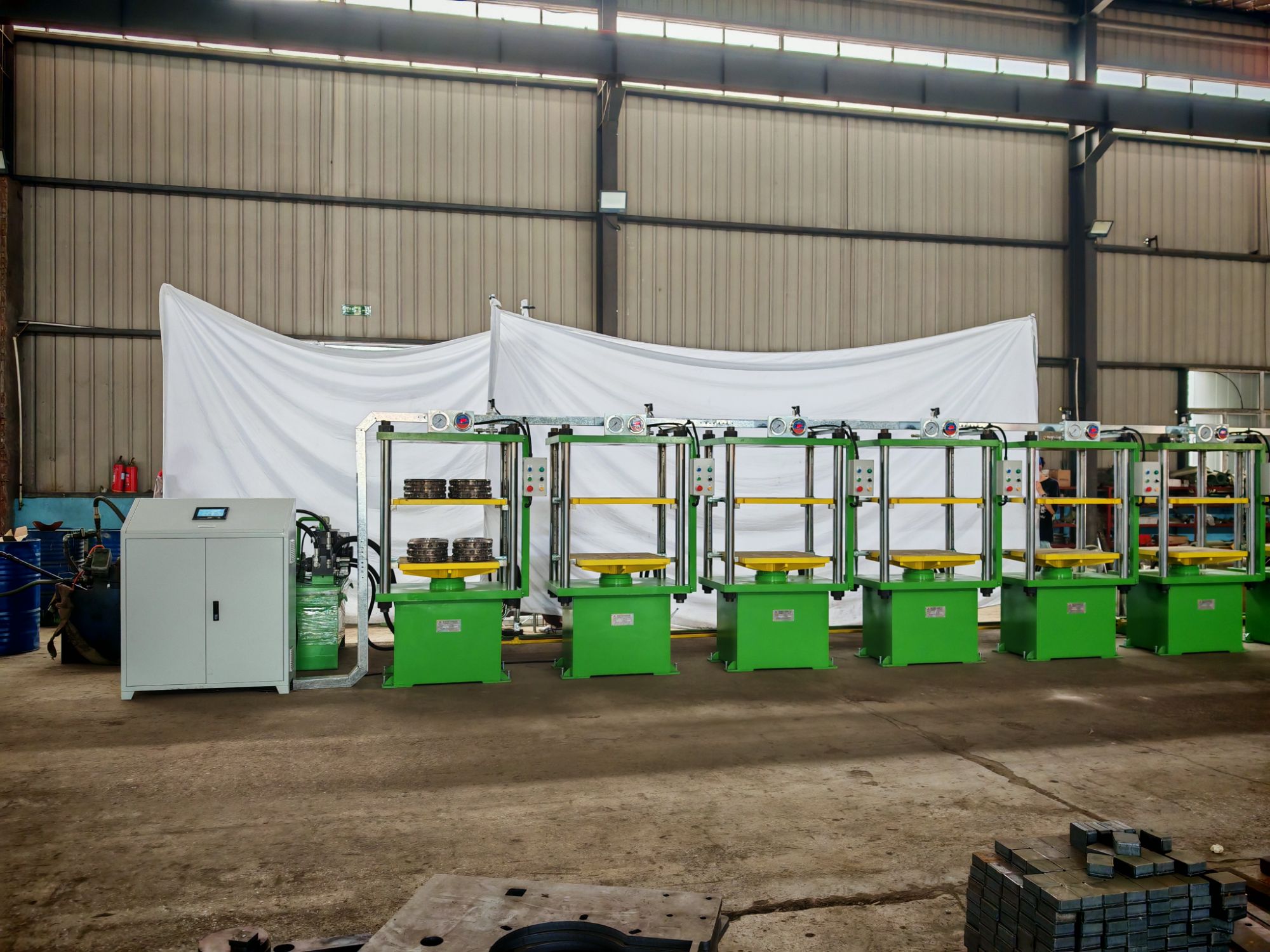
Modern extrusion lines are moving beyond simple throughput metrics and embracing precision as the real driver of efficiency. Rather than running at maximum speed and discarding off-spec material, intelligent systems use real‑time feedback from melt pressure, temperature, and dimensional sensors to stay within a tight process window. By constantly adjusting screw speed, barrel heating zones, and puller tension, these setups catch variation before it becomes scrap. The result is less edge trim, fewer layer delaminations, and a noticeable drop in the purge volume between product changeovers—all without an operator constantly tuning the line.
A key change comes from inline rheology and spectral analysis built directly into the die or adapter. Instead of sampling and waiting for lab results, the system reads viscosity shifts or additive dispersion as the melt flows, flagging lot‑to‑lot raw material drift immediately. That early warning lets the extruder automatically switch to a recipe tweak—a minor temperature shift or a subtle screw speed ramp—rather than dumping a full run of borderline product. Even colour or thickness changes happen with far fewer transition metres because the software learns exactly when the new material has fully purged the old, cutting the typical “scrap funnel” by more than half.
Waste reduction also shows up in the way these systems handle start‑up and shutdown. Predictive models overlay historical data onto current conditions, so the line can ramp up in a fraction of the usual time and hit target gauge right away. When an order finishes, instead of running the remaining material straight to the grinder, the control unit calculates the precise point to decelerate, leaving practically nothing in the barrel. This tight coupling of digital twin simulation, advanced sensing, and closed‑loop control transforms extrusion from a bulk process into a finish‑and‑move‑on operation, where every kilogram of resin is accounted for and converted into sellable product.
Precision Curing Stations for Consistent Quality
Achieving consistent quality in manufacturing often hinges on the final curing stage, where slight temperature fluctuations or uneven energy distribution can compromise the entire batch. Precision curing stations address this by embedding real-time feedback loops that monitor and adjust both thermal output and exposure duration with millisecond accuracy. Rather than relying on fixed timers, these systems adapt to variations in material composition or ambient conditions, ensuring each part exits the cycle with identical physical properties and a surface finish that meets strict specifications.
What sets advanced curing stations apart is their ability to maintain uniform energy intensity across complex geometries. Traditional setups struggle with shadowed areas or thick cross-sections, leading to under-cured spots that weaken structural integrity. By leveraging multi-angle emitters and dynamic zoning, precision stations deliver targeted energy where it's needed most, eliminating the need for post-cure inspections or manual rework. This approach not only tightens tolerance bands but also reduces material waste, as components are cured right the first time without over-baking.
Another layer of reliability comes from the data these stations capture during every cycle. Instead of treating curing as a black-box process, operators gain visibility into trends like lamp degradation or drift in humidity, allowing for predictive adjustments before defects appear. That shift from reactive troubleshooting to proactive control shortens ramp-up times for new product lines and creates a repeatable workflow that holds steady across shifts, facilities, and even different operators.
Automated Leak Detection Without Bottlenecks
Automated leak detection often falls short when data pipelines hit a wall — either from sheer volume or overly rigid rules that cry wolf too often. The real challenge isn’t spotting a drop; it’s doing so fast enough to matter, without grinding everything else to a halt. By distributing the monitoring logic across lightweight stream processors instead of a single monolithic checker, you can verify integrity at multiple points in the flow almost simultaneously. This eliminates the central choke point and lets you catch anomalies before they cascade, turning a slow trawl into a near real-time safeguard.
What makes this approach stick is its adaptability. Instead of hard-coding thresholds that break the moment traffic shifts, the system learns from live patterns — flow rates, sudden flatlines, unexpected schema drifts — and adjusts its sensitivity without manual intervention. Alerts become sharper, less noisy, and tied to actual operational impact rather than abstract metrics. The monitoring itself blends into the existing stream infrastructure, so you’re not setting up a parallel universe of dashboards and sinks.
In practice, teams stop firefighting false positives and start trusting the signal. When a genuine leak occurs, the detection hits the right people within seconds, often pinpointing the exact segment or consumer group that’s affected. And because the detection layer is decoupled from heavy batch scans, it handles spikes gracefully — busy holidays, product launches, or data migrations won’t slow it down or create a backlog of unprocessed checks. The result is a quiet, resilient layer that simply works, without ever becoming the bottleneck it was built to avoid.
Smart Cooling and Trimming with Zero Defects
Precision temperature control takes center stage in our approach. Rather than relying on broad, uniform cooling cycles, each zone of the mold adapts in real time to the flow and cooling demands of the polymer. This eliminates residual stresses before they form and keeps warpage out of the equation, no matter how complex the geometry.
The trimming stage gets the same attention to detail. High-speed vision systems scan every part the moment it exits the tool, comparing the cut profile against the digital twin of the trim line. Any deviation, down to a few microns, triggers an immediate in-line adjustment of the cutting path, so the first part of a run meets the same spec as the last.
What ties it all together is a closed-loop feedback architecture that learns from every cycle. Data from cooling rates and trim accuracy flows into a central control unit, which fine-tunes both processes without human intervention. The result is a production stream where defects become statistically meaningless, and the word ‘scrap’ starts to feel outdated.
Real-Time Data Integration for Smarter Line Control
Modern production environments operate at speeds that leave little room for lag. When sensors on a packaging line detect a micro-stoppage, the seconds lost waiting for a batch-processed report can cascade into minutes of downtime. Real-time data integration pulls signals directly from PLCs, vision systems, and environmental monitors, merging them into a single live stream that control systems can act on without the delay of traditional polling cycles. This direct handshake between the physical line and the digital command layer turns raw telemetry into instant adjustments—speeding up a filler, tweaking a torque setting, or rerouting a pallet before a bottleneck solidifies.
The value lies not just in speed but in context. Rather than viewing vibration data or temperature readings in isolation, a unified real-time feed ties each variable to the specific SKU, shift, and machine state. A spike in motor current during a label changeover, for example, can be cross-referenced against the recipe parameters and historical baselines within the same controller logic. This layered awareness lets line-level algorithms make nuanced decisions—like softening an acceleration curve only for fragile containers while maintaining throughput—without waiting for a supervisor’s override or a nightly batch analysis.
Scaling this capability across multiple lines and even multiple plants reshapes how production teams respond to variability. Edge gateways normalize data from disparate OEM equipment into a consistent schema, pushing summarized KPIs to the cloud while keeping low-latency control loops local. Supervisors see a live dashboard where a dip in OEE on Line 3 is instantly traceable to a downstream case packer fault, triggering automated rebalancing of workloads. Maintenance gets enriched alerts with exactly which sensor drifted and by how much, enabling condition-based interventions that replace fixed schedules. The outcome is a line that not only reacts in real time but learns from every cycle, steadily refining its own rhythm.
FAQ
The real game-changer is how smoothly each stage connects—from extrusion to curing—without bottlenecks. When compounding, extruding, splicing, and vulcanizing are calibrated as a single continuous flow, you cut downtime and material waste dramatically, often boosting output by 30% or more compared to piecemeal setups.
Quick-change extrusion heads and modular splicing units with pre-set recipes let us switch between butyl and natural rubber compounds or different tube sizes in under 15 minutes. No need to dismantle major sections; just swap the die, adjust the calibration rings, and load the new profile from the HMI. This keeps small-batch orders profitable.
Consistent heat distribution across the entire mold cavity. Many facilities chase faster cycle times but ignore hot spots that cause uneven wall thickness. We use multi-zone temperature controls on presses and precisely machined double-cavity molds. This yields tubes with zero thin spots, which directly reduces field failure rates.
Absolutely. Robotic valve insertion stations use vision guidance to place stems within ±0.2mm accuracy, followed by a dustless talc application system that coats the tube uniformly with a precise amount. These cells are programmed to adapt to different valve types and tube dimensions from the central controller, so you keep high speed without sacrificing changeover agility.
We rely on a cold-feed pin extruder with a high L/D ratio that delivers a consistent strip, then a servo-driven splicing table that aligns the ends and applies controlled pressure under a pre-set temperature. The key is eliminating trapped air and using a splice recipe that cures at the same rate as the parent material. In burst tests, the joint holds beyond the tube's rated pressure.
Every tube passes through a dual-station leak tester where it's inflated to a set diameter inside a water tank; any bubble larger than 0.5mm triggers an automatic reject. Simultaneously, laser micrometers scan wall thickness at three points along the circumference. Tubes that pass get a date-code laser etching and go directly to the auto-wrapping unit, with zero manual handling.
Main savings come from three areas: raw material usage drops because precise extrusion and minimal flash reduce scrap by up to 5%; energy consumption per tube falls with optimized curing cycles and insulated molds; and labor costs shrink as one operator can oversee the entire extrusion-to-packing line through a centralized touchscreen. The payback period is often under two years.
Conclusion
Modern tire inner tube manufacturing demands a rethink from the very first step. Instead of treating raw rubber and carbon black as static inputs, our approach turns material handling into an orchestrated flow that feeds directly into intelligent extrusion. The mixing and feeding systems talk to each other, adjusting compound delivery in real time so the extruders never starve or overflow. This cuts the typical scrap rate at the die head by anticipating viscosity shifts before they become a problem. What used to be a messy, stop‑start process now runs with the predictability of a closed loop, freeing operators to monitor quality instead of chasing material jams.
That continuity carries through to vulcanization and downstream finishing. Precision curing stations hold temperature and pressure within tighter bands by reading the profile of each tube coming in, not just the recipe. Automated leak detection follows immediately, using modular test cells that scale with line speed so you never create a backlog at inspection. Cooling and trimming then happen in a single smart zone where vision systems spot flash or micro‑tears and flag them for removal without stopping production. Overlaying all of this is a data backbone that stitches every station together—not for dashboards alone, but to let the line self‑correct. When the curing press sees a subtle drift in extrusion thickness, it nudges its cycle timing slightly, keeping wall consistency right where specs demand. The result is a line that runs leaner, generates significantly less rework, and delivers tubes that meet compound‑level precision day after day.
Contact Us
Contact Person: Lareina
Email: [email protected]
Tel/WhatsApp: +86 17561696737
Website: https://www.auguauto.com/