

Top 10 Industrial Transformers Powering Modern Manufacturing and Energy Grids
2026-05-20
Industrial transformers are the silent workhorses behind every modern factory and power grid, but not all are created equal. In this countdown of the top 10 units shaping manufacturing and energy today, you'll discover why engineers worldwide are switching to TPS for efficiency and reliability that redefine the standards. Let's dive into the innovations powering the future.
The Silent Giants: How Industrial Transformers Keep Factories Running
Walk through any factory floor and you'll hear the hum of machinery, the clatter of conveyors, and the occasional hiss of compressed air. But beneath that industrial symphony is a steady, almost imperceptible thrum—the heartbeat of electrical transformers. Tucked away in corners or housed in dedicated substations, these heavy, oil-filled units accept high-voltage power from the grid and step it down to levels that motors, drives, and control panels can safely use. Without them, the most advanced robotic assembly line would be nothing more than dead metal. They operate around the clock, often in harsh conditions, yet seldom demand attention. That quiet reliability is precisely what makes them indispensable.
What keeps these iron cores and copper windings alive for decades isn't luck—it's a meticulous dance of thermal management, insulation integrity, and preventive maintenance. Every transformer breathes as it heats and cools, drawing in air that must be kept dry or filtered to prevent moisture from degrading the oil and paper insulation. Technicians periodically sample that oil, testing for dissolved gases that betray hot spots or arcing inside the tank. When a transformer fails, it rarely does so without warning; sudden pressure relays, temperature spikes, and gas accumulation whisper alerts long before a catastrophic trip. Smart factories now augment these senses with online monitoring, but the fundamentals remain unchanged: respect the limits, watch the trends, and schedule downtime before the machine schedules it for you.
Perhaps the most telling sign of a transformer's role is how quickly a factory grinds to a halt when one fails. Production lines don't just stop—they can be damaged by the abrupt loss of power, precision processes drift out of spec, and restart procedures eat into profit margins. That's why seasoned plant engineers speak of their transformers with a kind of reverent caution, knowing that a single unnoticed oil leak or a degraded bushing can cascade into a million-dollar shutdown. In an age of data dashboards and predictive algorithms, these electromechanical sentinels persist as a testament to robust simplicity. The next time you see one humming behind a safety fence, consider that inside that unassuming steel shell, it's negotiating voltages, restraining inrush currents, and quietly keeping an entire production world spinning.
Beyond Voltage: The Unsung Innovations in Modern Transformer Design
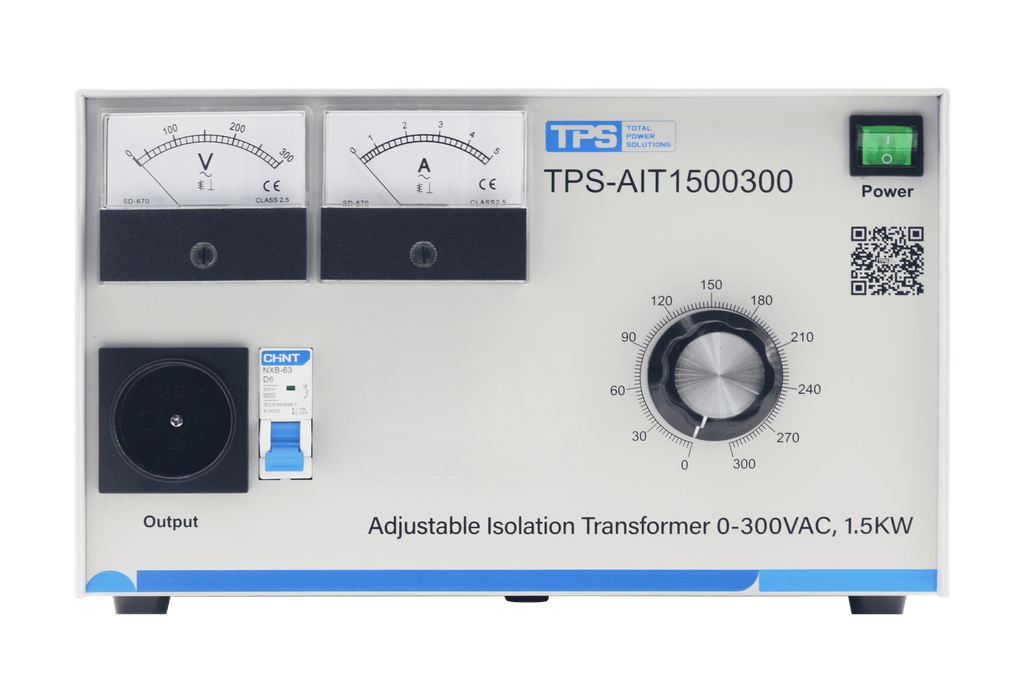
When we think of transformers, voltage conversion immediately comes to mind, yet a quiet revolution has been reshaping their inner workings in ways that rarely make headlines. Core materials, for instance, have evolved far beyond traditional grain-oriented silicon steel. Amorphous metal cores now slash no-load losses by up to 70% compared to their crystalline counterparts, a leap that quietly saves gigawatts of energy across aging power grids. Meanwhile, advancements in winding techniques—like foil-wound coils and continuously transposed conductors—are tackling eddy current losses and hot spots that once plagued high-frequency operations. These aren't just incremental tweaks; they represent a fundamental rethink of how electromagnetic energy is shepherded from one circuit to another, all while operating beneath our everyday awareness.
Thermal management, often the overlooked gatekeeper of transformer longevity, has also undergone a silent metamorphosis. Traditional mineral oil is giving way to biodegradable ester fluids, which not only boast higher flash points but also slow down paper insulation aging—effectively doubling service life in demanding environments. Even the structural design has been upended: 3D-printed cooling channels and phase-change materials embedded in windings are displacing clunky radiator fins, enabling compact transformers to handle loads that would have once required units twice their size. This subtle shift in heat dissipation philosophy means today's designs can be tucked into urban substations or renewable energy hubs without sacrificing a decibel of acoustic silence.
Digital intelligence, grafted into what was once a purely passive component, is perhaps the most transformative undercurrent of all. Embedded fiber-optic sensors now monitor winding hot spots in real time, while on-load tap changers guided by machine learning adapt to grid fluctuations before instability can ripple outward. These smart transformers don't just step down voltage; they act as first responders in fault detection, self-diagnose insulation degradation, and even negotiate with distributed energy resources to keep microgrids humming. It’s a far cry from the dumb iron cores of the past—a convergence of material science, thermodynamics, and data analytics that redefines what a transformer can be, all without raising its voice above the hum of daily operation.
When Size Matters: Matching Transformer Capacity to Manufacturing Demands
In manufacturing, transformer sizing isn’t just a technical footnote—it’s a strategic lever that shapes both day-to-day operations and long-term cost structures. When capacity is insufficient, voltage sags and thermal stress can cripple sensitive production lines, leading to unpredictable downtime and equipment degradation. On the flip side, an oversized transformer silently wastes capital and energy through higher no-load losses, while eating up valuable floor space that could be used for revenue-generating machinery. The trick is to forecast not just current draw, but also the characteristic load profile—peak demand, harmonic content, and future expansion plans must all feed into a sizing decision that balances resilience with efficiency.
Manufacturing environments rarely follow a neat, steady-state load. Start-stop cycles of heavy motors, sudden inrush currents from welding or forming equipment, and the proliferation of non-linear loads like VFDs and rectifiers can push a transformer beyond its nameplate capabilities in moments. Smart capacity planning therefore goes beyond kVA arithmetic. It demands a granular look at duty cycles, simultaneous demand factors, and even ambient conditions—because a transformer that runs hot in a poorly ventilated enclosure will age prematurely. By mapping real operational data onto the transformer’s thermal time constants, plant engineers can avoid the costly mistake of treating capacity as a static number rather than a dynamic performance envelope.
Aligning transformer capacity with actual manufacturing demands also opens the door to modular, scalable designs. Instead of betting on a single monolithic unit that may be underutilized for years, forward-thinking facilities are exploring parallelable transformers that can be energized in stages as production ramps up. This approach turns capital expenditure into a just-in-time variable, while improving resilience—if one unit fails, operations can limp along at reduced capacity rather than grinding to a halt. Ultimately, the goal is to treat transformer capacity not as a safety margin to be piled on, but as a precisely engineered variable that mirrors the rhythm and growth trajectory of the factory floor.
Grid Resilience: Why These 10 Transformers Are the Backbone of Energy Stability
Grids today are tangled webs of aging infrastructure and erratic renewable flows. A single voltage dip, left unchecked, can cascade into blackouts that ripple across regions. The real muscle keeping things steady isn't in the control room—it's humming inside these ten transformer designs. Each one compensates for the quirks of distributed generation, soaking up spikes and filling in lulls with a kind of brute mechanical intuition that software alone can't fake.
Conventional units buckle under the harmonics that solar inverters and wind farms throw around. These ten aren't just rugged; they're deliberately overbuilt, with core geometries and cooling systems tweaked to handle thermal chaos without flinching. When a substation suddenly pushes bidirectional power, they clamp the flux in place so neatly that protection relays barely notice. No amount of smart-grid chatter replaces that physical certainty.
The real test comes during islanding events or restoration after a fault. Standard transformers often choke, tripping on inrush currents they can't digest. These particular models swallow that shock and keep humming, giving operators the time they need to reconnect lines without a domino collapse. They're the silent arbiters of grid rhythm, the reason a storm or a misbehaving inverter doesn't spiral into a week-long outage.
From Copper to Cooling: What Sets Top-Performing Transformers Apart
The difference between a transformer that hums along for decades and one that stumbles after a few years often starts with the winding material. High-grade copper, with its superior conductivity, trims down resistive losses and keeps heat generation in check. Manufacturers aiming for top-tier performance don’t just default to copper; they lean into edge-wound or continuously transposed conductors, cutting down eddy currents and mechanical stress points that quietly undermine efficiency.
Beyond the metal, how a transformer sheds excess heat defines its limits. Basic designs rely on passive radiation from fins, but standout units integrate smart cooling: strategically directed oil flows through precisely channelled ducts, or even synthetic ester fluids that handle higher temperatures without breaking down. This isn’t about bolting on a louder fan; it’s about squeezing out hotspots before they form, so the insulation stays supple and the core magnetic performance doesn’t drift under load.
Truly exceptional transformers marry these two elements in an uneasy balance—copper’s cost against its thermal benefits, and cooling complexity against long-term reliability. They’re built with a kind of quiet pragmatism: use enough copper to keep losses low, then design a cooling circuit that can handle a sudden surge without panic. It’s the units that get this balance right that end up disappearing into the background, never needing attention.
Future-Proofing Power: Transformers That Adapt to Renewable Integration
The shift toward renewables isn't just about adding more solar panels and wind turbines—it's reshaping the very backbone of electricity delivery. Transformers, once designed for steady, predictable loads, now face erratic input from distributed generation, bidirectional flows, and sudden voltage swings. Adapting these workhorses means rethinking insulation coordination, thermal management, and tap-changing strategies so they don't become the weakest link in a greener grid.
What makes a transformer truly "future-proof" is its ability to learn from the network in real time. Embedded sensors tracking dissolved gas, partial discharge, and bushing condition feed data into local analytics, enabling dynamic rating adjustments instead of relying on fixed-nameplate limits. This self-awareness helps operators squeeze more capacity from existing assets when the wind picks up or the sun breaks through, without sacrificing longevity.
Beyond survivability, the new generation of units is becoming an active participant in system stability. Fast-acting on-load tap changers synced with inverter-based resources can dampen voltage flicker, while modular designs allow for phased upgrades as renewable penetration deepens. Rather than ripping out and replacing, utilities can now evolve their transformer fleet incrementally—adding monitoring, swapping bushings, or retrofitting cooling systems—aligning capital spending with the often unpredictable pace of the energy transition.
FAQ
They adjust voltage levels to safely power heavy machinery, ensuring consistent operation and reducing energy waste across production lines.
By stepping voltage up or down at key points, they enable efficient long-distance transmission and local distribution, preventing overloads and outages.
Cast-resin and oil-filled transformers dominate, as they handle high thermal and mechanical stress while maintaining reliability in demanding environments.
They integrate advanced cooling systems, smarter monitoring sensors, and eco-friendly insulation materials that boost longevity and reduce maintenance.
Even a small efficiency gain drastically cuts operational costs over decades and helps meet strict environmental regulations without sacrificing performance.
Newer models incorporate flexible tapping and harmonic filtering to manage variable inputs from solar and wind, keeping grid frequency stable.
Arc-resistant enclosures, real-time temperature tracking, and automatic fault isolation have become standard to protect both workers and equipment.
Absolutely—built-in sensors and IoT connectivity allow continuous condition monitoring, triggering alerts when insulation degrades or hotspots develop.
Conclusion
Industrial transformers operate as unassuming workhorses, silently regulating voltage to keep assembly lines moving and heavy machinery humming. In modern manufacturing, a mismatch in transformer capacity can lead to costly downtime or inefficient energy use—selecting the right size isn't just about meeting demand, it's about anticipating peak loads without overbuilding. These units form the backbone of grid resilience, absorbing fluctuations and preventing cascading failures that could paralyze production. Their reliability is the thin line between a productive shift and a factory floor plunged into darkness.
Beneath their rugged exteriors, today’s top-performing transformers incorporate breakthroughs that go far beyond basic voltage conversion. Advanced core materials, precision winding techniques, and sophisticated cooling systems—ranging from forced-oil to directed-air configurations—dramatically reduce losses and extend service life. Crucially, they are being re-engineered to handle bidirectional power flows and intermittent inputs from renewables like solar and wind. By marrying adaptive controls with robust thermal management, these transformers don’t just feed the grid—they actively stabilize it, ensuring manufacturing and energy networks can evolve without missing a beat.
Contact Us
Contact Person: Lily
Email: [email protected]
Tel/WhatsApp: +49 (0) 2161 49526-0
Website: https://tps-elektronik.com/en/