

Top Bending Machine Manufacturing: Innovations and Industry Leaders
2026-06-18
The bending machine sector is quietly revolutionizing modern manufacturing, yet few outsiders realize how fast the technology is moving. Every curve, fold, and precision bend in metal fabrication now hinges on breakthroughs in automation, software integration, and material science. In this landscape, some manufacturers are pushing boundaries faster than the rest. JIAN MENG has caught attention for blending robust engineering with smart innovation—making it a name worth tracking. Ahead, we will explore the innovations and industry leaders setting new standards, and why these shifts matter for anyone in metal forming today.
Can Machines Learn to Bend? Inside AI-Driven Metal Forming
Sheet metal bending has always been as much art as science, relying on the experienced hands of operators who can feel when a fold is about to crack. What if that tactile intuition could be translated into code? AI-driven metal forming is quietly challenging long-held assumptions by letting machines learn the subtle dance between pressure, angle, and material grain. Instead of hard-coded rules, neural networks now digest thousands of bending sequences, picking up patterns that even seasoned engineers might overlook. The result isn’t just faster production—it’s a new kind of collaboration where the press brake becomes a student of physics.
One of the trickiest problems in forming is springback, where the metal partially unbends after the tool lifts. Traditional compensation methods often require multiple test pieces and adjustments, wasting material and time. Machine learning models flip this by predicting springback directly from material properties and tool paths, sometimes with startling accuracy. They don’t just run simulations; they learn from every real bend, refining their predictions in near real-time. Factories using these adaptive systems report dramatically fewer rejected parts, and engineers are freed to explore more complex geometries without the usual trial-and-error slog.
The shift isn’t just about smarter algorithms—it’s about rethinking the entire workflow. Imagine a design file uploaded to a bending cell that autonomously configures punch strokes, clamping forces, and sequencing without human intervention. That’s already happening in some high-mix, low-volume shops where agility matters more than raw throughput. The AI doesn’t replace the craftsman; it augments their skill, handling the repetitive math so they can focus on pushing the limits of what can be formed. The deeper question isn’t whether machines can learn to bend, but how far they’ll reshape the very boundaries of metalworking.
Why Electric Press Brakes Are Stealing the Spotlight
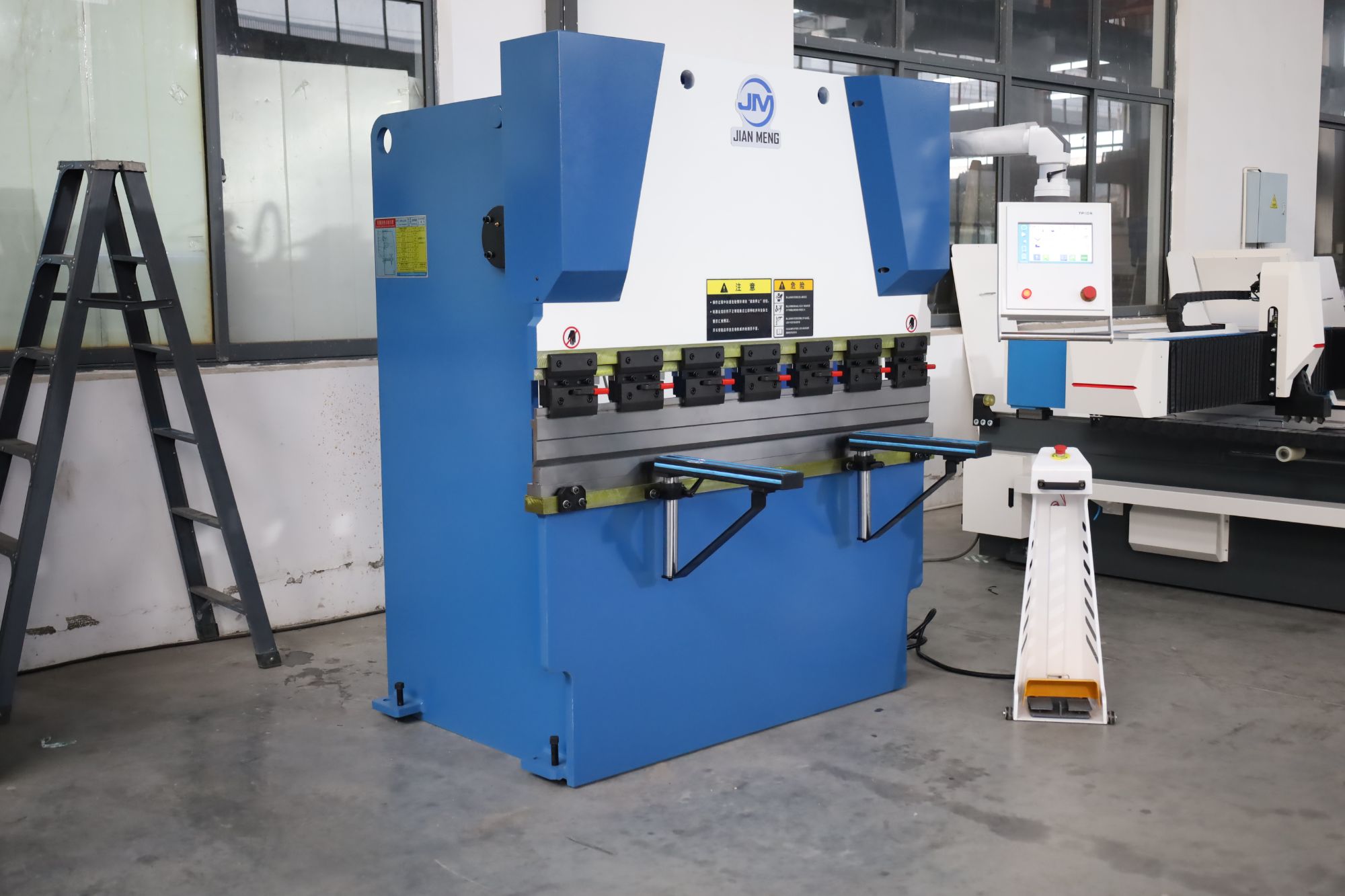
Walk into any modern fabrication shop and you'll notice a quiet revolution taking place. The familiar hum of hydraulic systems is being replaced by near-silent precision. Electric press brakes have shifted from a niche option to the center of attention, and it's not just about energy savings anymore. Shops are discovering that these machines offer a level of control and repeatability that fundamentally changes how they approach bending, allowing them to take on intricate work that was once considered too delicate or inconsistent for traditional methods.
The real allure lies in their ability to slash setup times and eliminate the constant tweaking that plagues older systems. Operators are finding that they can move from one complex part to another with minimal fuss, thanks to intelligent controls that automatically compensate for material variations. This agility means shorter runs become profitable, and prototyping turns into a same-day affair. It's a shift that's reshaping workflows, giving smaller shops a competitive edge previously reserved for high-volume plants.
There's also an understated elegance in their mechanical simplicity. Without hydraulic oil, pumps, or valves, maintenance headaches dwindle and the shop floor stays cleaner. But the standout feature is the way these brakes communicate—they feed back real-time data on angle and force, enabling a level of process transparency that turns bending into a predictable science. It's this blend of cleanliness, speed, and smart technology that's causing fabricators to look past the upfront cost and see a tool that evolves with their ambitions.
The Hidden Champions of Bending: Meet the Industry’s Top Innovators
Beyond the massive factories and household names lies a quieter tier of manufacturers—those who have quietly mastered the art of bending metal, tube, and profile with a precision that turns complex geometries into everyday realities. These are the firms that don't chase headlines, yet their engineering DNA runs through everything from surgical robotics to satellite masts. They thrive not on scale alone, but on a deep, almost obsessive understanding of material behavior under stress, developing proprietary tooling and process tweaks that big automation houses often overlook.
What sets these hidden champions apart is their refusal to treat bending as a mere forming step. Instead, they approach each curve as a unique physics puzzle—balancing springback compensation, grain direction, and wall thinning with a craftsman’s intuition backed by in-house software models you won’t find on the open market. One shop in northern Italy, for instance, reinvented rotary draw bending for ultra-thin-walled titanium tubing, enabling coolant lines that snake through jet engines with tolerances measured in microns. Another, tucked away in the industrial corridors of Ohio, redesigned the wiper die geometry to eliminate wrinkling in high-strength aluminum, shaving weeks off electric vehicle development cycles.
These innovators rarely advertise, yet their client lists read like a who’s-who of aerospace, energy, and medical device sectors. They earn loyalty through a kind of technical intimacy—working side-by-side with design teams to tweak bend radii long before a prototype ever hits the floor. It’s a slow-burn approach, built on trust and cumulative know-how, proving that in an age of automation and AI, the real edge still belongs to those who understand the hidden language of a material’s memory.
No More One-Size-Fits-All: The Rise of Custom Bending Solutions
For decades, industries that needed metal bending settled for off-the-shelf machinery and standard die sets. These systems worked fine if your project matched their limited specifications—anything beyond that meant compromises. Now, a shift is underway. Engineers and fabricators are pushing back against the constraints of mass-produced equipment. They’re demanding solutions that adapt to the part, not the other way around. This isn’t just a trend; it’s a fundamental rethinking of how bending should work.
Custom bending solutions open up design possibilities that were once considered impractical. Instead of tweaking a product to fit a machine’s capabilities, teams can specify everything from bend radii and angles to material thickness and springback behavior. Shops are integrating modular tooling, programmable backgauges, and specialized mandrels to handle shapes that used to require multiple setups—or were simply impossible. The result is tighter tolerances, less waste, and faster turnaround, all while preserving the structural integrity of exotic alloys or thin-walled tubing.
Bending Without Breaking the Planet: Sustainable Manufacturing Advances
Manufacturing has long been seen as a trade-off between output and environmental harm, but new approaches are flipping that narrative. Circular production systems now keep materials in use for multiple cycles, slashing the need for virgin resources. Companies are re-engineering supply chains to recover and refurbish components instead of discarding them, which cuts both costs and landfill waste. This isn’t just a niche experiment—major industries from electronics to automotive are adopting these methods and seeing real reductions in their carbon footprints.
On the tech side, precision tools like additive manufacturing and smart sensors are rewriting the efficiency playbook. 3D printing builds parts layer by layer, using only the material needed and eliminating the scrap typical of subtractive processes. Meanwhile, machine learning algorithms fine-tune energy use across factories, spotting leaks and optimizing production schedules in real time. The result is a quieter, cleaner factory floor that runs on less power and generates fewer emissions—all while ramping up speed and flexibility.
From Sensors to Servos: The Tech Redefining Bending Machines
Modern bending machines have left their purely mechanical past behind. What once relied on operator instinct now leans heavily on a tight feedback loop between sensors and servos. In-the-moment torque readings and angular adjustments happen faster than a human could blink, reshaping how metal yields to pressure.
At the heart of this shift is the servo drive itself. Unlike older hydraulic systems that drift with temperature or load, servo motors deliver force with a stubborn precision. They pause, reverse, or ramp up based on real-time data flowing from laser encoders and strain gauges, making over-bend a relic of the past.
This sensor-to-servo conversation also unlocks a new level of adaptability. Material variations—thickness, grain direction, even springback quirks—are no longer showstoppers. The machine reads these signatures on the fly and adjusts stroke depth or pressure accordingly, turning what used to be trial-and-error into a predictable, efficient process.
FAQ
It's not just about precision anymore—top manufacturers integrate smart automation, real-time monitoring, and energy-efficient designs that drastically cut downtime and material waste. The ones leading the pack are those who treat each machine as a customizable solution rather than a one-size-fits-all product.
Adaptive bending technology with AI-driven angle correction has been a game changer. Instead of relying on operator guesswork, machines now self-adjust during the process, handling material springback in real time. This means fewer rejected parts and a lot less trial-and-error on the shop floor.
Names like TRUMPF, Amada, and Bystronic usually come up first, but smaller European firms such as Salvagnini and LVD are pushing boundaries with hybrid servo-electric systems. They're forcing the entire industry to rethink speed-to-energy ratios, and their influence is showing up in mid-range machines more each year.
The short answer is consistency and operating cost. All-electric systems eliminate oil maintenance, warm-up cycles, and temperature-related drift. They also offer repeatability down to microns, which has become essential for sectors like medical devices and aerospace where even minor deviations cause batch failures.
Software has become the backbone. Offline programming and 3D simulation allow operators to visualize bends and collision risks before touching a sheet. Some platforms now import CAD files directly and auto-generate tooling sequences, which means the skill barrier is dropping while throughput goes up—a combination that's redefining what a 'skilled operator' looks like.
It's a mix of lifecycle thinking and machine design. Leaders are using regenerative drives that feed power back into the grid, modular builds for easier recycling, and predictive maintenance algorithms that extend machine life significantly. Some even offer retrofit kits to upgrade older hydraulic machines to near-electric efficiency, which cuts down on industrial waste dramatically.
One under-the-radar trend is the convergence of bending and forming with additive manufacturing. Some manufacturers are experimenting with 3D-printed tooling for short-run complex shapes, while others integrate sensor-laden clamping systems that map workpiece stress in real time. It's pushing bending from a standalone process into part of a larger, data-driven manufacturing ecosystem.
It often comes down to three things: application support, local service responsiveness, and the machine's ability to grow with the business. A flashy spec sheet means nothing if the supplier can't train the team or deliver spare parts within 24 hours. The smartest buyers look for manufacturers that offer incremental upgrade paths—like adding robotics or advanced controls later—without a total retrofitting nightmare.
Conclusion
The world of bending machine manufacturing is undergoing a quiet revolution, driven by a convergence of artificial intelligence, electrification, and a growing demand for adaptability. AI-driven metal forming is no longer science fiction; machines now learn from each bend, adjusting in real time to material variations and tooling wear, slashing waste and setup times. Meanwhile, electric press brakes are stealing the spotlight for good reason—they offer silent, energy-efficient operation with unparalleled precision and repeatability, reducing the environmental footprint without compromising on power. Behind these advances are hidden champions, innovative firms that push the boundaries of what’s possible, from compact servo-electric benders to massive hydraulic systems reimagined with smart controls. The common thread? A refusal to settle for the status quo in a field where centuries-old techniques meet cutting-edge technology.
This wave of innovation is also redefining how manufacturers approach production itself. The era of one-size-fits-all is fading, replaced by custom bending solutions tailored to exotic alloys, complex geometries, and rapid changeovers—a must for industries from aerospace to boutique architecture. Sustainability isn’t an afterthought; it’s engineered into the machines themselves, with energy recovery systems, minimal lubrication, and longer tool lives that bend without breaking the planet. Underpinning it all is a seamless integration of sensors and servos, forming a digital backbone that monitors every micro-movement, predicts maintenance needs, and feeds data back into AI models for continuous improvement. Together, these trends paint a picture of an industry where machine and material dance in harmony, guided by human ingenuity and enabled by technology that’s as clean as it is clever.
Contact Us
Contact Person: Jeanie
Email: [email protected]
Tel/WhatsApp: +86 19805122954
Website: https://www.jianmeng.com