

Top Copper Gaskets Suppliers in China You Should Consider for Your Next Project
2026-08-28
When it comes to sourcing copper gaskets from China, the options can feel overwhelming—but choosing the right supplier makes all the difference in sealing performance and long-term reliability. Among the names worth knowing, Kaxite stands out for its consistent quality and engineering expertise. In this guide, we’ll walk you through the top copper gasket suppliers in China you should consider for your next project, so you can skip the guesswork and make an informed decision.
Copper Grades Worth Asking About Before You Order
Most suppliers default to C110, the ubiquitous electrolytic tough pitch copper, and for good reason—it conducts well and costs less. But if your part will be heated during fabrication, skip the default and ask for C101 or C102 oxygen-free instead. The tiny oxygen content in C110 can react with hydrogen in brazing or welding atmospheres, causing voids and brittleness that show up only after you've already committed to a batch.
Machinability is another quiet spec. Pure copper is notoriously gummy to cut, so if you need tight tolerances or thousands of small turned parts, C145 tellurium copper is worth the upgrade—it machines more like brass while keeping most of copper's electrical performance. And for springs, connectors, or anything that cycles under load, don't overlook C172 beryllium copper; it costs more, but the jump in fatigue strength and conductivity compared to generic alloys often pays for itself in warranty claims avoided.
Why Some Suppliers Struggle with Odd-Shaped Gaskets
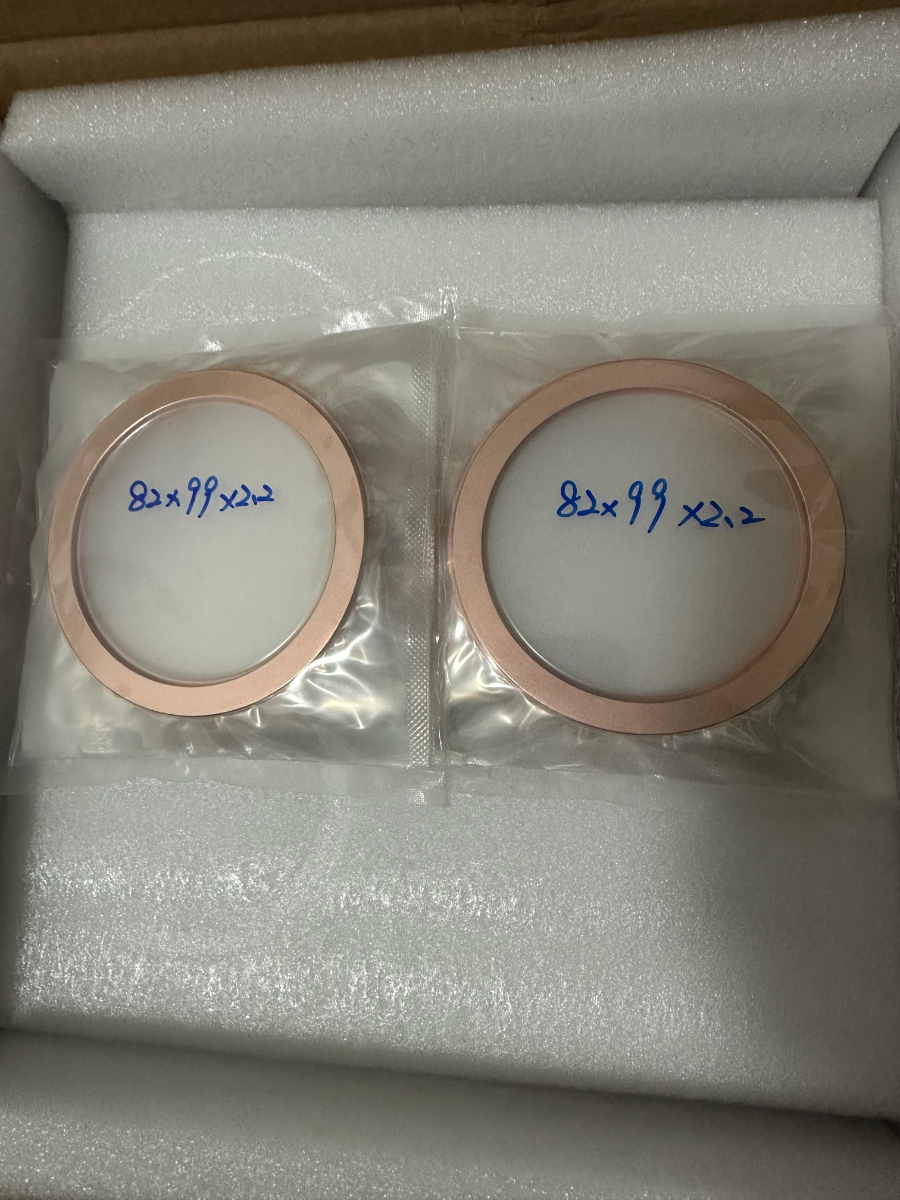
Odd-shaped gaskets rarely share tooling with other products. A standard circular or rectangular gasket can be stamped with a die that has already paid for itself across thousands of orders, but every custom contour demands a new set of cutting tools. For a supplier, that means upfront engineering time, CNC machining of the die or mold, and trial runs before a single sellable part comes off the line. When the order is only a few hundred pieces, those fixed costs eat the entire margin—so many shops simply decline the work or pad the quote until the customer walks away.
Precision is another quiet killer. A gasket with sharp corners, tight radii, or a long serpentine edge has many more points where compression can vary. Standard presses and simple flat dies often can't hold the required tolerance across the entire profile, especially in thinner materials that flex during cutting. The result is a part that looks right on the drawing but leaks or fails after installation. Suppliers who don't have in-house metrology or experienced toolmakers end up iterating on the die multiple times, burning hours and material while the delivery date slips.
Material yield also works against odd shapes. In flat sheet processing, a circular gasket nests efficiently; an irregular outline leaves large skeletons between parts. Laser or waterjet cutting can handle the geometry, but they are far slower than high-speed stamping, and the wasted sheet stock still gets billed to the job. That combination—slow cutting plus low yield—pushes unit costs high enough that many suppliers can't compete unless they specialize in low-volume, high-mix production. Most general-purpose gasket makers avoid that niche entirely.
Tolerance Checks That Go Beyond the Drawing
Most drawings capture nominal dimensions and a handful of GD&T callouts, but they rarely tell the full story of how parts actually fit together. A bore that measures perfectly within spec on a CMM can still bind after assembly because thermal expansion from a nearby motor shifts the mating surface by a few microns. Checking tolerances only against the print ignores stack-ups that emerge from clamping forces, gravity, or even the sequence of bolts being torqued down.
One approach we lean on is building a functional gauge that mimics the real mating condition rather than the isolated feature. For a sealing flange, instead of just verifying flatness per the drawing, we press the mating face against a calibrated granite plate with a thin layer of Prussian blue and inspect the contact pattern. A wavy surface might pass a profilometer check but still leak because the high spots concentrate stress unevenly. That kind of check isn't on the drawing, but it has caught more near-misses than any formal tolerance table.
Another trick is to measure parts under load, not just in free state. A thin-walled housing can be dead-on at inspection but turn into a potato once you bolt it to a rigid frame. We'll often clamp the part to a fixture that simulates assembly constraints, then re-scan critical bores and faces. Comparing free-state and constrained measurements reveals how much the part deforms, which tells you whether you need to compensate in the drawing or adjust the machining strategy. It's the difference between a part that checks out on paper and one that actually works in the machine.
Lead Time Promises You Can Actually Hold Them To
The quickest way to burn a customer relationship is to quote a lead time you know is wishful thinking. Yet plenty of teams do it under pressure, hoping the shop will somehow catch up. A promise you can actually keep starts with looking at your last twenty orders, not your best day ever. If the real average is nine days, saying five just because the client wants it faster only guarantees a tense week and an apology call.
Instead of padding wildly or guessing, break the lead time into chunks: raw material arrival, actual production hours, finishing, and a day or two for the unexpected. That last buffer isn't a lie; it's admission that trucks break down and suppliers run late. When you present the total, explain what drives it. Customers accept longer timelines when they understand the sequence and know you're not stalling.
Once you give a date, treat it like a contract with yourself. Schedule the work backward from the ship date and check progress at set intervals, not just when someone asks. If something slips, tell the customer the same day with a new, firmer date—not a vague "soon." A lead time you can hold onto isn't about being fastest; it's about being believable every single time.
The Certifications That Signal a Serious Copper Gasket Maker
A stack of copper sheets and a CNC punch don’t make a supplier worth trusting. The real differentiator shows up in the certs they hang on the wall—or better yet, the ones they’ll email you without being asked. ISO 9001 is the floor, not a flex. Any shop that treats it as a headline probably isn’t deep enough for custom copper gasket work. Look for IATF 16949 if your parts touch engines, transmissions, or anything automotive. That one forces process control down to the raw material lot, which matters more than most buyers realize.
Serious copper gasket makers also keep material certifications close. If they can’t tell you the exact alloy, temper, and ASTM spec—like B152 for copper sheet—walk away. REACH and RoHS declarations are standard now, but the shops worth keeping will offer full traceability back to the mill heat number. Ask about in-house tensile testing or hardness checks on incoming coils. If the answer is a blank stare, you’ve found a reseller, not a manufacturer.
For aerospace or industrial sealing, look for AS9100 or API Q1 depending on the sector. These aren’t just badges; they require documented risk management, supplier audits, and first article inspection reports. A copper gasket maker that invests in these audits is signaling they understand failure isn’t an option when a flange leaks at 600°F. That’s the kind of quiet assurance you can’t fake with a polished website.
How to Tell If You Are Talking to a Factory or a Middleman
A good first step is to listen to how quickly and precisely they answer technical questions. Factories tend to have engineers or production staff close at hand, so they can confirm tolerances, material grades, or lead times without putting you on hold. Middlemen often sound confident but get vague when you push for specifics like tooling ownership, minimum order quantities, or what happens if a batch fails inspection. If every answer feels like it was designed to keep the conversation moving rather than to solve a real production problem, that is a signal.
Another useful test is to ask about customization limits. A factory will usually tell you what cannot be changed because of machine constraints or raw material supply. A middleman will often say yes first and figure out the details later, because their incentive is to close the deal and then find someone who can do it. Ask for a video call inside the production area, or request pictures of the actual line running a similar product. Middlemen can get photos, but live video with dated signage and unscripted movement is much harder to fake.
Finally, watch how they handle problems. Factories talk about defects, rework, and delays as normal parts of manufacturing. They may push back on unrealistic deadlines or explain why a material choice will cause warping. Middlemen tend to promise perfect quality and on-time delivery no matter what, because they are not the ones running the machines. The moment you hear zero hesitation around every risk, treat it as a reason to ask one more question before you commit.
FAQ
Most suppliers offer solid copper, copper-asbestos, spiral wound, and corrugated designs. Solid copper works well for high-temperature exhaust systems, while spiral wound versions with graphite or PTFE fillers handle corrosive environments.
Request material certificates like EN 10204 3.1, ask for sample batches to test hardness and conductivity, and check if they follow ASTM B152 or equivalent. A quick factory video call can reveal a lot about their processing and packing.
Yes, many factories keep their own tooling and can laser or waterjet cut non-standard dimensions. You usually need to provide a drawing with tolerances, and they can produce a small trial run before full production.
It varies widely. For standard ring gaskets, MOQs might be around 500 to 1,000 pieces. Custom stamped or machined parts can start at 200 pieces, depending on the supplier's setup and your required thickness.
Expect 2 to 4 weeks for standard sizes after payment and drawing approval. Custom tooling can add another 1 to 2 weeks. Some larger factories with in-house die shops can compress this to 10 days if you pay for expedited production.
Many suppliers offer tin plating, nickel plating, or silver coating. For high-temperature use, a thin anti-tarnish film is sometimes applied. Specify the finish in your RFQ, because bare copper will darken during storage and shipping.
Yes, most copper gasket manufacturers also stock stainless steel, alloy 400, and flexible graphite. This lets you consolidate orders for different gasket types in one shipment and reduces freight costs.
Look for individual wrapping or interleaving with acid-free paper, rigid cartons or plywood cases for large diameters, and clear labeling of size and batch number. Good packaging prevents scratches, bending, and tarnishing during long transit.
Conclusion
Before you settle on a copper gasket supplier in China, ask which grades they actually keep in stock—C11000, C10200, and C12200 each behave differently under compression and heat. A shop that hesitates on grade-specific data is often the same one that fumbles with odd-shaped gaskets. Those non-circular profiles, with tight inner cutouts or bolt-hole clusters, separate real manufacturers from resellers fast. You also want to see how they handle tolerance checks beyond the drawing. A good supplier will measure flatness, burr direction, and surface finish after stamping or laser cutting, not just repeat the nominal dimensions back to you. And when they quote a lead time, pin them down on what happens if a batch fails inspection mid-run—do they rework, recut, or push the date out?
Serious copper gasket makers in China lean on certifications that matter for your industry: ISO 9001 is the floor, but RoHS, REACH, and occasionally IATF 16949 show they understand downstream requirements. The real test, though, is whether you are talking to a factory or a middleman. Ask for a video walkthrough of the shop floor, not just a polished brochure. Check if they can adjust tooling on short notice or if every change triggers a round of 'we will check with the factory.' A direct supplier will discuss die clearances, material sourcing, and packaging for export without flinching. When you weigh those factors—grade transparency, odd-shape capability, tolerance discipline, honest lead times, and verifiable production—you end up with a shortlist worth trusting for your next copper gasket order.
Contact Us
Contact Person: Kaxite
Email: [email protected]
Tel/WhatsApp: 0086-574-87527771
Website: https://www.seal-china.com