

Top Sewer Pipe Cleaning Equipment Company Options for Effective Maintenance
2026-08-14
If you’ve ever dealt with a clogged sewer line, you know that the right equipment makes all the difference. But here’s the thing: not every company selling that equipment can back it up with real-world performance. That’s where a brand like AMJET comes in—they’ve built a reputation for tough, effective gear that handles maintenance jobs without the guesswork. Below, we break down the top options in sewer pipe cleaning equipment and what sets the best apart from the rest.
How High-Pressure Jetting Tackles Stubborn Blockages
When a drain clogs, the usual plunger or chemical cleaner often just nudges the problem deeper. High-pressure jetting works differently—it blasts water at pressures high enough to slice through grease, scale, and even tree roots that have invaded the pipe. The force doesn't just punch a hole; it scours the entire pipe wall, flushing away years of accumulated sludge that other methods leave behind.
The real advantage shows up with blockages that keep coming back. A jetting nozzle directs multiple streams backward, propelling itself forward while cleaning every inch of the line. This means no more recurring clogs from partial clearing. Contractors often rely on it for commercial kitchens where fat and food waste build up into a concrete-like mass that manual rods can't break apart.
One trick experienced operators use is adjusting the pressure and nozzle type based on the pipe material. Too much force on old clay pipes can cause damage, but the right combination turns a stubborn blockage into a clear, free-flowing line in minutes—without leaving chemical residue that harms the plumbing system over time.
Choosing Between Augers, Jetters, and Rodders for Your Pipe Type
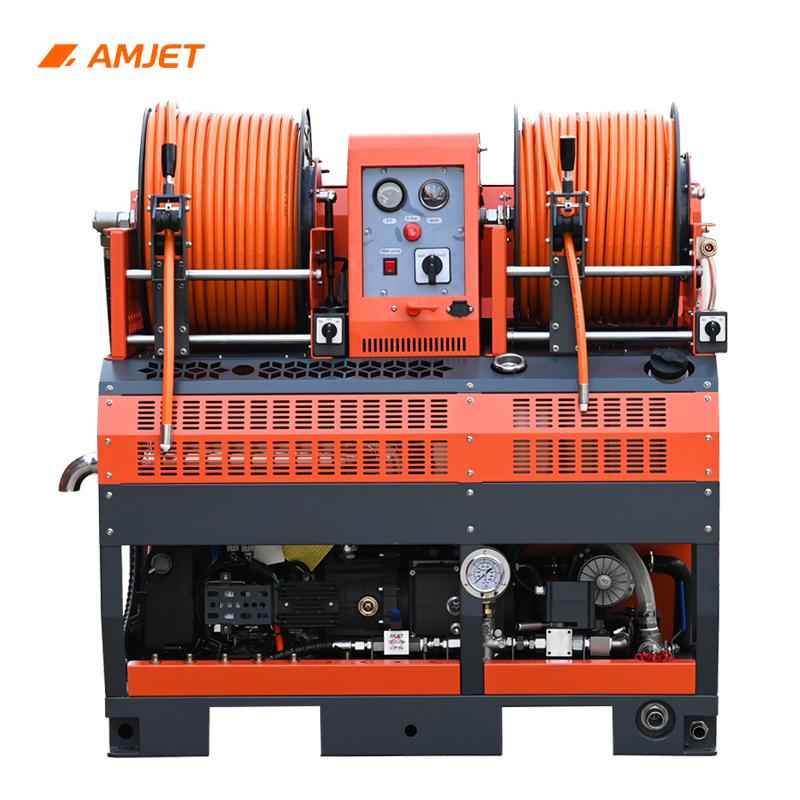
Your choice really comes down to what’s flowing through the line and what the pipe itself can handle. Thin-walled PVC or older clay pipes won’t forgive a high-pressure jetter the way cast iron or concrete will. If you’re clearing a kitchen sink or a small branch line with soap sludge, an auger often does the job without risking joint damage. The cable physically breaks through, and you control the torque.
For larger diameter mains or lines carrying heavy grease and scale, a jetter works better because it scours the whole inner wall instead of just punching a hole. But jetters rely on flow; if the pipe is collapsed or severely root-bound, the water simply backs up. That’s when a rodder earns its keep—it can push through packed debris and give you a clear channel to work with, especially in long straight runs where an auger would bind.
The trick is matching the tool to both the obstruction and the material. Use an auger for tight, small-diameter twists and soft blockages. Switch to a jetter when buildup coats the pipe and you need a thorough wash. Keep the rodder for stubborn, compacted stoppages where brute mechanical force matters more than finesse.
Why Routine Camera Inspections Save Money on Major Repairs
A hairline crack in a drain line doesn't announce itself. It seeps quietly, loosens surrounding soil, and invites tree roots long before you see a backup. Routine camera inspections catch these early whispers. Instead of guessing where a clog might be or digging up a yard on a hunch, a small waterproof lens travels through the pipe and shows exactly what's happening. That precise view stops minor flaws from becoming full-scale failures.
Think of it as a low-cost diagnostic compared to the bill for emergency excavation. A scheduled camera check might run a few hundred dollars, while replacing a collapsed sewer line can easily climb past ten thousand. Add in ruined flooring, interrupted business hours, or a weekend plumber's overtime rate, and the math gets worse. Regular footage also gives you a baseline, so when something changes—a new offset, a slow-growing root mass—you can act before it turns urgent.
The real savings come from the repairs you never have to make. A joint showing early separation can be sealed or sleeved while the pipe still has years left. A sluggish section can be hydro-jetted before grease hardens into a full blockage. By scheduling camera inspections on a set rhythm, you trade expensive surprises for predictable, small fixes, and you keep the system working without drama.
Comparing Portable vs Truck-Mounted Cleaning Systems
When deciding between portable and truck-mounted cleaning systems, the most obvious difference is mobility. Portable units are compact enough to be carried into tight spaces, up stairs, or through narrow doorways, which makes them ideal for apartments, small offices, or areas with limited parking. Truck-mounted systems, on the other hand, stay with the vehicle and rely on long hose runs, so they shine in open spaces, large commercial buildings, or multi-story facilities where the extra reach outweighs the setup time. If your work often takes you into hard-to-reach places, a portable system might be the more practical choice — but if you mostly clean large, accessible areas, the truck-mounted setup can save you a lot of back-and-forth.
Power and recovery are another key battleground. Truck-mounted machines typically draw from the vehicle's engine, delivering higher pressure and stronger vacuum than most portables. That means deeper extraction, faster drying times, and the ability to handle heavy soil or thick carpets without struggling. Portable systems have improved a lot in recent years, but they still can't match the raw suctio of a well-engineered truck mount. However, that extra power comes with a trade-off: noise, fuel consumption, and the need to park close enough to run hoses. For residential jobs where power outlets are limited and quiet operation matters, a portable unit may actually be the smarter tool.
Cost and maintenance also play a huge role in the decision. Portable systems are generally cheaper upfront, easier to store, and simpler to repair — often with off-the-shelf parts you can replace yourself. Truck-mounted units, while more expensive and more complex to maintain, tend to last longer and hold their value better if you treat them well. They also eliminate the need to haul a heavy machine in and out of a vehicle every job. Weighing your budget, the types of jobs you take on, and how much you're willing to invest in upkeep will usually point you toward the right choice for your business.
What to Look for in a Reliable Sewer Equipment Supplier
A reliable sewer equipment supplier does more than hand you a catalog and a quote. Ask how quickly they can dispatch a technician when a jetter or push camera fails mid-job, and whether they keep common wear parts—seals, nozzles, hoses—on their own shelves instead of ordering from a distant warehouse. If they hesitate to share references from municipal crews or contractors with similar pipe diameters and flow rates, treat that as a red flag. The best suppliers will also be upfront about what their machines cannot handle rather than overselling horsepower you will never need.
Look closely at the warranty structure. Some policies cover the pump but not the labor to replace it, which leaves you paying for downtime twice. Ask for written response-time commitments, especially for emergency sewer work, and find out whether the supplier employs its own service team or relies on third-party contractors. On-site training for your operators is another sign of a partner rather than a one-time vendor. A supplier that understands municipal budget cycles and can schedule preventive maintenance around your busy season is far more valuable than one that disappears after the invoice clears.
Preventing Future Clogs with Smart Maintenance Scheduling
Most drain clogs don't happen overnight. They build up over weeks or months, and the timing often depends on how the property is used. A kitchen sink in a busy household, for example, accumulates grease and food particles far faster than one in a guest bathroom. Smart maintenance scheduling starts with tracking those usage patterns—note which fixtures clog most often and how long it takes between blockages.
Instead of waiting for the water to back up, schedule preventive cleaning based on those intervals. A high-use kitchen line might need a monthly enzyme treatment or a quarterly hydro-jetting session, while slower drains can often go six months between checks. The point is to set reminders that match the actual risk, not a generic calendar date.
Another practical step is to coordinate maintenance with other routine tasks. If you're already having an HVAC check or gutter cleaning, add a drain inspection to the same appointment. This reduces the chance of forgetting and makes the schedule feel less like an extra chore. Over time, you'll develop a rhythm that keeps pipes clear without constant emergency calls.
FAQ
The best suppliers typically offer a range of machines that can handle different pipe diameters and debris types, along with accessible parts and service support. Look for equipment with adjustable pressure controls and durable hose reels rather than just the lowest price.
Hydro jetters use high-pressure water to scour grease, sludge, and scale from pipe walls, which is ideal for preventive cleaning. Mechanical rodders excel at cutting through solid blockages like roots or hardened debris. Many crews keep both on hand because they solve different problems.
Cameras let you see exactly what's causing a blockage before you commit to a method. A root intrusion calls for a cutting attachment, while a grease buildup might only need a jetter. Skipping the camera work often leads to repeated callbacks and wasted hours.
It depends on access and job frequency. Trailer-mounted units offer more power and larger water tanks for long runs, but cart-mounted models can fit into tight spaces and are easier to move between buildings. Many municipalities mix both types across their fleet.
Daily flushing of the pump, checking nozzles for wear, and inspecting hoses for soft spots go a long way. Storing equipment out of freezing temperatures and using a water softener in hard-water areas also reduces premature failures.
Nozzles determine how the water energy is directed. A forward-thrust nozzle helps push debris down the line, while a rotating or flail nozzle scours the pipe walls more thoroughly. Using the wrong nozzle can leave half the pipe uncleaned or cause the hose to get stuck.
Ask where the nearest authorized service center is, how quickly replacement parts can ship, and whether the company provides technical training for operators. Equipment from a no-name supplier may look identical but can become a liability when a pump fails mid-job.
Look beyond the sticker price to things like fuel consumption, hose life, and typical maintenance intervals. A slightly more expensive jetter with a stainless steel tank and common engine parts may cost less per hour over five years than a cheaper unit that needs frequent unscheduled repairs.
Conclusion
Effective pipe maintenance hinges on matching the right tool to the blockage. High-pressure jetting remains the go-to for grease, sludge, and stubborn clogs because it scours the full pipe wall instead of just punching a hole. But not every line benefits from that force—older or fragile pipes often do better with a sectional auger or a set of rodders, which offer more controlled contact. A dependable equipment company will help you weigh these options against pipe material, diameter, and access points rather than pushing a one-size-fits-all machine.
Before committing to a purchase or rental, ask how the supplier supports camera inspections. Routine video checks catch root intrusion, cracks, and bellied sections long before they become emergency repairs, and that alone can save thousands. Then decide whether a portable unit fits your job sites or a truck-mounted system makes sense for larger municipal work. Portable jetters are easier to move and store; truck-mounted rigs deliver higher flow and longer reach. Finally, look for a supplier with a real maintenance schedule—preventive cleanings spaced by pipe history and flow data do more to stop clogs than reactive call-outs. The best equipment partner will spec the machine, train your crew, and help you build that schedule, turning sewer upkeep into a predictable routine instead of a recurring crisis.
Contact Us
Contact Person: Mike
Email: [email protected]
Tel/WhatsApp: +86 19545555505
Website: https://www.amjeting.com/