

Wholesale Bag Hardware: Essential Components for Designers and Manufacturers
2026-11-16
Every handbag tells a story, but behind every flawless finish is a world of tiny, unsung heroes: the hardware. From the satisfying click of a magnetic snap to the elegant drape of a chain strap, these components define both function and luxury. For designers and manufacturers, sourcing the right parts isn’t just a step in production—it’s the difference between a forgettable accessory and an heirloom piece. That’s where Kingming comes in, cutting through the noise with precision-engineered bag hardware that balances durability, aesthetics, and seamless supply. If you’ve ever felt overwhelmed by generic catalogs or inconsistent quality, you’re in the right place. Let’s unpack what really matters when choosing hardware that elevates your designs from the inside out.
The Silent Architects of Bag Design: Why Hardware Matters
A bag’s silhouette might catch your eye from across the room, but it’s the hardware that quietly commands how you feel when you touch it. A zipper that glides like a whisper, a clasp that clicks with precise satisfaction, or the cool weight of a custom buckle—these details shape every interaction. They’re the unnoticed framework that holds the entire design together, turning a simple carryall into an object you trust without thinking.
Beyond function, hardware tells an unspoken story of intention. Brushed brass suggests a heritage of craftsmanship; gunmetal lends a contemporary edge; polished palladium whispers minimalist luxury. The way light catches a chain strap or a turn-lock can shift the bag’s entire personality—from playful to formidable—without altering a single stitch of leather. It’s a silent dialogue between material and mood, one that designers carefully orchestrate.
Over time, hardware also becomes a record of use. The patina on a brass rivet, the faint scratches on a clasp—they layer in history, making the bag uniquely yours. This quiet transformation is where the true architecture reveals itself: the pieces that weather elegantly, that never lose their voice despite daily friction. In an industry obsessed with logos, it’s often the metalwork that speaks loudest by saying nothing at all.
Beyond Shiny and Silver: Uncommon Finishes That Define Modern Accessories
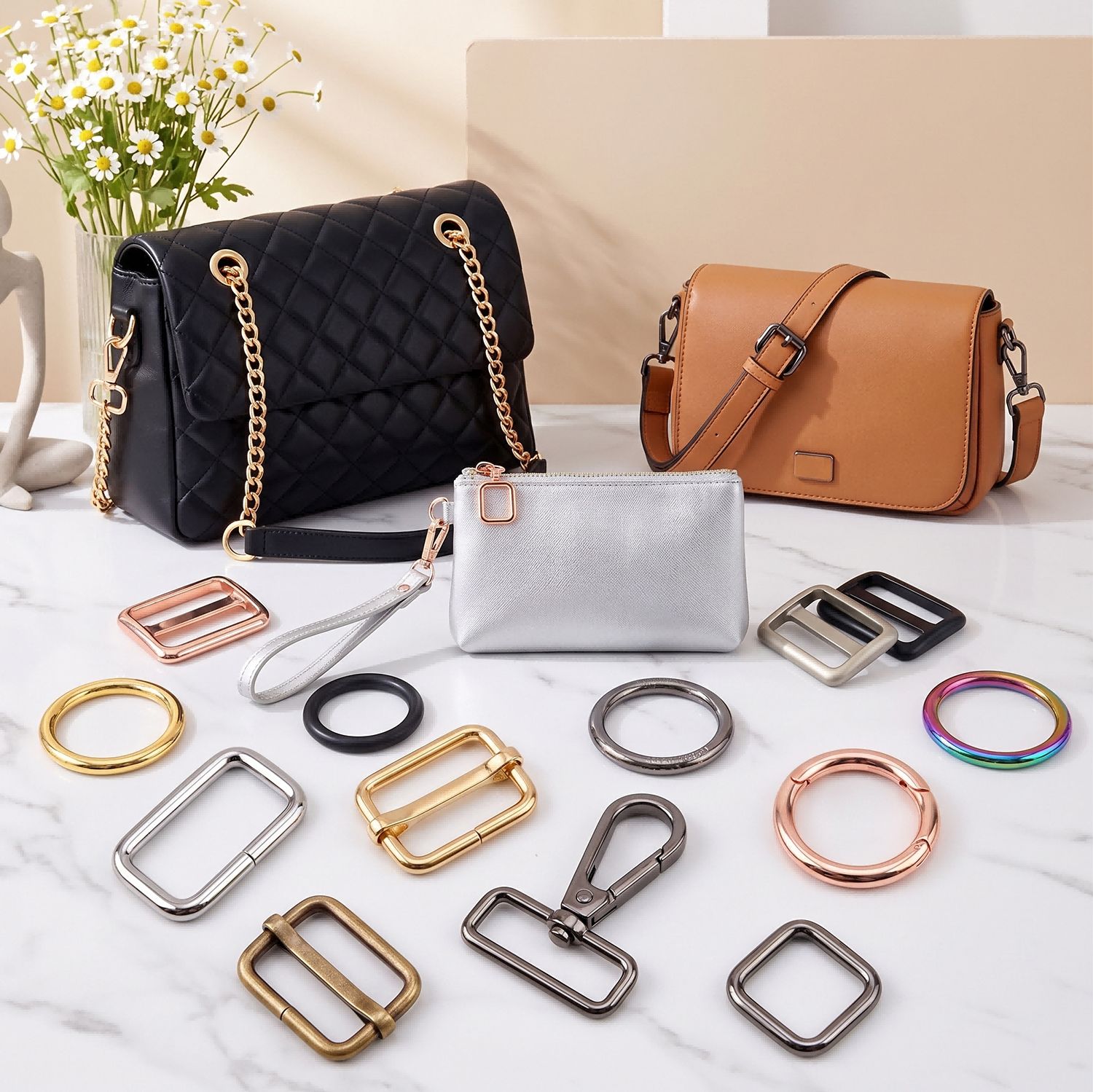
Polished chrome and brushed silver have long been the default for accessories, but a quiet rebellion is unfolding in studios and ateliers. Designers are turning to surfaces that feel tactile and alive—blasted stone, oil-rubbed bronze with its deep, uneven patina, and softly corroded brass that whispers age rather than shouting polish. These finishes don't reflect light so much as absorb it, shifting the focus from flash to texture and from perfection to personality.
The appeal lies in subtle imperfection. A matte ceramic coating can make a metal cuff feel unexpectedly warm, almost like worn leather. Pitted blackened steel reminds the eye of ancient tools or coastal rock, giving a bracelet or keyring the gravity of an heirloom. Even porcelain enamel, applied in thin, cracked layers, tells a story before its owner does. Such surfaces resist the impulse to stay pristine, instead growing more interesting with use, scratched by keys and softened by fingertips.
These rare finishes also shape how accessories interact with skin and clothing. A titanium piece with a heat-induced oxide layer shifts colors from straw gold to deep violet as it moves, catching the eye in a way static silver never could. Raw linen-bound resin, coarse to the touch, stands in stark contrast against a sleek phone or laptop. The result is an accessory that doesn't just accompany an outfit—it challenges it, adding friction and depth where before there was only reflection.
Strength Meets Style: Choosing Metals That Survive Daily Life
When you’re picking out metals for pieces you’ll use every day—whether it’s a kitchen island, a pair of earrings, or that new water bottle—you’re really hunting for a material that can take a beating without losing its charm. Stainless steel has earned its place in this game for good reason: it laughs off rust, shrugs at scratches, and cleans up with nothing more than a damp cloth. It’s the quiet workhorse that still looks sharp years later, fitting right in whether your aesthetic leans sleek and modern or comfortably worn-in.
But practicality doesn’t mean sacrificing personality. Brass, copper, and bronze are having a real moment precisely because they develop a living patina as they age—those subtle darkening tones and gentle fingerprints that tell a story. A brass pendant light over your dining table won’t just glow warmly tonight; it’ll keep evolving, reflecting the light and the life around it in a way no brand-new finish can replicate. The trick is understanding which of these reactive metals fits your actual habits. If you reach for the polish every week, unlacquered brass rewards you with an ever-changing luster. If you’d rather set it and forget it, a sealed or powder-coated version keeps things low-maintenance while still giving you that rich, warm tone.
Then there are the modern alloys and coatings that blur the line between jewelry-grade beauty and shop-floor toughness. Titanium, for instance, is surprisingly lightweight, biocompatible, and so resistant to corrosion that it’s become a favorite for everything from wedding bands to camping cookware. Hard-anodized aluminum gives you the color depth of a precious metal with a surface that’s harder than raw steel. The real trick in choosing isn’t just falling for a look in the showroom—it’s picturing that piece after a year of keys clanking against it, wet swimsuits draped over it, or hurried scrubs in the sink. The metals that truly marry strength and style are the ones that feel even more yours after all that living.
From Functional to Focal Point: How Clasps and Rings Transform a Bag’s Identity
At first glance, clasps and rings seem purely practical—they secure a bag’s opening or attach a strap. But step closer and you’ll notice they do much more than hold things together. A clasp can be engineered into the silhouette itself, turning a simple flap into a sculptural statement. Rings, often dismissed as linking hardware, shift proportions, creating unexpected curves or framing the bag like jewelry. It’s this quiet reinvention that pushes a design from forgettable accessory to something you remember by touch and sight.
Think about how a oversized ring suddenly becomes the center of gravity on a soft clutch, pulling the eye and altering the entire mood of the piece. Metal choices deepen the effect: brushed brass whispers heritage, while high-polish nickel feels futuristic and sharp. Some designers treat clasps like punctuation—a comma in the form of a half-moon twist lock, an exclamation point with a baroque crystal push-button. In these moments, function dissolves and the hardware writes the bag’s personality.
There’s also a narrative layer when clasps and rings draw directly from the house’s archives or a specific inspiration. A ring shaped like a door knocker doesn’t just hang there; it hints at entryways, old cities, stories waiting behind closed doors. When you carry the bag, that small piece of metal engages constantly with your hand, your clothing, the light. It becomes a focal point not because it’s loud, but because it’s deliberately placed to transform how you perceive the whole form—elevating leather and canvas into something with its own identity.
Supplier Real Talk: What Seasoned Designers Look for Before Placing a Wholesale Order
Before I even glance at a line sheet, I’m digging into the supplier’s consistency. I want to know if their previous collections held up in quality after multiple wears and washes. It’s not just about how the sample feels in my hands—seasoned designers will hunt down reviews, ask for references from other boutiques, or order a small test batch themselves to see if the finishing, stitching, and fabric durability match the promise. If the supplier hesitates to share that kind of track record, I walk.
Communication cadence is a dealbreaker nobody talks about enough. I’ve learned to test responsiveness early: how quickly do they answer specific questions about MOQ flexibility, lead time buffers, or material sourcing? A supplier who ghosts for days when I ask for a swatch or a revised spec sheet will absolutely vanish when a shipment gets stuck in customs. I also pay attention to the tone. The best partners don’t just say yes to everything—they push back with better alternatives, showing they actually think through the design instead of just chasing the order.
Finally, I’m always mapping the hidden friction in their process. What’s the real turnaround from deposit to dispatch? Are their packaging and labeling standards compatible with my brand’s unboxing experience, or will I have to redo everything locally? I look at how they handle defect rates, what their reorder minimums look like, and whether they can scale if a style takes off. A low unit price means nothing if every step after sampling eats up my margin and my time.
Future-Proofing Fashion: Sustainable Materials and Smart Hardware Integrations
The conversation around sustainable fashion has moved well beyond organic cotton and recycled polyester. A new wave of bio-based leathers made from apple waste, cactus, or mycelium is quietly reshaping how garments are sourced and produced. These materials aren't just eco-friendly on paper—they break down naturally at the end of their life, require far less water, and often match or exceed the durability of animal or synthetic alternatives. When paired with modular hardware like detachable zippers or snap-in buttons designed for easy repair, a jacket stops being a disposable seasonal item and becomes something people can keep, update, and ultimately compost.
Smart hardware is also evolving beyond the gimmicky. Conductive threads woven into seams can link to discreet sensor arrays that monitor posture, body temperature, or UV exposure, feeding data to a minimalistic app—without turning clothing into a gadget showroom. Heating elements printed onto silk linings or cooling panels embedded in summer fabrics adapt to the wearer's needs in real time, all powered by thin, flexible batteries that recharge with movement or sunlight. The trick is making these integrations so seamless they feel like a natural part of the garment’s architecture, not an afterthought.
What makes this direction future-proof isn't just the tech or the materials alone—it's the shift toward a design philosophy where everything is meant to be taken apart. Stitching techniques that allow electronic components to be removed and recycled, fabrics that return safely to the soil, and hardware standardized across brands so a snap from one label fits another. This kind of systemic thinking moves fashion away from the cycle of production and waste, building a wardrobe that genuinely respects both the planet and the people wearing it.
FAQ
Beyond the standard zippers and sliders, look into magnetic snaps with reinforced backing plates, adjustable sliders with custom finish options, and rivets that match your brand’s tone exactly. For luxury lines, consider engraved locks and hidden-magnet closures that keep the silhouette clean. For utility bags, quick-release buckles and industrial-grade D-rings with high tensile strength stand out to serious manufacturers.
Start by grouping your requirements across several styles instead of ordering per design. Many suppliers offer tiered pricing once you cross 500 units per item type, but you can also score discounts by ordering mixed finishes in the same mold type. Don't be afraid to ask for 'new customer sampling privileges'—often they'll deduct sample costs from your first full production invoice.
It depends on use context, but for high-contact items like purse handles and crossbody straps, electroplated zinc alloy with a top coat sealer outperforms basic lacquer finishes. Gunmetal and vintage brass are popular because they naturally disguise micro-scratches. For a modern edge, PVD-coated stainless steel resists corrosion and color fading far longer than standard painted surfaces.
Yes, but you need to ask the right way. Instead of 'MOQ', discuss 'trial run batches'. Many wholesalers in hubs like Guangdong will accommodate short runs of 200-300 pieces if you’re using existing molds. You'll pay a small surcharge per unit, but it’s worth it to test hardware without committing to thousands of pieces. Also, teaming up with a local sampling studio can pool orders from multiple designers to meet volume thresholds.
Work with suppliers who stock interchangeable decorative caps or logo plates that snap onto standard base components. That way, you can switch from a matte gold floral plate to a sleek acrylic accent without redesigning the entire clasp. Also, consider dual-tone electroplating that gives a subtle gradient effect—this feels very current yet won't look dated if trends shift.
Always request a unified dye-lot certification if you’re using multiple components from the same electroplating batch. For mixed materials (e.g., a brass zipper and a zinc alloy slider), provide the factory with a physical master swatch instead of Pantone references alone. Even better, ship them a production-spec sample of the main fabric so they can adjust the hardware sheen to complement the bag’s texture and color under natural light.
Conclusion
Bag hardware is the unseen foundation that turns a good design into a product that lasts and sells. More than just decoration, components like zippers, buckles, rivets, and clasps dictate how a bag feels in daily use and how it communicates its value before a customer even touches it. The shift away from generic shiny finishes toward textured matte, brushed, or even darkened alloys is redefining modern accessories, allowing brands to signal subtlety and intention rather than cheap flash. At the same time, the physical demands of real life mean designers must match style with structural sense: choosing metals that resist corrosion, hold their finish, and endure friction without cracking or discoloring. A lightweight zinc alloy might capture intricate detail beautifully, but a stainless steel frame or solid brass rivet ensures the bag won’t fail at a stress point months down the line. These silent choices separate a product that photographs well from one that builds genuine brand trust.
Beyond material performance, hardware has evolved from a purely functional necessity into a focal design element. A strategically mismatched clasp ring, an oversized D-ring, or a lock mechanism with a satisfying tactile click can transform a generic silhouette into a recognizable signature. Experienced designers approach wholesale suppliers with a checklist that goes far beyond unit price: they ask about consistency in plating thickness, availability of custom molds, minimum order flexibility, and the raw truth about lead times. Increasingly, that conversation also includes sustainability. Forward-thinking manufacturers are exploring recycled base metals, low-waste plating processes, and even hardware embedded with NFC or Bluetooth tags that merge physical durability with digital functionality. Bag hardware might sit quietly in the background, but getting it right bridges the gap between a prototype that looks clever and a commercial product that actually performs.
Contact Us
Contact Person: Jamie Zeng
Email: [email protected]
Tel/WhatsApp: +86 13728219269
Website: https://www.kmhardware.com